
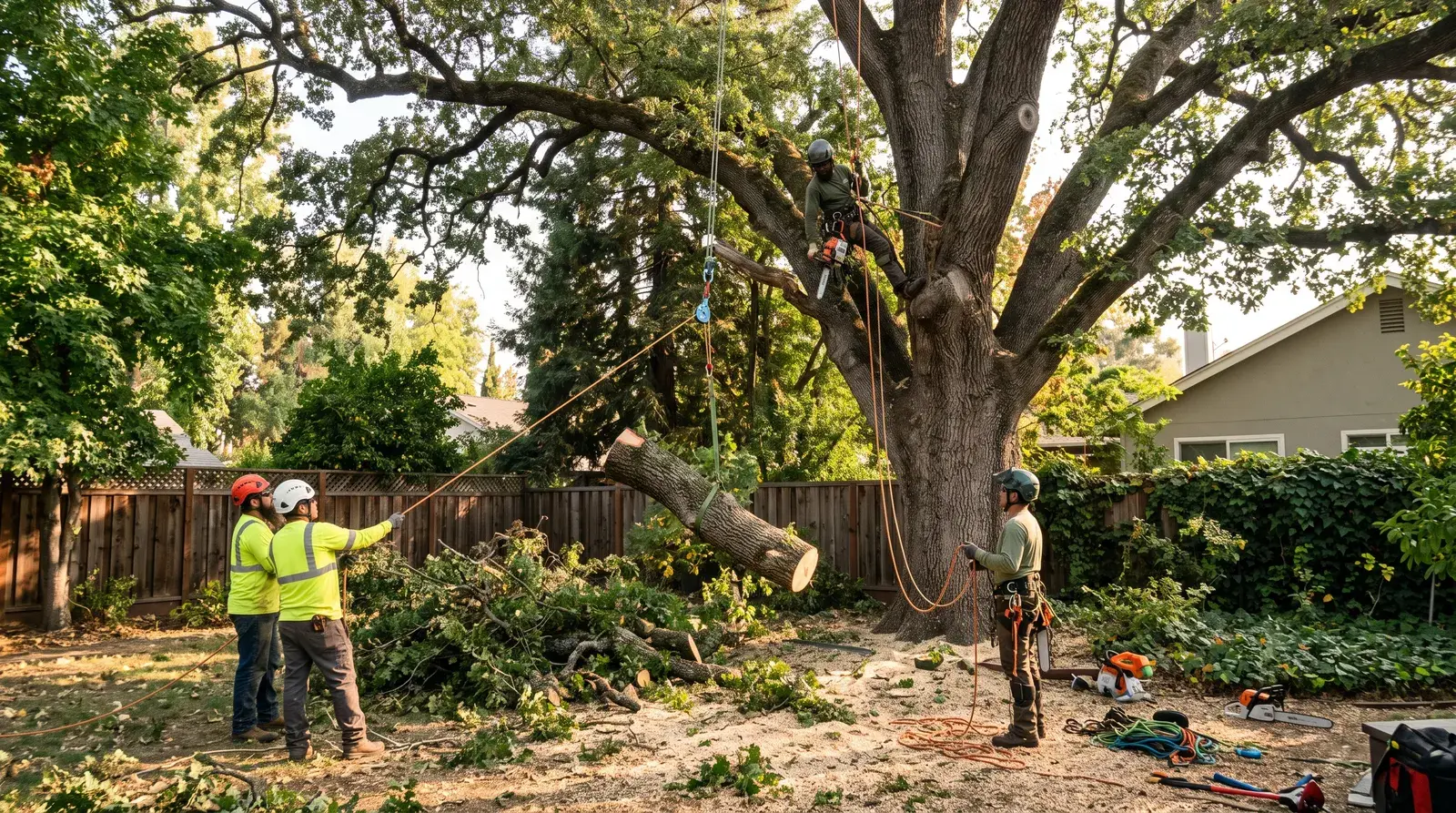
Two Canopies, Two Kinds of Removal
Roseville is really two tree cities. The east side kept its native oak woodland when the neighborhoods were built around it; the west side was graded flat and planted new. The removals — and the rules — are different on each side.
- East Roseville (Stoneridge, Olympus Pointe, Maidu, Sierra Gardens, streets toward Granite Bay): mature valley oaks and interior live oaks, removed only for death, decay, or structural failure — and usually only after the ordinance question is settled.
- West Roseville (Fiddyment Farm, WestPark, Sun City Roseville, Diamond Creek): 10-to-25-year-old landscape trees — ornamental pear, Chinese pistache, raywood ash — that failed in wind or outgrew their planting strips.
- Old Town and the original grid near the rail yard: aging mid-century plantings, including brittle Modesto ash reaching the end of its lifespan.
- Blue oaks appear on the higher, drier ground toward the northeast edges — slow-growing, drought-adapted, and worth saving whenever they're sound.
Roseville's Tree Ordinance: Check Before You Cut
The City of Roseville protects native oak trees under its own tree preservation rules — separate from Sacramento's and Placer County's. If the tree in question is a valley oak, interior live oak, or blue oak of any real size, assume a permit conversation comes first and verify with the city.
- Native oaks at or above the city's size thresholds generally require a city permit before removal, even on private residential lots.
- Street trees in the public right-of-way are managed by the city's urban forestry program — they're not yours to remove even when they front your lot.
- Dead and hazardous trees typically have a faster path, but document condition with photos, and expect some applications to want an arborist letter.
- Permit conditions can include replacement plantings — plan for that in the budget conversation.
- 916 Trees checks the ordinance question on every Roseville estimate and can supply arborist report support when an application needs one.
Tree Removal in Roseville — free, site-specific estimates.
Wind Failure in West Roseville's Open Subdivisions
West Roseville's newer neighborhoods sit on open, graded ground with no mature canopy to break the wind. When a winter south wind hits saturated soil, young lawn-watered trees with shallow or circling roots tip over whole — onto fences, patio covers, and parked cars.
The pattern repeats every storm season across Fiddyment Farm and WestPark: trees staked too long never built taper, container-grown roots circled instead of anchoring, and irrigated lawns kept root systems shallow. Whole-tree tip-over is the signature failure, root ball and all. If one of your trees lifted soil on the windward side or picked up a new lean after the last storm, it has partially failed — a scheduled removal now costs a fraction of an emergency callout plus a fence repair in January.
What Tree Removal Costs in Roseville
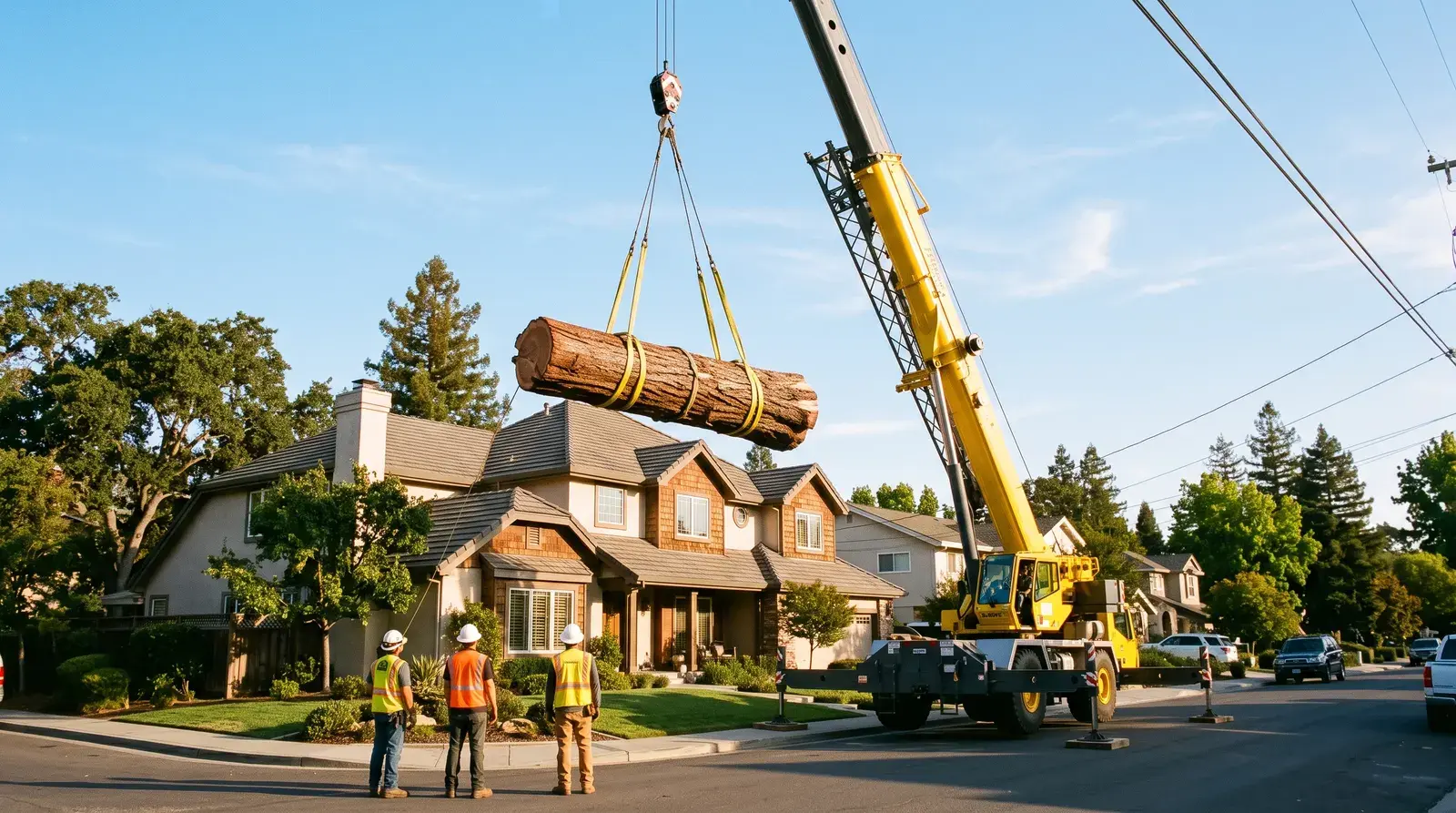
As broad regional figures, most residential removals run $500–$2,500. West-side subdivision trees often land at the lower end; mature east-side oaks over structures are the multi-thousand-dollar jobs, and crane-assisted removals can exceed $5,000–$10,000+.
- Size sets the baseline — a 60-foot valley oak carries several times the wood of a subdivision pistache.
- Access matters as much as size: a backyard tree behind a WestPark side gate takes more labor than a front-yard tree a chip truck can reach.
- Targets under the canopy — roofs, pools, fences — force slow, rigged, piece-by-piece takedowns.
- Decayed or dead oaks can be unsafe to climb, which pushes the job toward a crane or lift.
- Permit-related costs (application, arborist report, replacement trees) apply to protected oaks — we flag them up front. Every estimate is free and site-specific.
Need tree removal in Roseville?
Share the address and project details — we'll come back with a scoped, site-specific estimate.
HOA Frontage Trees and Replacement Rules
Much of west Roseville is governed by HOAs with landscape standards covering frontage trees — and many require an approved replacement after any front-yard removal. Check the CC&Rs before the tree comes down, not after the violation letter arrives.
Sun City Roseville, WestPark, and Fiddyment Farm associations commonly specify approved street-tree species lists and replacement windows. We can fold a replacement planting into the removal quote so the takedown, stump grind, and new tree happen in one mobilization — which usually satisfies the HOA requirement in a single visit. For trees in the public planting strip, the city's urban forestry program controls the work regardless of what the HOA says; we'll tell you at the estimate which authority your tree answers to.
The same crew from estimate to cleanup.
No juggling separate contractors for one tree. Tell us the address and what you're dealing with, and we'll come back with a written, site-specific number.
- Removal, trimming, stumps, and cleanup handled by one crew
- Free, site-specific estimates — priced to your tree, not a flat rate
- Sacramento, Placer, El Dorado, and Yolo counties

Stumps, Wood, and What Comes Next
Decide about the stump, the wood, and any replacement before removal day — one mobilization is always cheaper than a callback. Every 916 Trees removal quote includes haul-off of trunk and brush unless you want firewood or chips left.
- Stump grinding runs 8–12 inches below grade standard, deeper for replanting or hardscape — quoted as its own line item.
- Oak makes excellent firewood; we can buck rounds and leave them stacked at no charge.
- Replacement planting closes out HOA requirements and some city permit conditions — and keeps shade on a lot that will miss it by July.
- We photograph condition before and during removal when insurance or permit files need documentation.
Related guides
Do You Need a Permit to Remove a Tree in Sacramento?
Which Sacramento trees need a removal permit, how city and county rules differ, and how to check before the saw comes out.
How Much Does Tree Removal Cost in Sacramento? (2026)
Typical 2026 Sacramento tree removal price ranges by tree size, the factors that move the number, and how to read a quote before you sign it.
9 Signs a Tree Needs to Come Down
Nine warning signs a tree is hazardous or dying — and when removal is safer than trying to save it.
What tree removal costs — and what Roseville allows
Regional ranges, local permit rules, and the alternatives worth weighing before tree removal in Roseville.
Emergency Tree Service Cost in Sacramento (2026)
Regional range $800–$8,000 — and what moves the number on a real job.
Do You Need a Tree Removal Permit in Roseville?
Where Roseville draws the line before a tree comes down, and who to check with.
Tree Pruning vs. Removal: When to Save a Tree and When to Take It Down
Pruning or Removal — how to tell which one the tree actually needs.
Tree Service in Placer County, CA
Placer County spans flat valley suburbia in Roseville and Rocklin and rises through the oak-woodland foothills to ponde…
Crane-Assisted Tree Removal Cost in Sacramento (2026)
Regional range $2,500–$12,000 — and what moves the number on a real job.
Do You Need a Permit to Remove a Tree in Sacramento?
Which Sacramento trees need a removal permit, how city and county rules differ, and how to check before the saw comes out.
Want a sense of the work first? See the kinds of tree removal jobs we take on and who shows up to do them.
Frequently asked questions
Do I need a permit to remove an oak tree in Roseville?
Very likely, if it's a native oak of any real size. Roseville's tree preservation rules protect valley oak, interior live oak, and blue oak on private property at and above the city's size thresholds, and street trees in the right-of-way belong to the city's urban forestry program outright. Dead and hazardous trees have a faster path but still want documentation. We check the ordinance question during every estimate and point you to the city's current application when one applies.
How much does tree removal cost in Roseville?
As a broad regional range, most residential removals run $500–$2,500. Young west-side subdivision trees — pears, pistache, raywood ash — often land toward the lower end. Mature east-side valley oaks over rooflines run several thousand, and large, decayed, or tight-access trees needing a crane can exceed $5,000–$10,000+. Protected oaks may also carry permit and replacement-tree costs. Every estimate is free and based on a site visit, not a photo.
Why do young trees in West Roseville keep blowing over?
Open graded terrain with no windbreak, shallow lawn-irrigated root systems, and container-planting root defects that never anchored — then saturated winter soil plus a sustained south wind. The result is whole-tree tip-over, root ball and all, which is why the same storm drops trees across Fiddyment Farm and WestPark all at once. Trees showing soil lift or a new lean have already partially failed and should be assessed before the next front.
The tree is in the strip between my sidewalk and the street. Can you remove it?
Not without the city's involvement. Trees in the public planting strip are city street trees managed by Roseville's urban forestry program, even though you water the strip and rake the leaves. Removing one without authorization is a code problem regardless of the tree's condition. If a street tree is dead, hazardous, or wrecking your sidewalk, the right move is reporting it to the city — we can document the condition to support that request.
Can you save a big oak instead of removing it?
Often, and we'd rather. A healthy valley oak with too much end weight usually needs crown reduction or cabling, not a takedown — mature oaks are the most valuable trees in east Roseville and take a lifetime to replace. Removal is the right call for standing dead trees, major trunk decay, root plate failure, and split co-dominant stems past cabling. A tree health assessment gives you an honest answer before you spend removal money.