Folsom's Three Native Oaks
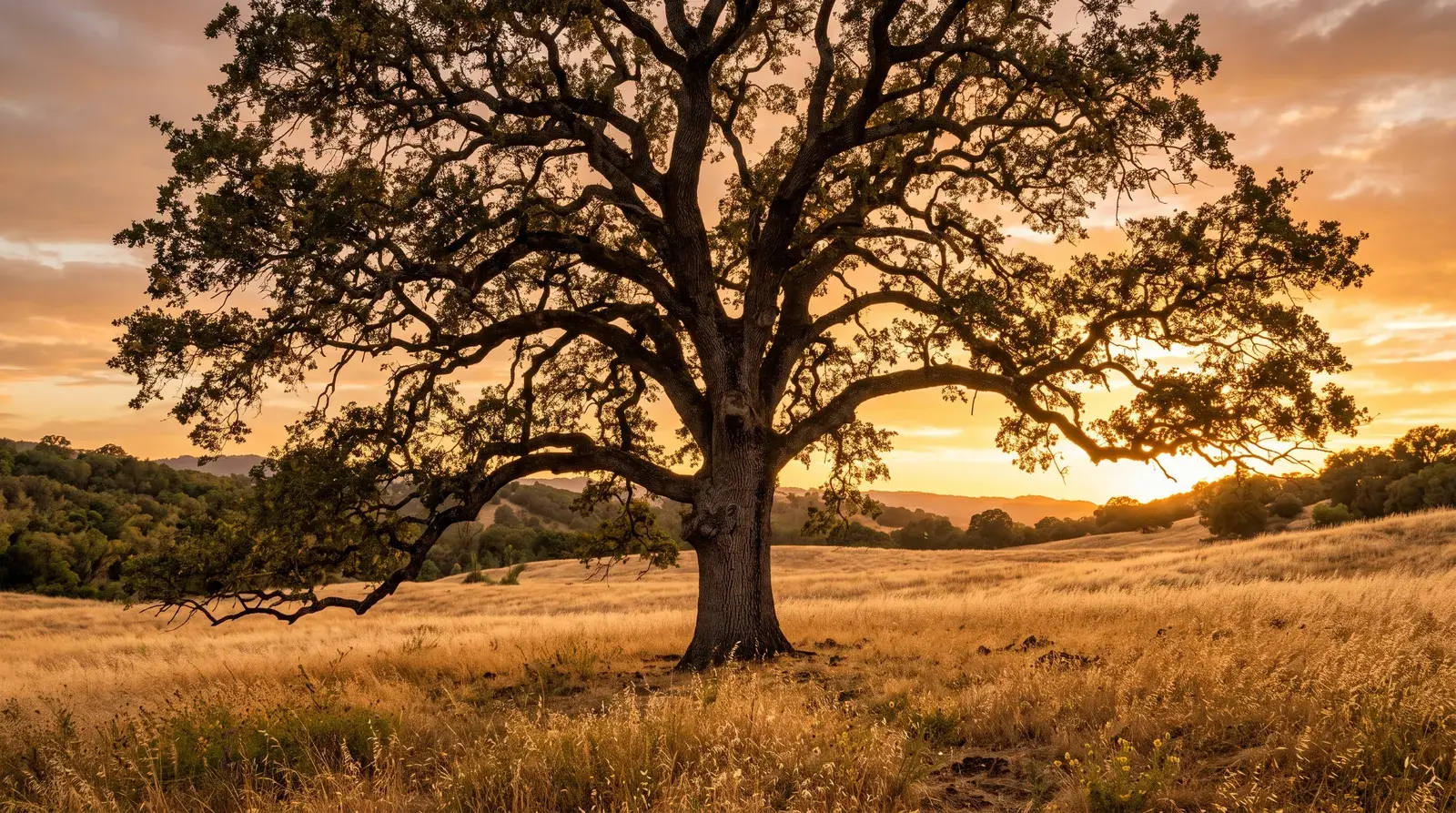
Three natives dominate Folsom, and they need different handling. Knowing which oak you have is the first step in caring for it — and all three are protected under the city's tree preservation rules.
- Interior live oak — evergreen, dense, dark canopy; the most common yard oak in American River Canyon and around the lake. Main needs: deadwood removal and end-weight reduction on long limbs.
- Blue oak — drought-adapted foothill oak with blue-gray leaves, common on the drier slopes east of town. Slow-growing and intolerant of summer water; the worst thing you can do to one is surround it with irrigated lawn.
- Valley oak — the big deciduous oak of creek corridors and deeper soils; fast-growing for an oak, with heavy limbs that benefit from structural management as they extend.
Pruning Oaks the Right Way, at the Right Time
Native oaks get pruned in the dry season or dormancy — wet-season cuts invite disease, and heavy summer stripping stresses a tree already managing heat. Good oak pruning is conservative: deadwood out, weight reduced, structure preserved, and no cut bigger than it has to be.
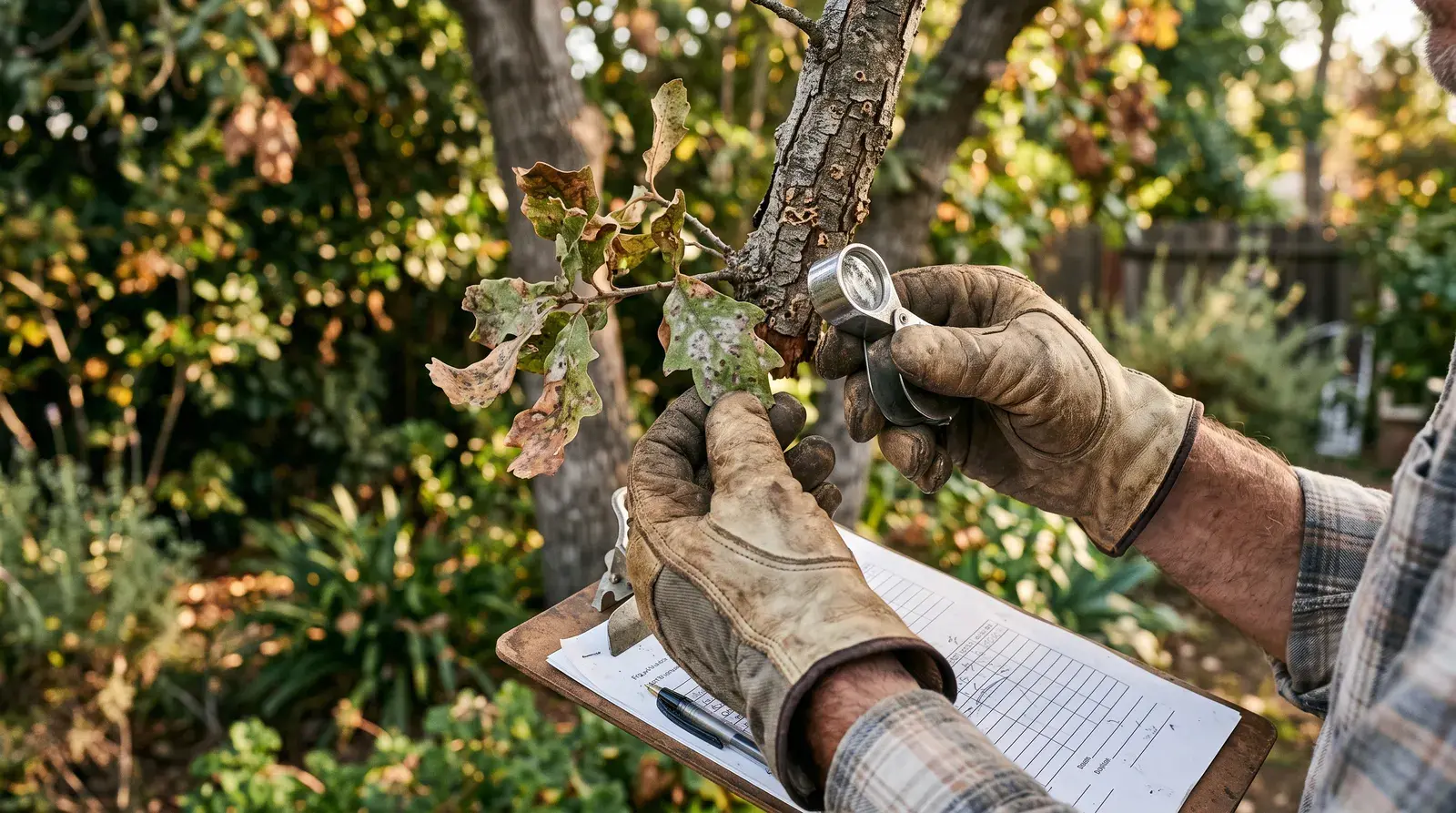
- Deadwood removal — the bread-and-butter of live oak care; dead limbs over patios and walkways are the most common oak hazard in Folsom.
- End-weight reduction — shortening long horizontal limbs back to sound laterals so wind and gravity stop working against them.
- Structural pruning on young valley oaks — small corrective cuts in the first decades prevent the co-dominant failures that plague mature trees.
- Never topping — topped oaks respond with weak, fast regrowth and decay at the cut. On a protected Folsom oak, it can also be an ordinance violation.
Oak Tree Care in Folsom — free, site-specific estimates.
The Watering Mistake That Kills Folsom Oaks
More established oaks in Folsom are killed by irrigation than by chainsaws. Native oaks evolved for dry summers; lawn sprinklers running inside the root zone all summer create the warm, wet soil conditions where oak root fungal diseases thrive.
- Keep turf and heavy irrigation out of the root zone where possible — the drip line and beyond, not just the trunk.
- Mulch under the canopy instead of lawn: it moderates soil temperature, holds winter moisture, and needs no summer water.
- Blue oaks are the least tolerant — a blue oak in the middle of a new irrigated backyard is on a countdown unless the watering plan respects it.
- Mature oaks generally need no summer watering at all; deep, infrequent winter-pattern moisture is what they are built for.
Need oak tree care in Folsom?
Share the address and project details — we'll come back with a scoped, site-specific estimate.
Protecting Oaks During Construction and Landscaping
Folsom keeps building — ADUs, pools, and the entire Folsom Ranch expansion — and construction is where preserved oaks quietly get killed. Root damage from trenching, grade changes, and soil compaction can take years to show, long after the contractor is gone.
- Fence the root protection zone before equipment arrives; the drip line is the minimum, not the target.
- Route trenches for utilities and irrigation around the root zone, or bore under it rather than cutting through.
- No fill soil, no grade cuts, and no material staging over oak roots — compaction suffocates roots as surely as cutting them.
- City approvals for work near protected oaks may carry tree-protection conditions; an arborist report documents compliance and protects the tree and the project.
The same crew from estimate to cleanup.
No juggling separate contractors for one tree. Tell us the address and what you're dealing with, and we'll come back with a written, site-specific number.
- Removal, trimming, stumps, and cleanup handled by one crew
- Free, site-specific estimates — priced to your tree, not a flat rate
- Sacramento, Placer, El Dorado, and Yolo counties
When an Oak Is Declining
A thinning crown, dieback at the limb tips, fungal conks at the base, or oozing bark all warrant a real assessment — not an automatic removal quote. Many declining Folsom oaks can be stabilized by fixing the conditions killing them, usually water and root-zone problems.
We assess the tree, identify what is actually wrong, and lay out options honestly: cultural fixes, pruning, cabling for structural issues, or removal when the tree is genuinely past saving. Because Folsom's oaks are protected, a documented assessment also matters for the paperwork — if removal is justified, the arborist documentation supports the city process. Preservation first is not a slogan; a mature oak is the single most valuable plant on a Folsom lot.
Related guides
When to Trim Oak Trees in California
The best window to prune native California oaks, why dry-season timing cuts disease risk, and the pruning mistakes that shorten an oak's life.
Sacramento's Heritage Tree Ordinance, Explained
What makes a Sacramento tree a Heritage Tree, what City Code Chapter 12.56 protects, and how to get pruning or removal approved.
Do You Need a Permit to Remove a Tree in Sacramento?
Which Sacramento trees need a removal permit, how city and county rules differ, and how to check before the saw comes out.
What oak tree care costs — and what Folsom allows
Regional ranges, local permit rules, and the alternatives worth weighing before oak tree care in Folsom.
Oak Tree Care & Trimming Cost in Sacramento (2026)
Regional range $400–$3,500 — and what moves the number on a real job.
Do You Need a Tree Removal Permit in Folsom?
Where Folsom draws the line before a tree comes down, and who to check with.
Deep-Root Fertilization vs. Surface Feeding: What Trees Actually Need
Deep-Root Fertilization or Surface Feeding — how to tell which one the tree actually needs.
Tree Service in Sacramento County, CA
Tree work in Sacramento County ranges from removing aging valley oaks in East Sacramento to grinding stumps on new-buil…
Arborist Report Cost in Sacramento (2026)
Regional range $300–$1,500 — and what moves the number on a real job.
Do You Need a Permit to Remove a Tree in Sacramento?
Which Sacramento trees need a removal permit, how city and county rules differ, and how to check before the saw comes out.
Want a sense of the work first? See the kinds of oak tree care jobs we take on and who shows up to do them.
Frequently asked questions
When is the best time to prune oaks in Folsom?
Dry season — summer into early fall — or winter dormancy for most structural work. Avoid heavy pruning in the wet season, when fresh cuts are most exposed to disease, and avoid stripping live canopy during extreme heat. Deadwood removal is safe year-round since it takes no live tissue. If your oak is protected under Folsom's rules, keep pruning to industry-standard maintenance levels.
Are my oaks protected under Folsom's tree ordinance?
If they are native oaks — blue oak, interior live oak, or valley oak — above the city's size threshold, assume yes, even on private property and even in newer subdivisions where builders preserved them during grading. Protection covers removal and can extend to major damage like topping or severe root cutting. Verify current thresholds with the City of Folsom; we flag ordinance questions on every oak estimate.
Why is my blue oak dying after we put in a lawn?
Summer irrigation is the most likely culprit. Blue oaks are the most drought-adapted of Folsom's natives and cannot tolerate warm, wet soil around their roots — conditions that favor root-rotting fungi. Pull irrigation back out of the root zone, replace turf under the canopy with mulch, and get an assessment quickly. Caught early, many irrigation-stressed oaks recover; caught late, the root damage is done.
Can I build near a protected oak in Folsom?
Often yes, with conditions. Projects near protected oaks typically require a tree protection plan — fencing the root zone, routing trenches around it, and limiting grade changes. The city may require arborist documentation as part of the approval. Plan the tree protection before the design is final; moving a trench line on paper is free, while replacing a killed 150-year-old oak is impossible.
My live oak drops dead branches every year — is it dying?
Not necessarily. Interior live oaks naturally shed interior deadwood as their canopies grow, and some annual deadfall is normal. The concerns are volume and pattern: widespread tip dieback, a visibly thinning crown, or large dead limbs suggest root or health problems worth assessing. Regular deadwood pruning every few years handles the hazard and gives us a close look at the tree's actual condition.