
Why Citrus Heights Removals Are Almost Always Sectional
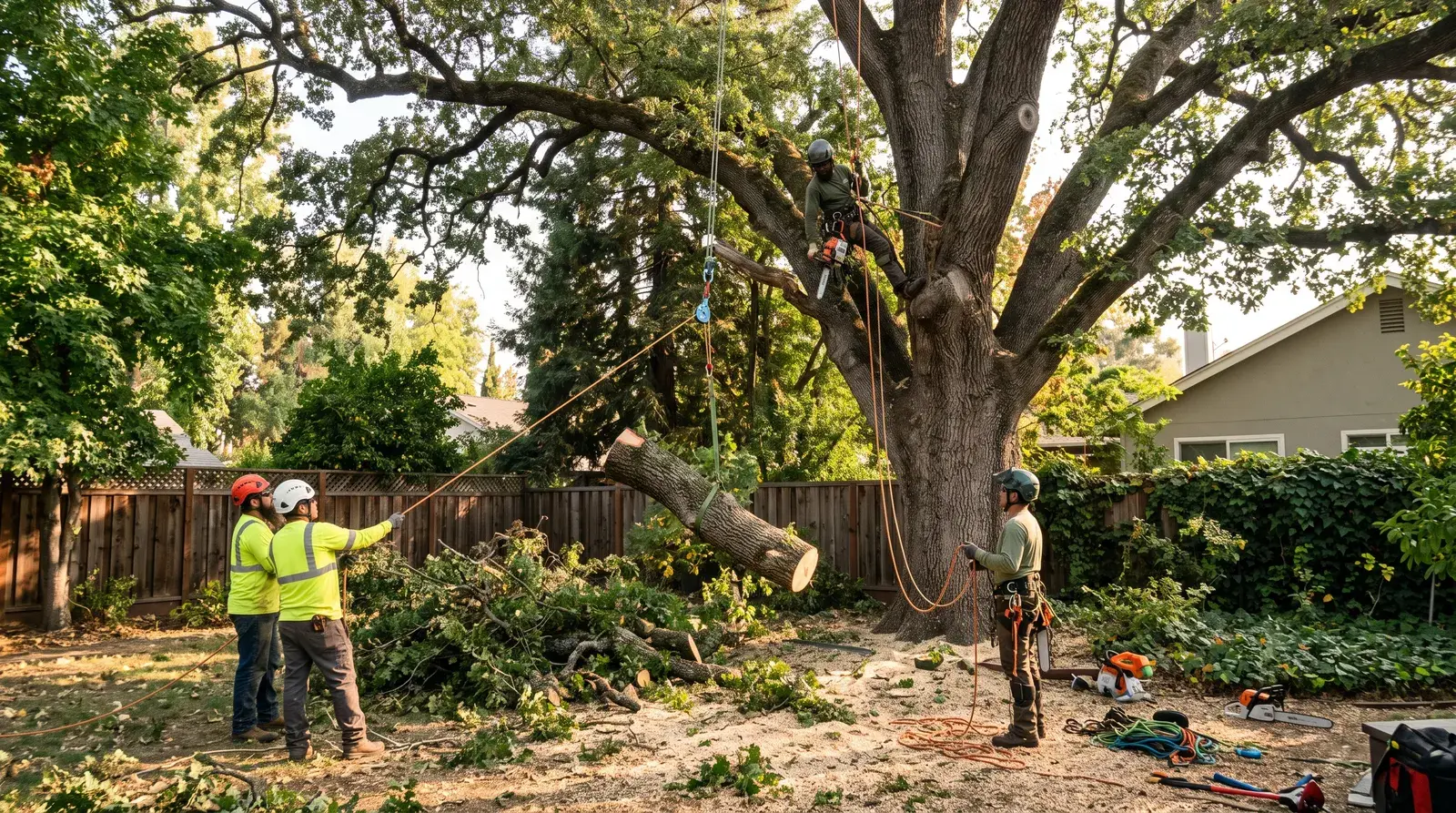
Most Citrus Heights lots are quarter-acre or smaller, fenced on three sides, with the biggest tree in the backyard. That geometry decides the method: there is no room to fell a 50-foot tree whole, so nearly everything comes down in rigged pieces.
- Backyard trees off Greenback Lane and Sunrise Boulevard typically mean gate access only — logs get carried or wheeled out, not driven out.
- Limbs over rooflines, patio covers, and pools are roped down on lowering lines, one piece at a time.
- Fence-line trees shared with a neighbor get scoped from both sides so nothing lands where it shouldn't.
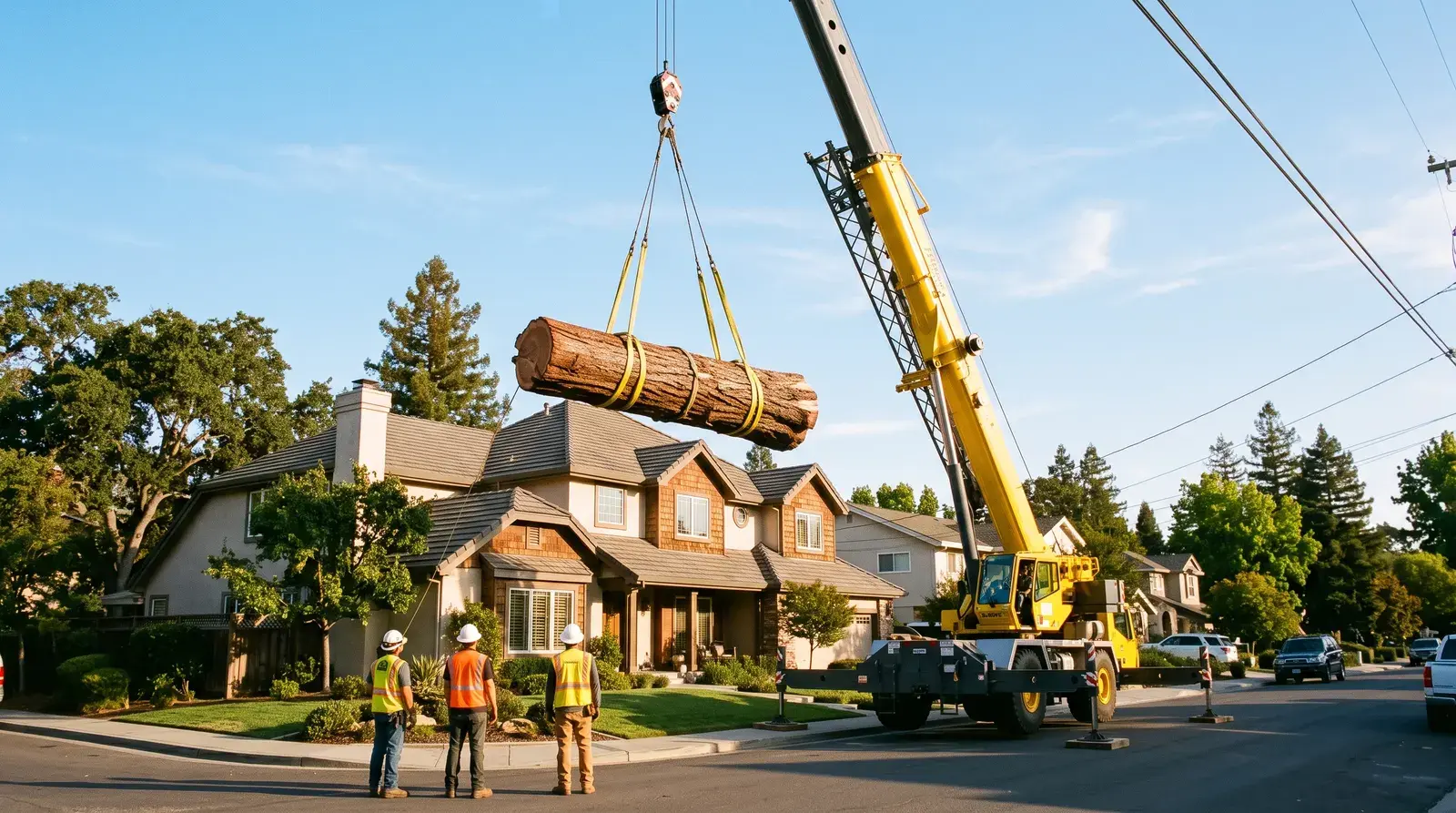
- Where a tree is too decayed to climb safely, we bring an aerial lift or quote a crane pick from the street.
The Trees We Remove Most in Citrus Heights
A handful of species generate most removal calls here, and they map directly to when the neighborhoods were built. Trees planted in 1965 are now sixty years old, and several of the popular choices from that era age badly.
- Modesto ash — the signature mid-century street and yard tree, now brittle, decay-prone, and the most common storm failure in the city.
- Fence-line privacy plantings — redwoods, Monterey pines, and Leyland-type cypress set a few feet off the property line in the 70s, now oversized, heat-stressed, and dropping deadwood.
- Valley oak and interior live oak — usually removed only when dead or structurally failed, and only after the permit question is answered.
- Camphor — dense canopies and aggressive surface roots that heave driveways and sewer laterals in older sections near San Juan Avenue.
- Ornamental pear — short-lived, split-prone at the trunk union, and frequently down after a wet winter windstorm.
Tree Removal in Citrus Heights — free, site-specific estimates.
Permits: Citrus Heights Has Its Own Tree Rules
Citrus Heights incorporated in 1997 and adopted its own tree preservation ordinance — it is not covered by Sacramento County rules or City of Sacramento rules. Native oaks and other protected trees can require a city permit before removal, so verify before you cut.
The practical rule: assume any large native oak is protected until the City of Citrus Heights confirms otherwise, and treat trees in the public strip along the street as a separate question from trees on your lot. Dead and clearly hazardous trees usually have a faster path, but the city still wants documentation. We flag the permit question on every estimate, photograph the tree's condition, and can provide an arborist report when the application asks for one. Losing a week to paperwork beats a code violation and a replacement-planting order.
Need tree removal in Citrus Heights?
Share the address and project details — we'll come back with a scoped, site-specific estimate.
What Tree Removal Costs in Citrus Heights
As broad regional figures, most Sacramento-area removals run $500–$2,500, and large or crane-assisted jobs can exceed $5,000–$10,000+. Citrus Heights jobs often land mid-range because tight access adds labor even on moderate-size trees.
Treat those numbers as orientation only. Every quote we give is free, written, and based on a site visit, not a photo.
- A small ornamental pear in an open front yard sits at the low end.
- A 50-foot fence-line redwood between two houses is a full day of rigging — expect the middle of the range or above.
- A dead Modesto ash over the roof costs more than a live one, because decayed wood forces slower, more conservative rigging.
- Stump grinding, firewood bucking, and haul-off are separate line items — ask for all of them on one written estimate.
The same crew from estimate to cleanup.
No juggling separate contractors for one tree. Tell us the address and what you're dealing with, and we'll come back with a written, site-specific number.
- Removal, trimming, stumps, and cleanup handled by one crew
- Free, site-specific estimates — priced to your tree, not a flat rate
- Sacramento, Placer, El Dorado, and Yolo counties
Storm Season Is When Citrus Heights Trees Fail
The failure pattern here is predictable: saturated soil in December through February, a strong south wind, and sixty-year-old ash and pines let go. If a tree leaned, cracked, or dropped a big limb last winter, get it assessed before the next storm — removal on your schedule is cheaper and safer than removal off your roof.
Related guides
Do You Need a Permit to Remove a Tree in Sacramento?
Which Sacramento trees need a removal permit, how city and county rules differ, and how to check before the saw comes out.
How Much Does Tree Removal Cost in Sacramento? (2026)
Typical 2026 Sacramento tree removal price ranges by tree size, the factors that move the number, and how to read a quote before you sign it.
9 Signs a Tree Needs to Come Down
Nine warning signs a tree is hazardous or dying — and when removal is safer than trying to save it.
What tree removal costs — and what Citrus Heights allows
Regional ranges, local permit rules, and the alternatives worth weighing before tree removal in Citrus Heights.
Emergency Tree Service Cost in Sacramento (2026)
Regional range $800–$8,000 — and what moves the number on a real job.
Do You Need a Tree Removal Permit in Citrus Heights?
Where Citrus Heights draws the line before a tree comes down, and who to check with.
Tree Pruning vs. Removal: When to Save a Tree and When to Take It Down
Pruning or Removal — how to tell which one the tree actually needs.
Tree Service in Sacramento County, CA
Tree work in Sacramento County ranges from removing aging valley oaks in East Sacramento to grinding stumps on new-buil…
Crane-Assisted Tree Removal Cost in Sacramento (2026)
Regional range $2,500–$12,000 — and what moves the number on a real job.
Do You Need a Tree Removal Permit in Folsom?
Where Folsom draws the line before a tree comes down, and who to check with.
Want a sense of the work first? See the kinds of tree removal jobs we take on and who shows up to do them.
Frequently asked questions
Do I need a permit to remove a tree in Citrus Heights?
Sometimes. Citrus Heights is an incorporated city with its own tree preservation ordinance, separate from Sacramento County's. Native oaks and other protected trees can require a city permit before removal, and street-strip trees are treated differently from yard trees. Dead or hazardous trees usually have a faster path but still need documentation. We check the ordinance question during the free estimate and point you to the city's current application if one applies.
How much does tree removal cost in Citrus Heights?
Most removals in the Sacramento region run $500–$2,500 as a broad range, with large or crane-assisted jobs exceeding $5,000–$10,000+. Citrus Heights jobs often price mid-range because backyard access on fenced 1960s lots adds labor — every log comes out through a gate. Size, species, decay, and what sits under the canopy drive the final number, so we quote from a site visit. Estimates are free.
Can you remove a fence-line tree shared with my neighbor?
Yes, and it is one of our most common Citrus Heights calls — privacy redwoods, pines, and cypress planted on or near property lines in the 70s. If the trunk straddles the line, both owners generally need to agree to removal, so sort that out first. We scope the job from both sides, protect both yards during rigging, and can put the condition of the tree in writing if the neighbors want documentation.
My Modesto ash keeps dropping limbs. Remove it or trim it?
Depends on the trunk. Modesto ash are aging out across Citrus Heights, and once the main stems show decay pockets or large seams, trimming only postpones the failure — removal is the honest recommendation. If the structure is still sound, a proper crown reduction can buy years of safe life. We tell you which one you have during the estimate rather than defaulting to the bigger ticket.
Do you haul everything away, and can you grind the stump too?
Haul-off of brush and trunk wood is included in removal quotes unless you want firewood or chips left. Stump grinding is a separate line item — standard grinds run 8–12 inches below grade, deeper if you plan to replant or pour concrete over the spot. On tight Citrus Heights lots we use a narrow-access grinder that fits through standard gates. Ask for the removal and grinding numbers on the same estimate.
What tree service does 916 Trees provide in Citrus Heights?
Removal, trimming, stump grinding, and ongoing tree care for the aging Modesto ash, valley oaks, and fence-line privacy trees common on Citrus Heights' 1960s and 70s tract lots. Most jobs start as a removal-or-trim question — we tell you honestly which one your tree needs during a free, on-site estimate, then handle the permit check, the rigging, and full cleanup in one visit. See tree trimming in Citrus Heights if the tree just needs pruning instead of coming out.