
A Master-Plan Canopy Outgrowing Its Design
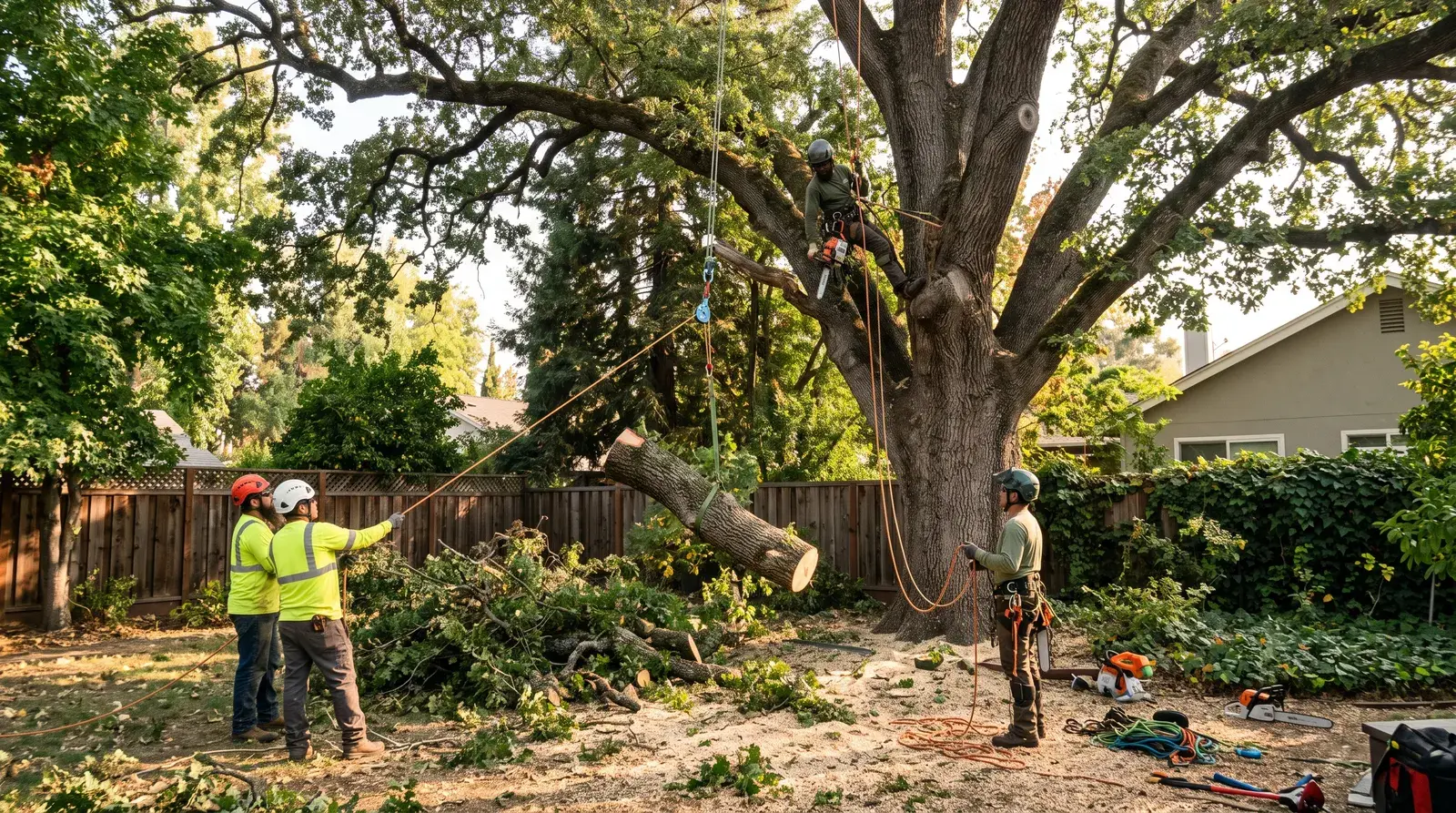
Gold River was built with trees as a design element — planted at spacing, species, and scale that made sense for 1980s landscaping standards. The community is now more than 40 years old, and the trees have followed their own biology, not the original plan.
- Valley oaks and native species planted along the parkway buffer and open-space corridors have matured into large, significant trees well within range of Sacramento County's native oak protections.
- Ornamental trees — liquid amber, ornamental cherry, Bradford pear, Chinese pistache — were placed in narrow planting strips and courtyard beds where root systems and canopy spread now conflict with hardscape and SMUD utility runs.
- Privacy screens that were 6-foot shrubs at planting now reach 30 to 45 feet, pressing against fences, overhanging rooflines, and shading out yards that were designed to be open and sunny.
- Gold River's winding road alignments and shared-landscape easements mean that what looks like your tree may sit in a common-area corridor governed by the master association, not your lot.
- SMUD serves Gold River, and utility-zone line clearance is the utility's responsibility in its own right-of-way — but conflict between a mature planned tree and a SMUD line still affects working access and removal logistics.
HOA Process: Architectural Approval Before the Cut
The Gold River Community Association — with sub-associations in several of the community's residential pods — requires architectural review before significant changes to any landscape visible from the street, a common area, or shared open space. Tree removal typically qualifies. This is a separate approval from any Sacramento County ordinance and runs on its own timeline.
- Submit the removal request to the association's architectural review committee before work begins — an after-the-fact approval is harder to obtain and may come with a compliance notice regardless of condition.
- Common supporting materials include a written reason for removal (hazard, disease, structural failure, fence conflict) and sometimes a replacement planting commitment.
- Trees on HOA common land — corridor plantings, street medians, shared open-space buffers along the American River Parkway edge — are the association's responsibility, not the adjacent homeowner's.
- Sub-associations within Gold River can have more specific landscape standards than the master HOA; confirm which body controls your specific parcel before submitting an application.
- 916 Trees can supply written scope, dated condition photos, and a plain-language description of the tree's structural problem to support an HOA architectural submission — the review committee needs to see why, not just what.
Tree Removal in Gold River — free, site-specific estimates.
Sacramento County Native Oak Protections
Gold River is unincorporated Sacramento County — it has no city hall of its own and is not governed by Rancho Cordova's or Sacramento's municipal codes. Tree permit authority for unincorporated parcels rests with Sacramento County, which has adopted protections for native oaks on private land in the unincorporated area.
- Native valley oak, blue oak, Oregon white oak, and interior live oak are the species most likely to trigger county permit requirements — and valley oaks are present in Gold River's older open-space edges and parkway-buffer plantings.
- Protected oaks at or above the county's size thresholds generally require county review before removal on private property, even when the tree is in clear decline.
- Dead or hazardous trees typically have a faster path through the review, but documentation — photos of the decay, split leader, root plate failure, or structural defect — is still the right practice before a protected oak is felled.
- Street trees in the public right-of-way along Gold River's roads are county-managed, not homeowner-managed, regardless of whose lot they front — contact Sacramento County's urban forestry program if a public street tree is the problem.
- We check the Sacramento County ordinance question on every Gold River estimate and tell you plainly whether a county permit conversation applies to your tree before any plan is made.
American River Parkway Adjacency
Gold River's western and southern edges border the American River Parkway — one of the longest urban river parkways in the country. Properties near this edge sit adjacent to riparian vegetation managed by Sacramento County Regional Parks, and some Gold River lots have trees growing near or at the parkway boundary.
Work near the parkway boundary moves carefully. Riparian corridors carry their own layer of environmental sensitivity, and trees with root systems extending toward the river bank or parkway buffer are worth verifying before any removal plan is set. Native species common to riparian edges — valley oak, Fremont cottonwood, box elder, Oregon ash — carry Sacramento County protections and may also fall under state resource agency notice requirements for work near regulated waterways. For Gold River homeowners with mature trees near the river side of their lots, we identify which agency has jurisdiction before the estimate goes final, so you know the full process before committing to a plan.
Need tree removal in Gold River?
Share the address and project details — we'll come back with a scoped, site-specific estimate.
What Tree Removal Costs in Gold River
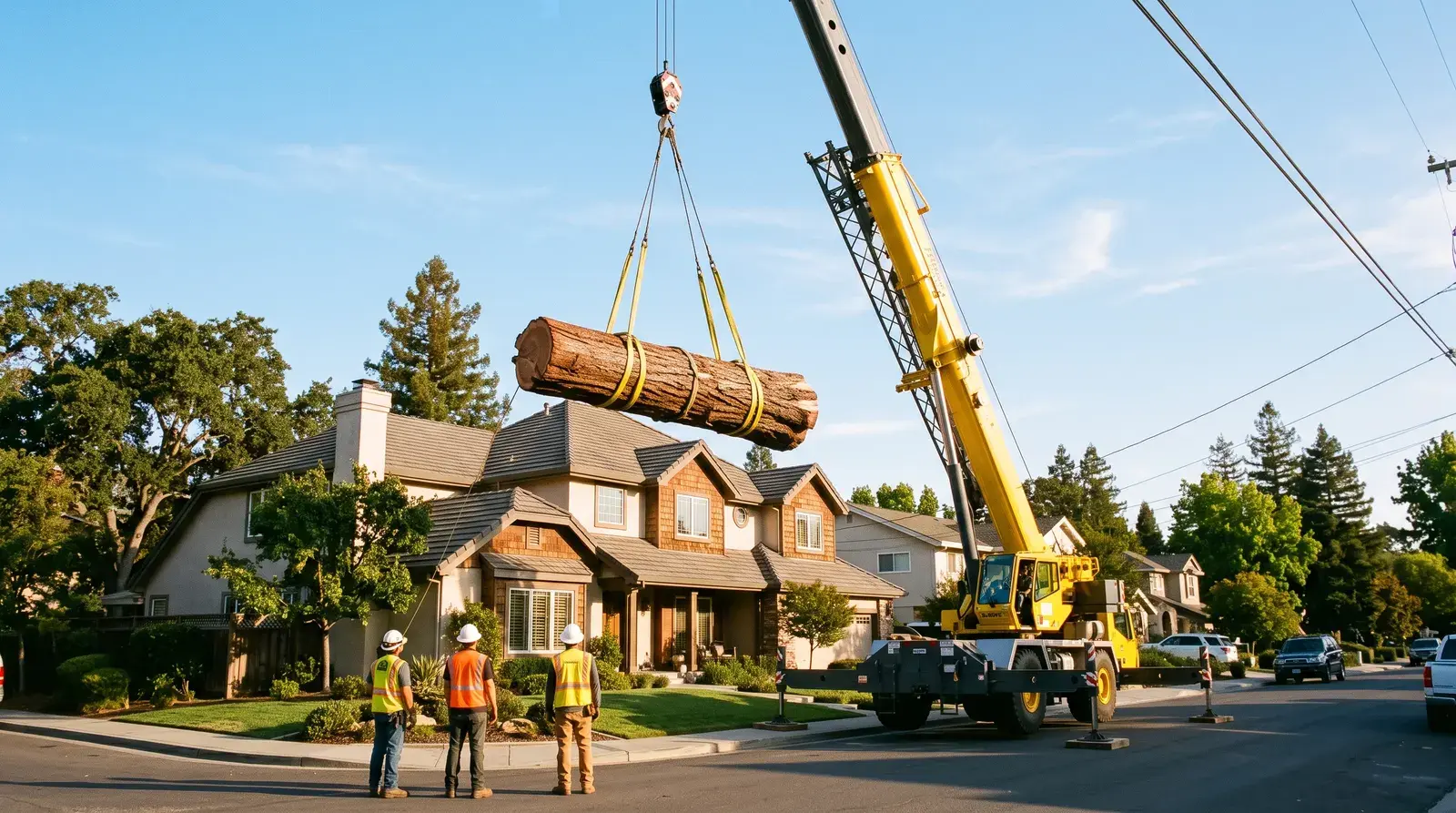
As broad regional figures, most residential removals in the Sacramento area run $500–$2,500. Mature oaks, difficult access through Gold River's gated driveways or narrow planned-community road corridors, and trees requiring craned removal over structures push costs higher — often into multiple thousands.
- Tree size and species drive the baseline — a 40-year-old liquid amber is a different job from a 40-year-old valley oak growing in the same space.
- Access in Gold River's planned-community road network can be tighter than standard subdivision streets — winding private roads, limited staging areas, and gated entries affect what equipment reaches the site.
- Trees growing over rooflines, shared privacy walls, or the common-area fencing that defines a lot's rear boundary force slow, rigged sectional takedowns with more labor per foot of trunk.
- HOA-required replacement planting is a budget line when the architectural approval requires one — we can fold the replacement tree into the same mobilization as the removal and grind.
- Every estimate is free, based on a site visit, and includes debris haul-off unless you want chips or rounds left.
The same crew from estimate to cleanup.
No juggling separate contractors for one tree. Tell us the address and what you're dealing with, and we'll come back with a written, site-specific number.
- Removal, trimming, stumps, and cleanup handled by one crew
- Free, site-specific estimates — priced to your tree, not a flat rate
- Sacramento, Placer, El Dorado, and Yolo counties
Stumps, HOA Compliance, and Cleanup
In a master-planned HOA community, the cleanup after removal is part of the approval, not an afterthought. A visible flush-cut stump in a Gold River frontage strip can generate a follow-up compliance notice from the association. Settle the full scope before the crew arrives.
- Stump grinding runs 8–12 inches below grade standard — enough for sod, ground cover, or a planting bed — with deeper grinds available for hardscape or replanting.
- Front-yard and frontage-strip stumps in an HOA community should be ground and backfilled the same day; a visible stump in a Gold River frontage is the kind of detail that generates a letter.
- If the HOA required a replacement tree as a condition of approval, a same-visit grind-and-plant covers both requirements in one mobilization — cheaper than two trips and cleaner on the association's inspection.
- Call USA North 811 before grinding near easements or utilities; Gold River's planned infrastructure includes irrigation laterals that can run directly under old stump locations.
- We photograph the tree's condition before removal and the finished site afterward when an HOA compliance file or insurance claim needs documentation.
Related guides
Do You Need a Permit to Remove a Tree in Sacramento?
Which Sacramento trees need a removal permit, how city and county rules differ, and how to check before the saw comes out.
How Much Does Tree Removal Cost in Sacramento? (2026)
Typical 2026 Sacramento tree removal price ranges by tree size, the factors that move the number, and how to read a quote before you sign it.
9 Signs a Tree Needs to Come Down
Nine warning signs a tree is hazardous or dying — and when removal is safer than trying to save it.
What tree removal costs — and what Gold River allows
Regional ranges, local permit rules, and the alternatives worth weighing before tree removal in Gold River.
Emergency Tree Service Cost in Sacramento (2026)
Regional range $800–$8,000 — and what moves the number on a real job.
Do You Need a Tree Removal Permit in Roseville?
Where Roseville draws the line before a tree comes down, and who to check with.
Tree Pruning vs. Removal: When to Save a Tree and When to Take It Down
Pruning or Removal — how to tell which one the tree actually needs.
Tree Service in Sacramento County, CA
Tree work in Sacramento County ranges from removing aging valley oaks in East Sacramento to grinding stumps on new-buil…
Crane-Assisted Tree Removal Cost in Sacramento (2026)
Regional range $2,500–$12,000 — and what moves the number on a real job.
Do You Need a Tree Removal Permit in Folsom?
Where Folsom draws the line before a tree comes down, and who to check with.
Want a sense of the work first? See the kinds of tree removal jobs we take on and who shows up to do them.
Frequently asked questions
Do I need HOA approval to remove a tree in Gold River?
Almost certainly, if the tree is visible from the street, adjacent to shared open space, or in a frontage planting strip — which covers most trees in Gold River's planned layout. The Gold River Community Association and relevant sub-associations require architectural review for significant landscape changes, and tree removal typically qualifies. Submit before the work, not after; an after-the-fact approval is harder and may still result in a compliance notice. Trees on HOA common land — corridor plantings, median trees, open-space buffer plantings — are the association's to manage, not the adjacent homeowner's. We can provide written scope and dated condition photos to support your HOA submission.
Gold River is unincorporated — which tree ordinance governs removal?
Sacramento County's. Gold River is not part of Rancho Cordova, Sacramento, or any incorporated city — it is unincorporated Sacramento County, which means the county's tree protection ordinance governs native oak removal on private property. The City of Rancho Cordova, which borders Gold River to the east, has no jurisdiction over trees inside Gold River's boundaries. For trees near the American River Parkway edge, Sacramento County Regional Parks may also have a say on work near the parkway corridor. We check the applicable ordinance at every Gold River estimate — it is the first question on every job.
How much does tree removal cost in Gold River?
Most residential removals run $500–$2,500 as a broad regional range. Mature oaks and planned-canopy trees that have grown to significant size run toward the upper end and past it. Trees requiring crane access or rigging over structures can exceed $5,000–$10,000+. Gold River's winding road network and gated access can add logistics cost compared to open-access residential jobs. HOA-mandated replacement trees add to the budget when the architectural approval requires one. Every estimate is free and based on a site visit — not a photo or a drive-by assessment.
My tree is near the American River Parkway boundary — are there extra rules?
Possibly, and worth checking before any plan is finalized. Properties at Gold River's western and southern edges border the parkway corridor, and trees near that boundary — especially native species like valley oak, cottonwood, or Oregon ash with roots extending toward the river bank — can trigger Sacramento County resource agency notification requirements on top of the standard county oak ordinance and HOA process. We identify the parkway proximity question at the estimate for any Gold River lot near the river edge and tell you which agencies need to be in the loop before the tree comes down.
The tree is on HOA common land, not our lot. Can you help?
That conversation runs between you and the association, but we can support the process. Trees on HOA common land — corridor plantings, median trees, shared buffer zones along Gold River's open-space edges — require the association's work order, not the homeowner's. If you are reporting a hazardous or dead tree in a common area, we can provide a written condition assessment and dated photos to support your request to the association's board or management company. When the HOA is ready to proceed, we are available to quote the work directly with them.