
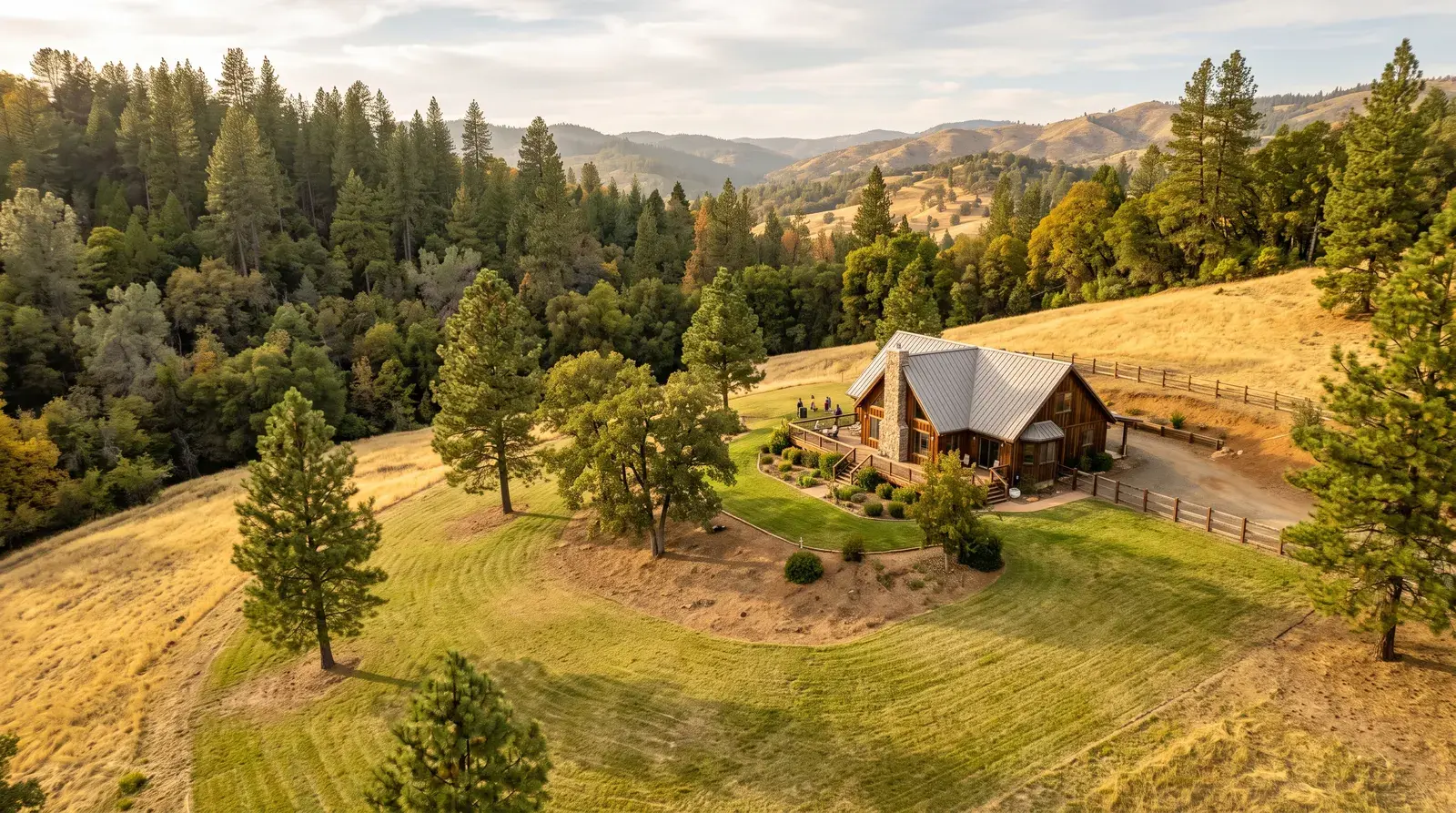
The PRC 4291 Zones, In Plain Terms
California Public Resources Code 4291 requires defensible space around structures in fire-hazard areas, organized in zones measured from the building outward. The logic is simple: starve fire of continuous fuel as it approaches the house, and deny embers an easy catch when they land.
One honest caveat that belongs on every defensible space page: this work reduces fuel and improves a home's odds. It does not fireproof anything, and nobody doing this work honestly will tell you otherwise.
- Zone 0 (0–5 ft, phasing in) — the ember-resistant zone: nothing ignitable against the structure. No bark mulch beds against siding, no junipers under windows, no firewood on the porch, nothing under decks.
- Zone 1 (0–30 ft) — lean, clean, and green: dead vegetation and debris removed, tree limbs kept clear of the roof and 10 feet from the chimney, plants low, spaced, and irrigated.
- Zone 2 (30–100 ft or to the property line) — reduced fuel: annual grass mowed short, brush thinned into separated islands, ladder fuels removed under trees, and horizontal and vertical spacing between fuels — more spacing on steeper slopes.
- Verify current specifics at readyforwildfire.org — spacing tables and Zone 0 rollout details are maintained there.
Why the Foothills Are the Front Line
The Sierra foothill belt of the Sacramento region — Auburn, Colfax, Newcastle, and Penryn in Placer County; Placerville, Pollock Pines, Cameron Park, and Shingle Springs in El Dorado County — sits in mapped high fire hazard severity zones. Homes here are surrounded by exactly the fuels PRC 4291 was written for.
- Fuel mix — blue oak and interior live oak woodland lower down, transitioning to ponderosa pine, black oak, and cedar with manzanita and whiteleaf ceanothus understory around Placerville and Pollock Pines.
- Bark beetle mortality — drought-stressed ponderosa pines killed by beetles are standing dead fuel and inspection flags; they're the first removals on most parcels.
- Slope — many foothill homes sit above or below steep ground, and fire moves fastest upslope. Steeper slopes require wider fuel spacing under the Zone 2 standard.
- Canyon corridors — the American River canyon communities around Auburn and Colfax see wind-driven alignment that makes defensible space work more than a paperwork exercise.
- Inspection reality — CAL FIRE and local fire districts actively inspect in these zones, and insurers increasingly require evidence of compliance.
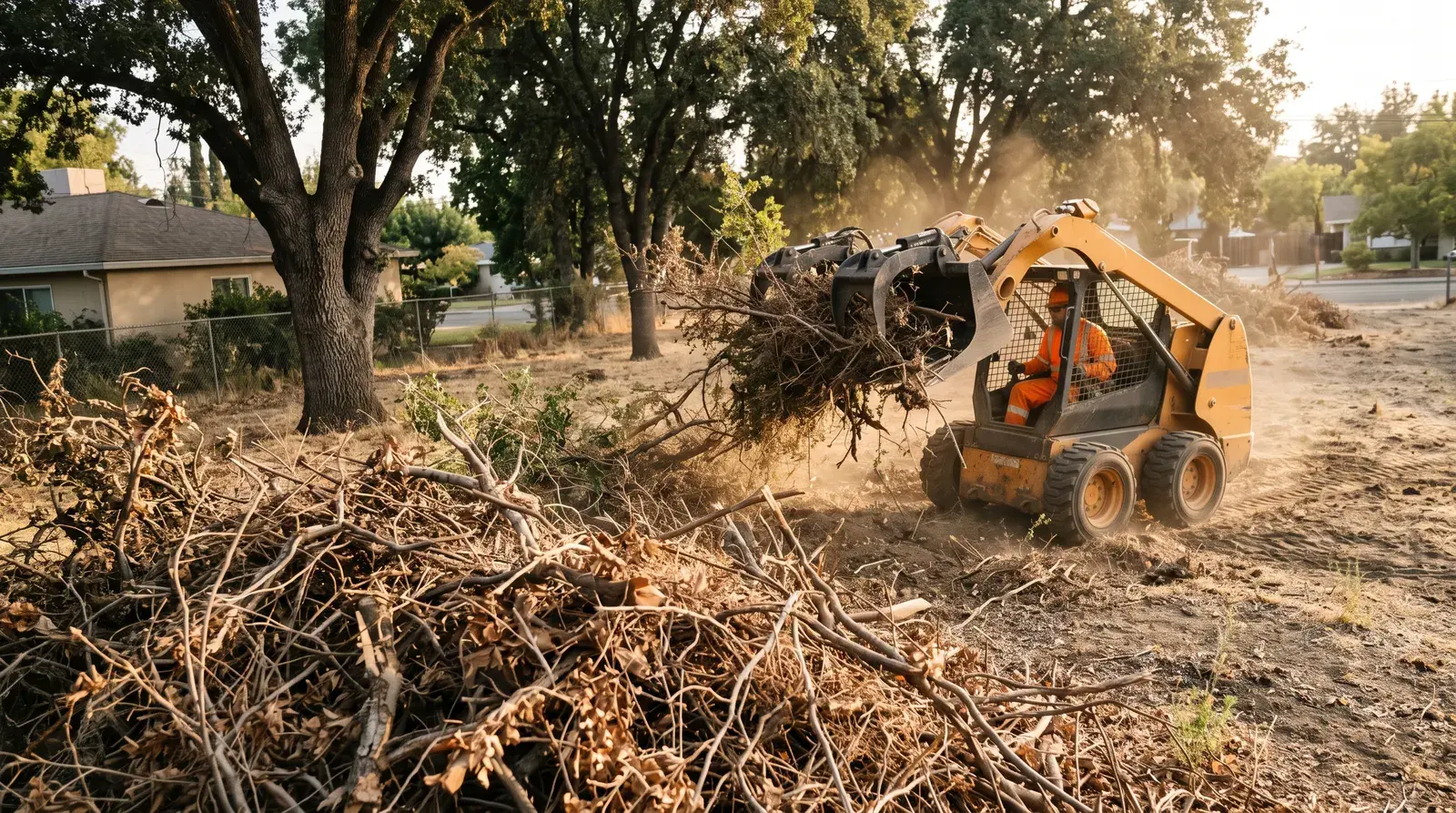
Defensible Space Clearing across Sacramento, Placer, El Dorado, and Yolo counties.
What the Work Actually Involves
Defensible space clearing is tree work, brush work, and cleanup applied in a specific pattern around the structure. We start at the house and work outward, because the fuels closest to the walls matter most.
- Limbing up — tree canopies raised (typically to 6–10 feet, less on small trees) so surface fire can't climb, and limbs cut back from the roofline and 10 feet from the chimney.
- Ladder fuel removal — brush, small conifers, and low growth beneath tree canopies removed to break the ground-to-crown connection.
- Thinning and spacing — dense stands opened up so canopies and brush islands stand separated, with wider spacing on slopes.
- Dead fuel out — standing dead trees, beetle-killed pines, dead shrubs, downed limbs, and accumulated litter removed from both zones.
- Grass and fine fuels — annual grasses cut short through Zone 2 before they cure into flashy fuel.
- Debris handling — material chipped on-site or hauled off; slash piles left on the ground defeat the purpose of the job.
Insurance Inspections: Preparing for the Walk-Around
For many foothill homeowners the pressure isn't a CAL FIRE inspection — it's the insurance carrier. Non-renewal notices and condition-of-coverage inspections are now routine in El Dorado and Placer counties, and vegetation is the item on the report you can actually fix.
- Work the inspector's list — limbs off the roof, clearance at the chimney, nothing dead inside 30 feet, no vegetation against walls, ladder fuels gone, Zone 2 mowed and spaced.
- Don't forget Zone 0 — combustible mulch against the foundation, stacked firewood on the deck, and shrubs under eaves are cheap fixes that show up on reports constantly. That same five feet is also where radiant heat loads onto glass, so if single-pane sashes are on your report too, AB 3074's Zone 0 rollout reaches glazing as well as vegetation — a glazier's scope rather than ours.
- Documentation — we can photograph the property after clearing so you have dated evidence of the work for your carrier, broker, or a FAIR Plan file.
- Timing — book ahead of your renewal or inspection date, not the week of; spring and early summer calendars fill fast in the foothills.
- No promises — clearing improves what an inspector sees; nobody can guarantee a carrier's underwriting decision, and you should walk away from anyone who claims they can.
Need defensible space clearing on your property?
Share the address and project details — we'll come back with a scoped, site-specific estimate.
Keep the Oaks, Manage the Fuel
Defensible space in oak country doesn't mean losing your oaks. Mature blue oaks and interior live oaks are relatively fire-resilient, legally protected in many jurisdictions, and worth keeping — the work is managing the fuel around and beneath them, not removing them.
- Native oaks are often protected — Sacramento County's ordinance covers native oaks in unincorporated areas, and Placer and El Dorado jurisdictions have their own review rules. Check before any oak removal, even for fire work.
- Under-canopy clearing — removing brush, litter, and ladder fuels beneath an oak does more for fire behavior than removing the tree, and it's what inspectors want to see.
- Prune in the dry season — native oaks should be pruned during dormancy or dry weather; wet-season cuts invite disease spread. Defensible space limbing schedules around that.
- Dead oaks are different — a standing dead oak inside the zones is fuel and a hazard; most jurisdictions have a faster path for documented dead-tree removal.
- Beetle-killed pines don't get the same grace — dead conifers come out, full stop.
Timing and Maintenance: Defensible Space Is Annual
Defensible space isn't a one-time project. The foothill grass crop cures every June, brush regrows, limbs drop, and litter accumulates — a parcel cleared to standard two years ago can fail an inspection today. The initial clearing is the expensive year; maintenance is cheap by comparison.
- Initial clearing — best done fall through late spring, when fire restrictions are loose, ground crews can burn less daylight on heat, and the work is finished before the grass cures.
- Late spring mowing — Zone 2 grass cut after the growth flush and before cure-out, the single most important annual task.
- Summer work — possible with spark-safe practices and red-flag awareness, and often necessary when inspection or insurance deadlines land mid-season.
- Annual walk-through — a yearly pass for new dead material, dropped limbs, regrown brush, and roof and gutter debris keeps the property at standard for a fraction of the initial cost.
- Bundle the parcel — many owners combine zone maintenance with broader brush clearing or lot work beyond 100 feet in one mobilization.
The same crew from estimate to cleanup.
No juggling separate contractors for one tree. Tell us the address and what you're dealing with, and we'll come back with a written, site-specific number.
- Removal, trimming, stumps, and cleanup handled by one crew
- Free, site-specific estimates — priced to your tree, not a flat rate
- Sacramento, Placer, El Dorado, and Yolo counties

What Defensible Space Work Costs
Cost tracks vegetation density, tree count, slope, and debris volume more than raw acreage — the zones only cover the first 100 feet, but what's standing in them varies enormously between a Cameron Park subdivision lot and a wooded Pollock Pines parcel.
Treat those as orientation, not a quote. Every estimate is free, written, and based on walking your zones with you — which is also when we'll tell you which items on the list you could handle yourself.
- Light maintenance — an already-managed property needing limbing, mowing, and dead-material removal often lands in the hundreds to low thousands.
- First-time clearing — parcels with years of deferred growth, heavy manzanita, ladder fuels, and dead pines run multi-day and cost accordingly.
- Tree removals — each dead or hazardous tree inside the zones is its own line item; beetle-killed pines near the house can need rigging or a lift.
- Slope and access — steep ground slows everything and moves the number up; drive-up access with room for a chipper moves it down.
- Chips vs. haul-off — chips spread on-site (kept away from the structure, per Zone 0 logic) cost less than hauling every branch off the hill.
Related services
Brush & Vegetation Clearing
Cutting back overgrown brush, weeds, and undergrowth for access, code compliance, and reduced fire fuel.
Lot & Land Clearing
Clearing trees, brush, and undergrowth from building sites and overgrown parcels — including ADU-prep tie-ins.
Tree Removal
Safe removal of hazardous, dead, or unwanted trees — including permit help, cleanup, and haul-off across the Sacramento region.
Related guides
California Defensible Space Requirements (Zones 0–2)
PRC 4291 defensible space zones explained — what to clear in Zone 0 (0–5 ft), Zone 1 (0–30 ft), and Zone 2 (30–100 ft), and what inspectors look for.
9 Signs a Tree Needs to Come Down
Nine warning signs a tree is hazardous or dying — and when removal is safer than trying to save it.
When to Trim Oak Trees in California
The best window to prune native California oaks, why dry-season timing cuts disease risk, and the pruning mistakes that shorten an oak's life.
Before you book defensible space clearing
What it runs, where permits bite, and how defensible space clearing stacks up against the alternatives.
How Much Does Tree Removal Cost in Sacramento? (2026)
Typical 2026 Sacramento tree removal price ranges by tree size, the factors that move the number, and how to read a quote before you sign it.
Do You Need a Tree Removal Permit in Auburn?
Where Auburn draws the line before a tree comes down, and who to check with.
Want to see what this looks like on a real property? Browse the defensible space clearing jobs we take on, or read how our crew scopes and prices work before you call anyone out.
Frequently asked questions
What are the defensible space zones under PRC 4291?
PRC 4291 sets two enforced zones around structures in California's fire-hazard areas. Zone 1, 0–30 feet from the home, is 'lean, clean, and green': dead vegetation removed, tree limbs clear of the roof and chimney, and plants kept low, spaced, and watered. Zone 2, 30–100 feet (or to the property line), is reduced fuel: grass cut short, brush broken into separated islands, ladder fuels removed, and spacing between tree canopies. An ember-resistant Zone 0 — the first 5 feet from the structure — is being phased in. Current details are at readyforwildfire.org.
Can defensible space work help with my homeowner's insurance?
It's one of the few fire-risk factors you directly control. Foothill homeowners in El Dorado and Placer counties are seeing non-renewals and inspection demands, and insurers and their inspectors look at the same things a defensible space inspection does: limbs over the roof, brush against walls, ladder fuels, and continuous fuel beds. We can't promise any insurance outcome — no one honestly can — but we clear to the PRC 4291 zone standards and can photograph the completed work so you have documentation for your carrier or broker.
Do my trees need to be removed for defensible space?
Usually not. PRC 4291 is about fuel arrangement, not clear-cutting — healthy, well-maintained trees can stay in both zones. What matters is limbing them up so ground fire can't climb (removing ladder fuels), keeping limbs off the roof and away from the chimney, and creating spacing between canopies in Zone 2, especially on slopes. Trees that do typically come out are dead ones, dying bark-beetle pines, and dense understory conifers growing beneath larger trees. We thin for survival odds, not for the biggest invoice.
I have a defensible space inspection coming — what will they look for?
Inspectors work the zones from the house outward: debris on the roof and in gutters, vegetation touching the structure, dead plants and dry grass inside 30 feet, limbs within 10 feet of the chimney, ladder fuels under trees, and whether Zone 2 fuel is mowed, spaced, and free of dead material. Prep is straightforward if you work the same list before they do. We do exactly that — clear to the zone standards ahead of your inspection date — and a follow-up visit is rarely needed if the first pass was honest.
How much does defensible space clearing cost?
It scales with vegetation density, slope, tree work, and debris handling. A maintained parcel needing a tune-up — limbing, light thinning, dead material out — sits at the low end, often in the hundreds to low thousands. A Pollock Pines or Colfax parcel that hasn't been touched in a decade, with heavy manzanita, ladder fuels, and dead pines, is a multi-day job that runs well beyond that. Slope raises cost; chipping on-site lowers it versus haul-off. Estimates are free and quoted from walking your ground.