
Colfax fuel: where oaks meet pines
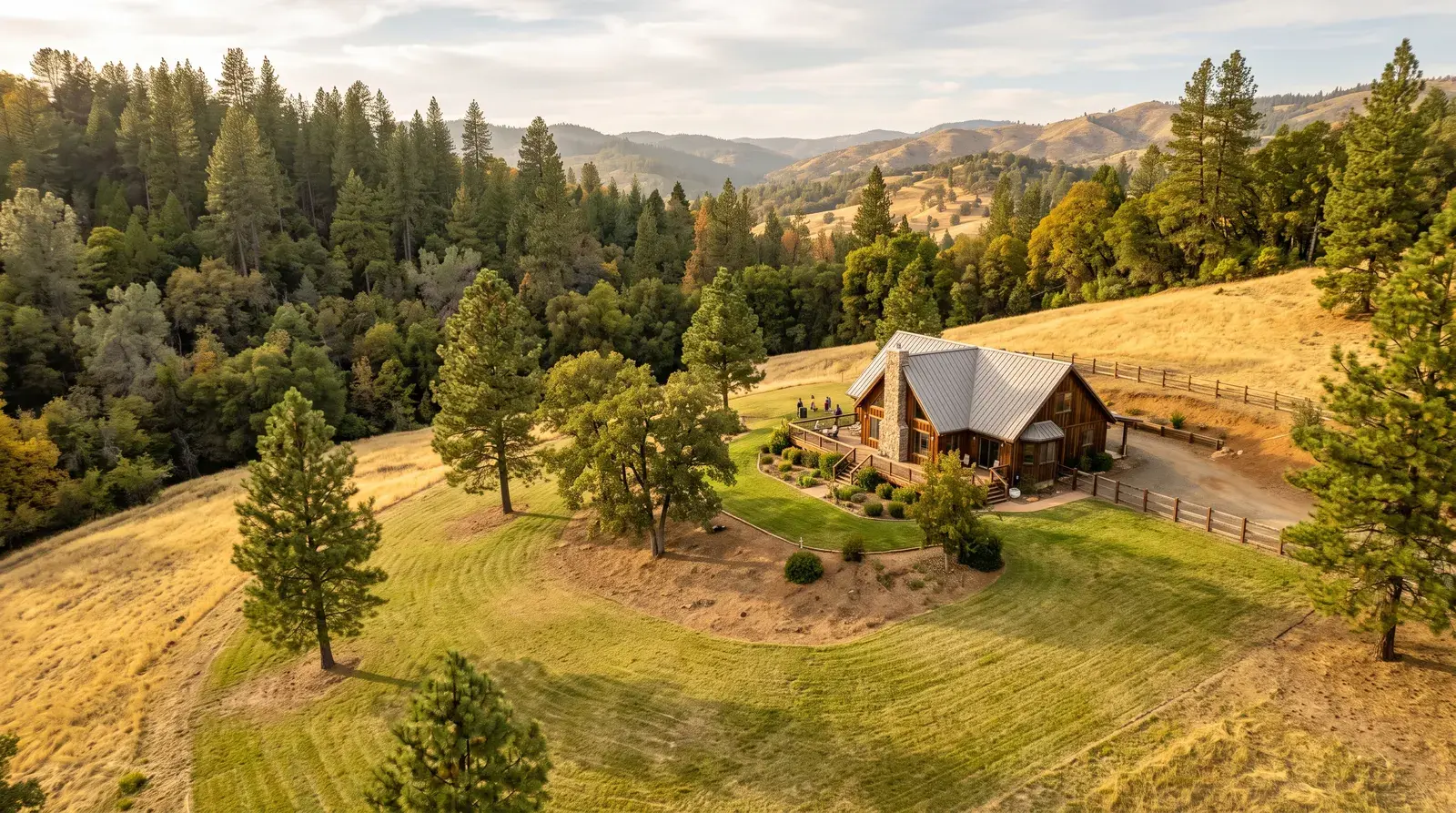
Colfax sits in the transition band where foothill oak woodland grades into Sierra conifer forest. That mix — pine crowns above, oak and brush below — builds a continuous fuel ladder from the ground into the canopy, which is exactly what defensible space work is designed to break.
- Ponderosa pine and gray pine dominate the overstory; gray pine in particular is resin-heavy, fast-burning, and drops big cones and limbs.
- Black oak and interior live oak fill the mid-story — live oak holds dense evergreen foliage low to the ground, feeding fire upward.
- Manzanita, whiteleaf brush, and Scotch broom form the understory layer that carries flame to the trees; broom is invasive and regrows aggressively.
- The 2021 River Fire near Colfax showed how fast this fuel mix moves — clearance in the first 100 feet is what gives a house a chance.
What PRC 4291 requires around a Colfax home
California PRC 4291 requires defensible space out to 100 feet from structures (or the property line). Zone 1 is the first 30 feet, Zone 2 runs 30-100 feet, and an ember-resistant Zone 0 covering the first 5 feet is being phased in. On a wooded Colfax lot the checklist is concrete.
- Zone 1: dead trees and limbs out, crowns separated from the roofline, needle and leaf litter cleared, brush removed or islanded with wide separation.
- Zone 2: limbs pruned up 6-10 feet to kill the fuel ladder, brush broken into separated clumps, and spacing kept between tree crowns — wider on slopes.
- Zone 0 (0-5 feet): nothing combustible against the structure — no juniper foundation plants, wood mulch, or stacked firewood under the deck.
- Full current standards are at readyforwildfire.org; Placer County and Cal Fire conduct inspections in the Colfax area.
Defensible Space Clearing in Colfax — free, site-specific estimates.
Dead and beetle-hit pine removal
Bark beetles follow drought, and Colfax's pines take the hit in dry years — western pine beetle in ponderosa, engraver beetles in stressed tops. A dead pine within 100 feet of a house fails the defensible space standard and gets more dangerous and more expensive to remove the longer it stands.
- Fading or red crowns, pitch tubes, and boring dust at the base are the tell-tale signs; once the crown is fully red the tree will not recover.
- Gray pines deserve extra attention — their long, heavy limbs and leaning habit make failures dramatic, and their pitch content makes them burn intensely.
- Dead trees that can strike the house, driveway, propane tank, or PG&E lines get priority; utility-adjacent removals are coordinated so nobody works near energized lines.
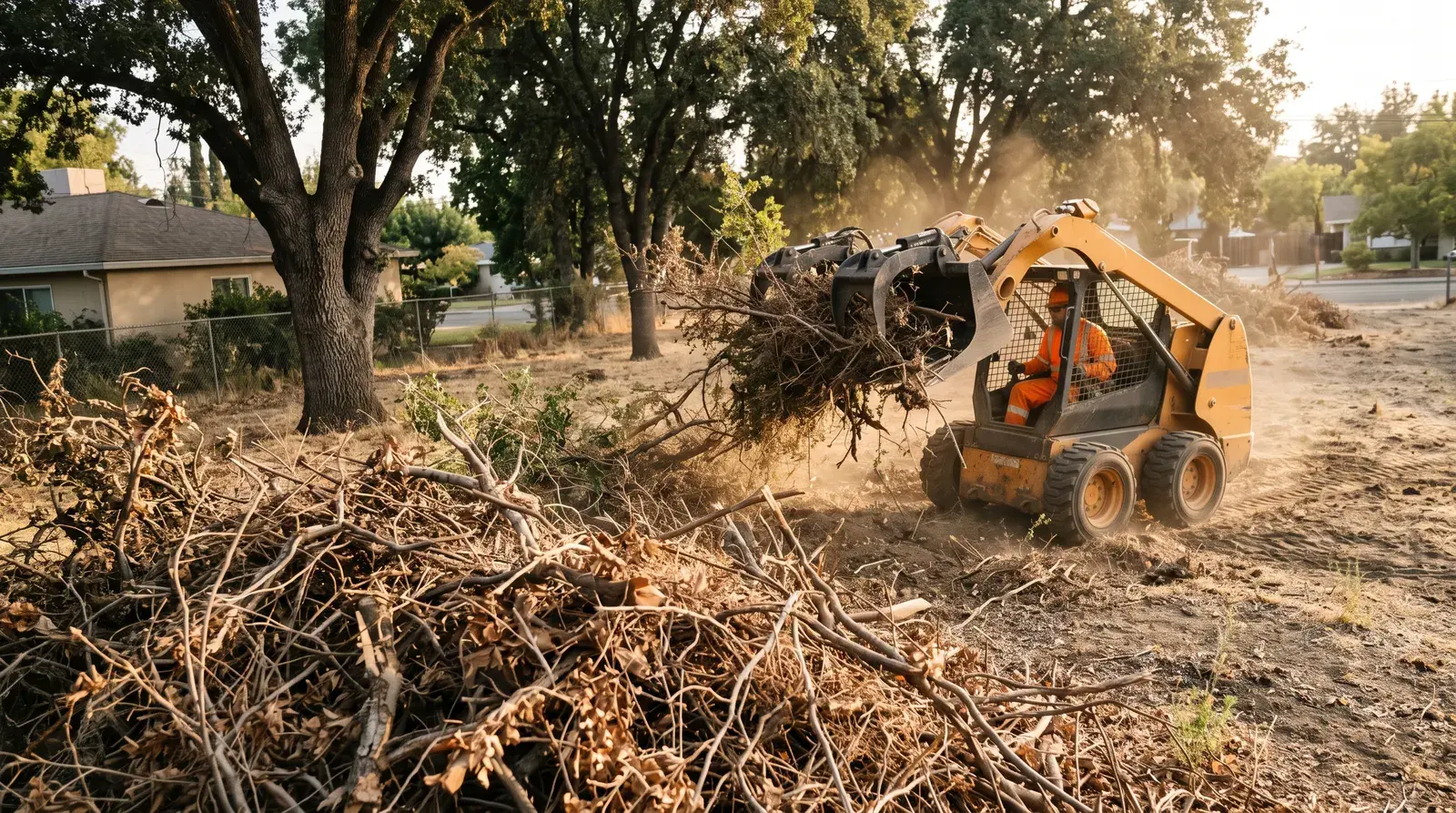
- Removal, bucking, chipping, and haul-off are scoped in one visit so you are not paying for a second mobilization.
Steep lots, snow years, and winter breakage
At 2,400 feet Colfax catches snow most winters, and heavy wet snow on top of the canyon winds that funnel up from the Bear River and North Fork American River breaks limbs and tops every year. Storm damage left hanging in the canopy is both a strike hazard and next summer's dead fuel.
- We remove broken hangers and snapped tops during clearance work — they count against your defensible space inspection either way.
- Slope matters: fire runs uphill, so downhill-side clearance on canyon-edge parcels should exceed the flat-ground minimums.
- Long horizontal pine limbs over roofs and parking areas get cut back before they fail under snow load, not after.
Need defensible space clearing in Colfax?
Share the address and project details — we'll come back with a scoped, site-specific estimate.
Driveway clearance and access on rural parcels
Many Colfax properties sit off long gravel drives climbing from Canyon Way, Rising Sun, or the roads out toward Iowa Hill. Fire-safe standards cover the driveway too — if an engine cannot reach the house, the rest of the clearance matters a lot less.
- Target roughly 10 feet of horizontal and 15 feet of vertical clearance along the full driveway so apparatus can get in and residents can get out.
- Overhanging live oak and pine limbs along drives are limbed back; brush at pull-outs and turnarounds is cleared.
- Tight-access parcels may mean compact equipment or hand crews — that is priced into the estimate up front.
The same crew from estimate to cleanup.
No juggling separate contractors for one tree. Tell us the address and what you're dealing with, and we'll come back with a written, site-specific number.
- Removal, trimming, stumps, and cleanup handled by one crew
- Free, site-specific estimates — priced to your tree, not a flat rate
- Sacramento, Placer, El Dorado, and Yolo counties

Cost and insurance realities in Colfax
Defensible space cost tracks brush density, slope, and dead tree count. As a broad regional guide, first-pass clearing on a typical wooded foothill acre commonly runs in the low thousands, with each significant dead pine removal adding several hundred to a few thousand dollars depending on size and what it can hit; large or technical removals can run higher. Insurance is the other driver: carriers along the I-80 foothill corridor increasingly require documented clearance to write or renew policies, and the Placer County Resource Conservation District and local fire safe councils periodically run chipping or cost-share programs worth checking before you start. Estimates are free and site-specific — photos and a parcel number get the conversation started, but pricing is set on the ground.
Related guides
California Defensible Space Requirements (Zones 0–2)
PRC 4291 defensible space zones explained — what to clear in Zone 0 (0–5 ft), Zone 1 (0–30 ft), and Zone 2 (30–100 ft), and what inspectors look for.
9 Signs a Tree Needs to Come Down
Nine warning signs a tree is hazardous or dying — and when removal is safer than trying to save it.
When to Trim Oak Trees in California
The best window to prune native California oaks, why dry-season timing cuts disease risk, and the pruning mistakes that shorten an oak's life.
What defensible space clearing costs — and what Colfax allows
Regional ranges, local permit rules, and the alternatives worth weighing before defensible space clearing in Colfax.
Defensible Space Clearing Cost in the Sacramento Foothills (2026)
Regional range $1,000–$10,000 — and what moves the number on a real job.
Do You Need a Tree Removal Permit in Auburn?
Where Auburn draws the line before a tree comes down, and who to check with.
Tree Service in Placer County, CA
Placer County spans flat valley suburbia in Roseville and Rocklin and rises through the oak-woodland foothills to ponde…
How Much Does Tree Removal Cost in Sacramento? (2026)
Typical 2026 Sacramento tree removal price ranges by tree size, the factors that move the number, and how to read a quote before you sign it.
Do You Need a Tree Removal Permit in Elk Grove?
Where Elk Grove draws the line before a tree comes down, and who to check with.
Want a sense of the work first? See the kinds of defensible space clearing jobs we take on and who shows up to do them.
Frequently asked questions
Is defensible space legally required in Colfax?
Yes on most parcels. Colfax and the surrounding Placer County foothills fall largely within High and Very High Fire Hazard Severity Zones, where PRC 4291 requires 100 feet of defensible space around structures. Cal Fire and local fire agencies inspect in the area, and failed inspections can bring compliance orders. Insurance carriers frequently require the same clearance regardless of inspection status, so the work usually pays for itself in insurability.
Do I need a permit to remove trees on my Colfax property?
For most single-family residential parcels in and around Colfax, removing dead, dying, or hazardous trees for defensible space does not require a permit. Placer County's tree ordinance mainly regulates removals tied to development and grading, and larger-scale conifer harvesting can trigger state forestry rules. We flag anything that needs review before cutting — verify specifics with the City of Colfax or Placer County for your parcel.
What is the best time of year for defensible space work in Colfax?
Late fall through spring is ideal. The ground is workable, fire restrictions on equipment use have not kicked in, and the work is done before grasses cure in early summer. Native oaks in the mix are also best pruned in the dry season or dormancy rather than with heavy summer cuts. If you are starting in summer, work can still proceed — crews just adjust for red-flag days and hot-saw restrictions.
Should I remove gray pines near my house?
Often, yes. Gray pine (also called foothill or digger pine) is common around Colfax and is one of the worst trees to have close to a structure: it leans, sheds massive limbs and softball-sized cones, carries flammable pitch throughout, and torches readily in a fire. A healthy gray pine well away from the house can stay, but one overhanging a roof, driveway, or propane tank is usually worth removing during clearance work.
Can you clear manzanita and Scotch broom, or just trees?
Both — brush is most of the fire problem on many Colfax lots. We cut and remove manzanita, whiteleaf brush, and Scotch broom as part of Zone 1 and Zone 2 work, then chip or haul the slash. Broom regrows from seed for years, so plan on follow-up passes; we can put properties on an annual maintenance cycle so the clearance you paid for does not grow back by next fire season.