
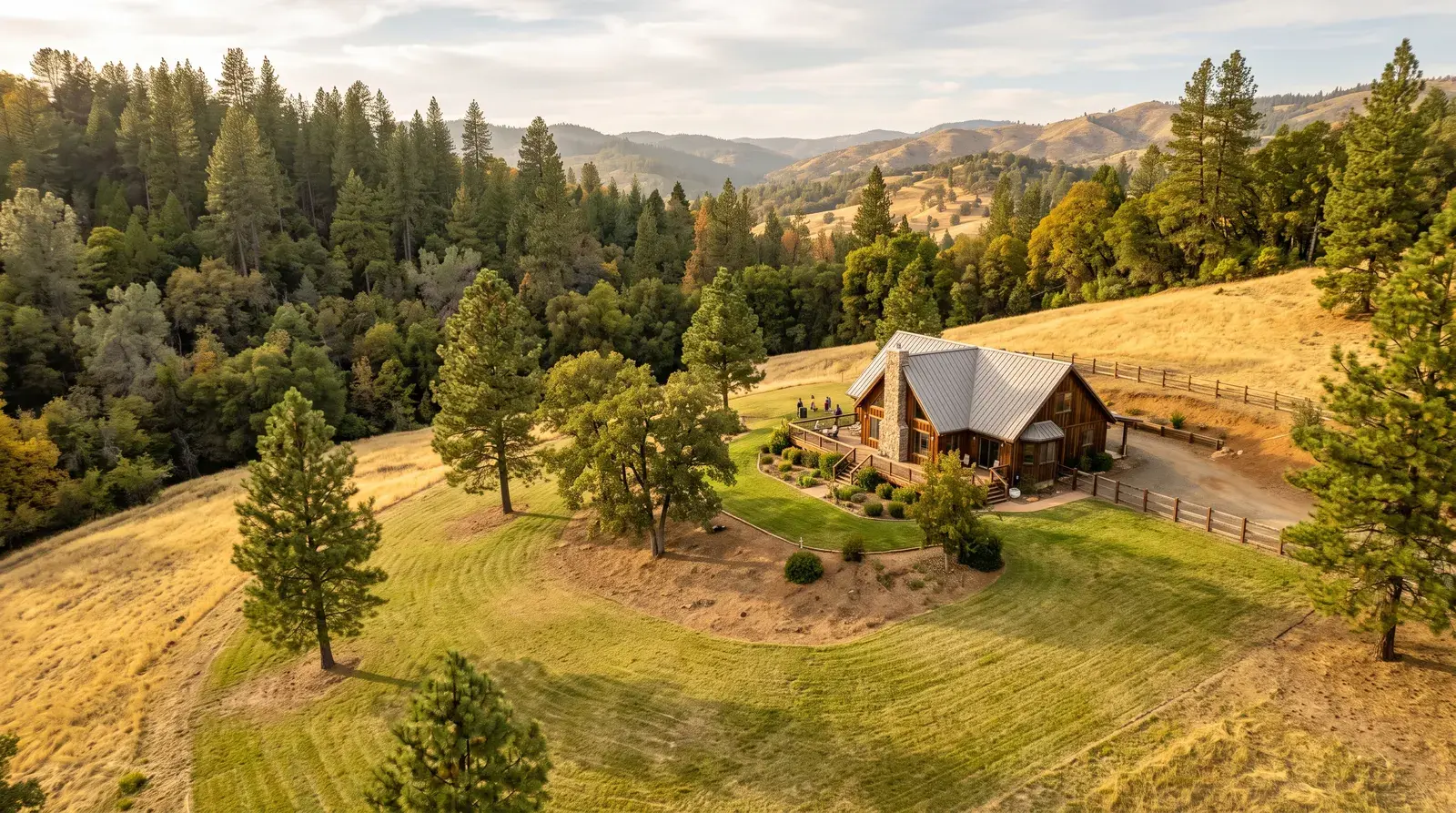
The PRC 4291 Zones, Applied to Cameron Park
State law measures defensible space outward from your structure: Zone 1 (0–30 ft) lean, clean, and green; Zone 2 (30–100 ft) reduced fuel; and an ember-resistant Zone 0 (0–5 ft) being phased in. Full current requirements are at readyforwildfire.org.
- Zone 0 (0–5 ft) — nothing combustible against the house: no juniper, no woody mulch beds, no limbs touching eaves.
- Zone 1 (0–30 ft) — dead vegetation gone, oak limbs pruned clear of the roof and chimney, spacing between tree canopies.
- Zone 2 (30–100 ft) — grass cut low, manzanita and brush broken into separated islands, ladder fuels removed under the oaks.
- Slopes — many Cameron Park lots roll off behind the pad; fire runs uphill, so downslope clearance typically needs to exceed flat-ground minimums.
Manzanita, Gray Pine, and the Local Fuel Load
Cameron Park's fuel problem is specific: manzanita and toyon brush fields that burn hot, gray pines that torch, and decades of accumulated dead wood under the oaks. Defensible space here is mostly about removing that ladder — not removing the oaks themselves.
- Manzanita — beautiful, oily, and one of the hottest-burning brush species in the foothills; the first thing we cut back from structures and out from under trees.
- Gray pine — resin-heavy with sparse, flammable crowns; dead ones near buildings should come out, live ones get limbed up 6–10 feet.
- Blue oak and interior live oak — keepers in almost every case, once deadwooded and separated from the brush beneath them.
- Dry annual grass — the fuse that connects everything; mowed to compliant height before it cures in early summer.
- Dead and beetle-hit trees — standing dead pines and drought-killed oaks are automatic inspection write-ups.
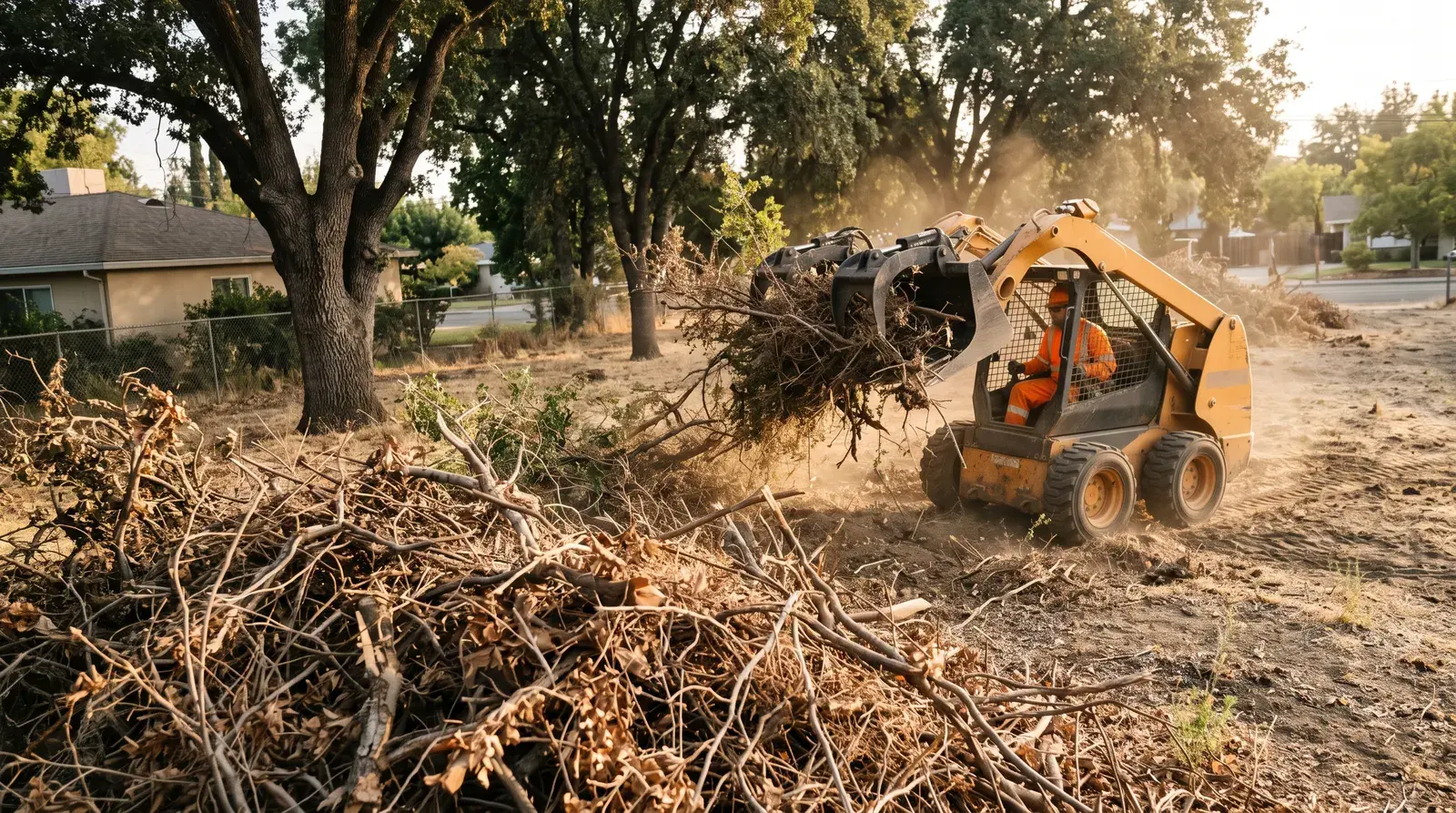
Defensible Space Clearing in Cameron Park — free, site-specific estimates.
Airpark Estates and Larger Parcels
Cameron Park's lots run bigger than typical suburbs — the Cameron Airpark estates and the parcels off Country Club Drive and Cambridge Road often carry a half acre to several acres of oak woodland behind the house. That's where Zone 2 work is measured in tonnage, not shrubs.
- Acreage brush thinning — crews cut and chip manzanita and understory brush across the full 100-foot zone, or to the property line.
- Machine work where the ground allows, hand crews on grades and around oak root zones.
- Chip-on-site or full haul-off — your call; chips can stay as ground cover outside Zone 0.
- Property-line coordination — on adjoining wooded parcels, splitting a shared fuel break with the neighbor is often cheaper for both sides.
Insurance Inspection Prep
Insurance non-renewal letters drive a lot of Cameron Park clearance work now. Carriers photograph homes in mapped hazard zones, and the fixes they demand are predictable: limbs off the roof, brush away from walls, dead trees gone. We scope directly from the carrier's letter.
- Roof and chimney clearance — oak limbs pruned back with proper cuts; no topping, no hat-racking.
- Structure separation — flagged shrubs and brush removed from Zones 0 and 1 where inspection photos focus.
- Dead tree removal — quoted per tree and prioritized by what can reach the house.
- Documentation — before-and-after photos of the completed work to send back with your renewal response.
Need defensible space clearing in Cameron Park?
Share the address and project details — we'll come back with a scoped, site-specific estimate.
Timing: Beat the June Grass Cure
The right window is late winter through spring — brush is easier to cut, native oaks are in the dormant/dry-season pruning window, and the work is done before grass cures and inspection season starts. Summer work still happens, just with more competition for crew time.
- January–April — best scheduling; dormant-season oak pruning and cool-weather brush work.
- May–June — pre-inspection rush across the foothills; book ahead.
- July onward — clearance continues with hot-day equipment precautions; dead-tree removals run year-round.
- Annual upkeep — a spring maintenance visit keeps regrowth down and costs a fraction of a first-year full clear.
The same crew from estimate to cleanup.
No juggling separate contractors for one tree. Tell us the address and what you're dealing with, and we'll come back with a written, site-specific number.
- Removal, trimming, stumps, and cleanup handled by one crew
- Free, site-specific estimates — priced to your tree, not a flat rate
- Sacramento, Placer, El Dorado, and Yolo counties

What Defensible Space Work Costs in Cameron Park
Price follows acreage, brush density, and slope. As broad regional figures, standard-lot Zone 1 cleanups often run several hundred dollars to low four figures; acreage parcels with heavy manzanita and dead-tree removal scale up from there. Every estimate is free, written, and site-specific.
- Small lot, light fuel — roofline pruning plus Zone 1 cleanup is the smallest ticket.
- Heavy manzanita — dense brush fields take real cutting and chipping time; density moves the number more than acreage alone.
- Dead trees — priced individually based on size, condition, and what they can hit.
- Repeat maintenance — returning clients pay less because the heavy first-year lift doesn't repeat.
Related guides
California Defensible Space Requirements (Zones 0–2)
PRC 4291 defensible space zones explained — what to clear in Zone 0 (0–5 ft), Zone 1 (0–30 ft), and Zone 2 (30–100 ft), and what inspectors look for.
9 Signs a Tree Needs to Come Down
Nine warning signs a tree is hazardous or dying — and when removal is safer than trying to save it.
When to Trim Oak Trees in California
The best window to prune native California oaks, why dry-season timing cuts disease risk, and the pruning mistakes that shorten an oak's life.
What defensible space clearing costs — and what Cameron Park allows
Regional ranges, local permit rules, and the alternatives worth weighing before defensible space clearing in Cameron Park.
Defensible Space Clearing Cost in the Sacramento Foothills (2026)
Regional range $1,000–$10,000 — and what moves the number on a real job.
Do You Need a Tree Removal Permit in Auburn?
Where Auburn draws the line before a tree comes down, and who to check with.
Tree Service in El Dorado County, CA
El Dorado County runs from the Sacramento Valley edge at El Dorado Hills up through Placerville and into Pollock Pines…
How Much Does Tree Removal Cost in Sacramento? (2026)
Typical 2026 Sacramento tree removal price ranges by tree size, the factors that move the number, and how to read a quote before you sign it.
Do You Need a Tree Removal Permit in Citrus Heights?
Where Citrus Heights draws the line before a tree comes down, and who to check with.
Want a sense of the work first? See the kinds of defensible space clearing jobs we take on and who shows up to do them.
Frequently asked questions
Does PRC 4291 apply to my Cameron Park home?
Almost certainly — Cameron Park sits in the Sierra foothill wildland-urban interface, and much of the community is in mapped fire hazard severity zones where California PRC 4291 defensible space requirements apply: Zone 1 (0–30 ft) lean, clean, and green, Zone 2 (30–100 ft) reduced fuel, and an ember-resistant Zone 0 being phased in. Check your parcel's zone status and the current standards at readyforwildfire.org, and confirm inspection practices with the local fire district.
Do I need to remove the manzanita on my property?
Not all of it, but manzanita near the house or growing under trees should go. It's one of the hottest-burning brush species in the foothills, and its job in a fire is to carry flame from the grass into the oak canopy. Within Zone 1 we remove it outright; in Zone 2 the standard approach is breaking continuous brush into separated islands with clean spacing. Manzanita on the far side of a large parcel, away from structures and ladder-fuel positions, can often stay.
My insurance carrier is threatening non-renewal over vegetation. What do you actually fix?
Send us the letter — it's usually specific. The recurring Cameron Park items are oak limbs overhanging the roof, shrubs and brush against the structure, dead trees on the parcel, and continuous fuel in the first 30 feet. We prune the limbs correctly, clear the flagged vegetation, remove or quote the dead trees, haul the debris, and photograph the finished condition so you have documentation for the carrier. Working from the letter keeps you from paying for work the insurer never asked for.
Will clearing defensible space make my lot look scalped?
No — done right, it looks like a maintained oak woodland instead of an overgrown one. Healthy blue oaks and live oaks stay; they get deadwooded and limbed up so nothing burns beneath them. Brush is thinned into islands rather than erased, grass is mowed instead of scraped, and topsoil and oak root zones are left alone. The scalped look comes from bad clearing. The goal is breaking the fuel ladder, and that's compatible with a lot of shade and privacy.
How big a job is defensible space on a one-acre Cameron Park lot?
First-year work on a wooded acre — say an Airpark-area parcel with manzanita understory and a few dead pines — is typically a multi-day job: roofline pruning, Zone 1 cleanup, Zone 2 brush thinning, dead-tree removal, chipping, and haul-off. Density matters more than acreage; a grassy acre with scattered oaks goes much faster than an acre of continuous brush. After year one, an annual spring maintenance visit usually keeps it inspection-ready. Estimates are free and based on walking the parcel.