What Tree Trimming Covers
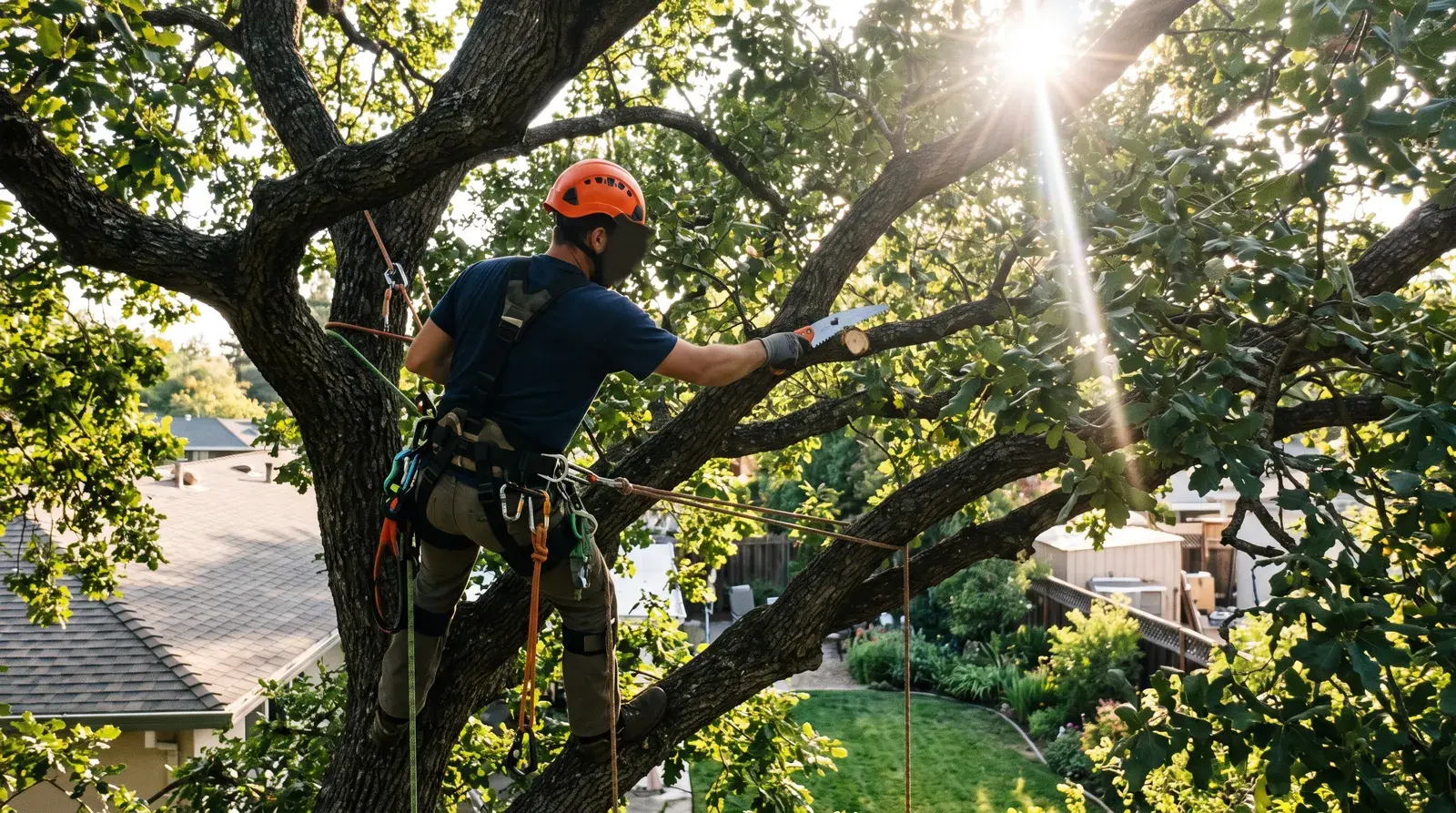
Tree trimming is maintenance work: keeping the canopy clear of structures, removing dead and broken limbs, and shaping the tree so it looks right and stays safe. It's the routine service most Sacramento trees need every few years — distinct from structural pruning, which corrects how a tree grows.
- Roof, gutter, and chimney clearance — limbs held off the house so they can't abrade shingles or drop debris
- Deadwood removal — dead limbs are the first thing to fall in a windstorm and the biggest routine hazard overhead
- Sidewalk, driveway, and street clearance — low limbs raised for pedestrians, vehicles, and sight lines
- Service-drop and light clearance around the low-voltage line to your house and around yard lighting
- Canopy shaping and crown cleaning — a balanced, natural outline without shearing or topping
- Vista and sunlight trimming — selective cuts to open a view or get light to a lawn or garden without gutting the tree
Why Sacramento Trees Need a Trimming Cycle
Sacramento calls itself the City of Trees for a reason: mature valley oaks, London planes, camphors, and Modesto ash dominate older neighborhoods, and they grow fast on valley soil and irrigation. Long dry summers build deadwood; winter windstorms and the occasional atmospheric river find every weak limb that summer left behind.
The pattern repeats every year. Trees push hard in spring, shed interior branches through the hot months, and then December and January storms load wet canopies with wind. Homes under big camphors in East Sacramento or planes in Land Park see it directly: limbs on roofs, debris in gutters, and the odd branch down after a storm front. A regular trimming cycle removes that deadwood and end-heavy growth before the weather does it for you. It's cheaper than storm cleanup and far cheaper than a roof repair.
- Fast growers (Modesto ash, mulberry, Chinese elm, silver maple): trim every 1–2 years
- Typical shade trees (camphor, plane/sycamore, zelkova, pistache): every 2–4 years
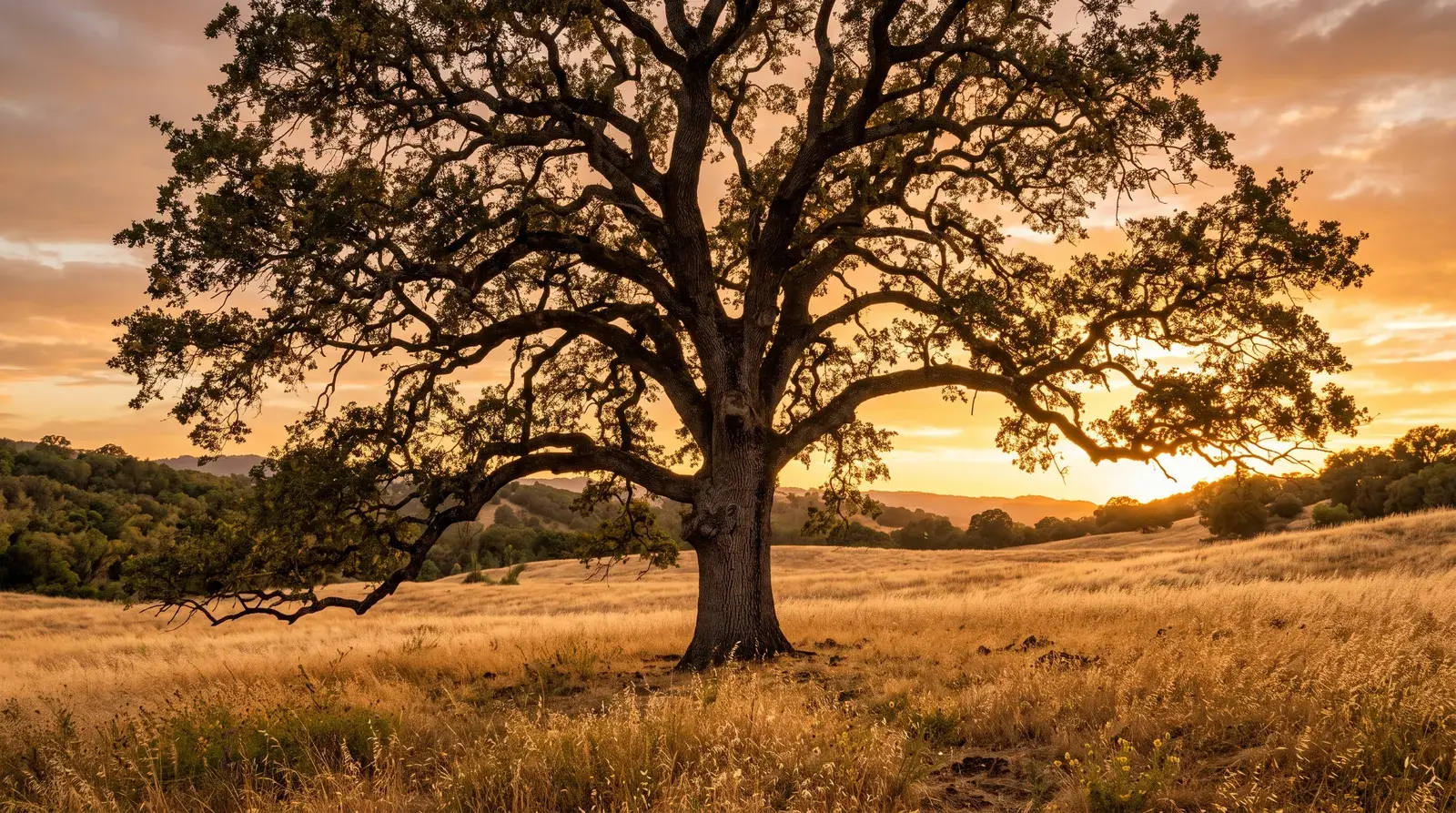
- Native oaks (valley, interior live, blue oak): every 3–5 years, timed to the dry season — see our oak tree care page
- Young street trees in newer areas like Elk Grove, Rocklin, and Lincoln: early training visits pay off for decades
Tree Trimming across Sacramento, Placer, El Dorado, and Yolo counties.
How We Trim — and What We Never Do
Good trimming removes the right limbs with proper cuts at the branch collar, keeps live-canopy removal modest — generally under about 25% in one visit — and leaves the tree's natural form intact. Bad trimming is easy to spot: topped leaders, stripped interiors, and stubs that rot.
Where a tree has genuinely outgrown its spot — too tall, too wide, too much end-weight over a structure — the answer isn't a heavier trim, it's a proper crown reduction with cuts to live laterals. We'll tell you which one your tree actually needs.
- Every cut goes back to the branch collar or a live lateral, so the tree can seal the wound
- No topping — cutting a leader to a stub triggers weak, fast regrowth that fails in wind and starts decay in the trunk
- No lion-tailing — stripping interior branches and leaving foliage only at the tips concentrates weight and wind load exactly where limbs break
- No gaff climbing on live trees — spike wounds on a tree you're keeping invite pests and decay
- Clean job site: limbs chipped, rakes and blowers on the lawn and roof, debris hauled unless you want the chips
Trimming vs. Pruning vs. Reduction: Which Do You Need?
The words get used interchangeably, but the jobs are different. Trimming is clearance and maintenance. Structural pruning corrects how a tree is built. Crown reduction shrinks a canopy that's too big or too heavy. Many visits combine two of the three — the point is choosing cuts for a reason.
- Choose trimming when limbs are on the roof, deadwood is accumulating, or the tree just looks overgrown
- Choose structural pruning for young trees, codominant stems, or crowded, poorly attached limbs — see structural tree pruning
- Choose crown reduction when height, spread, or end-weight over a target is the real problem — see crown reduction & thinning
- Choose a health assessment first if the tree is declining, dropping green leaves in summer, or showing fungus at the base
Need tree trimming on your property?
Share the address and project details — we'll come back with a scoped, site-specific estimate.
What Tree Trimming Costs in the Sacramento Region
Trimming is priced by time, access, and risk, not by a flat rate per tree. As a broad regional guide: small ornamentals often run $150–$450, mid-size trees $400–$900, and large mature shade trees $900–$2,500+ depending on deadwood, height, and what's underneath them.
These are typical regional ranges, not quotes. Estimates are free and site-specific — the honest price requires standing under the tree.
- Height and canopy spread — a 70-foot valley oak is a different day than a 20-foot crape myrtle
- Deadwood volume — years of deferred maintenance take longer to clean out
- Targets below — trimming over a roof, pool, or greenhouse means rigging limbs down instead of dropping them
- Access — backyard trees behind fences and over structures take more rope work than curbside trees
- Debris handling — chips left on site cost less than full haul-off
Permits and Protected Trees
Most routine trimming of a private tree needs no permit, but Sacramento has real tree protections and it's on the owner — and the contractor — to know them before cutting. Street trees, Heritage Trees, and native oaks each carry their own rules depending on where you are.
If a job touches a protected tree, we flag it during the estimate and point you at the right office before any saw starts. Cutting first and asking later is how owners end up with fines.
- City of Sacramento: trees in the public right-of-way are City Trees — the city controls work on them
- Heritage Trees are protected under City Code Chapter 12.56; significant pruning or removal needs a city permit — details at cityofsacramento.gov
- Unincorporated Sacramento County: the Tree Preservation and Protection Ordinance protects native oaks
- Other cities (Roseville, Folsom, Elk Grove, Citrus Heights) have their own tree ordinances — verify locally before major work
The same crew from estimate to cleanup.
No juggling separate contractors for one tree. Tell us the address and what you're dealing with, and we'll come back with a written, site-specific number.
- Removal, trimming, stumps, and cleanup handled by one crew
- Free, site-specific estimates — priced to your tree, not a flat rate
- Sacramento, Placer, El Dorado, and Yolo counties
What to Expect on Trimming Day
A typical residential trim takes a half day to a full day. We walk the scope with you before starting, work the tree top-down with a climber or lift, and leave the yard cleaner than we found it. You don't need to be home once the scope is agreed.
- Walkthrough to confirm which limbs go, clearance targets, and anything to protect below
- Limbs over structures are roped and lowered, not dropped
- Brush chipped as we go; wood cut to rounds and hauled, or left stacked if you want firewood
- Final rake, blow-off of roof and hardscape, and a walkaround with you if you're home
Related services
Structural Tree Pruning
Structural pruning that builds sound branch architecture — training young trees and correcting weak, crowded, or co-dominant limbs.
Crown Reduction & Thinning
Reducing height, spread, and wind-sail on overgrown or heavy canopies — proper reduction cuts, never topping.
Oak Tree Care
Specialized care for native valley, blue, and interior live oaks — dry-season pruning and heritage-tree compliance guidance.
Tree Health Assessment
Diagnosing disease, pests, and structural risk — with an honest plan to treat, monitor, or remove.
Related guides
When to Trim Oak Trees in California
The best window to prune native California oaks, why dry-season timing cuts disease risk, and the pruning mistakes that shorten an oak's life.
Keeping Trees Alive Through Sacramento Summers
Deep watering at the dripline, real mulch, and the heat-stress signs that matter — how Sacramento trees survive months of triple-digit heat.
Sacramento's Heritage Tree Ordinance, Explained
What makes a Sacramento tree a Heritage Tree, what City Code Chapter 12.56 protects, and how to get pruning or removal approved.
Before you book tree trimming
What it runs, where permits bite, and how tree trimming stacks up against the alternatives.
Crown Reduction Cost in the Sacramento Region (2026)
Regional range $500–$4,000 — and what moves the number on a real job.
Do You Need a Tree Removal Permit in Auburn?
Where Auburn draws the line before a tree comes down, and who to check with.
Crown Reduction vs. Topping: What's the Difference?
Crown Reduction or Topping — how to tell which one the tree actually needs.
Oak Tree Care & Trimming Cost in Sacramento (2026)
Regional range $400–$3,500 — and what moves the number on a real job.
Do You Need a Tree Removal Permit in Davis?
Where Davis draws the line before a tree comes down, and who to check with.
Want to see what this looks like on a real property? Browse the tree trimming jobs we take on, or read how our crew scopes and prices work before you call anyone out.
Frequently asked questions
How often should trees be trimmed in Sacramento?
Most mature shade trees do fine on a 2–4 year cycle. Fast growers — Modesto ash, fruitless mulberry, Chinese elm — often need a pass every 1–2 years to keep clearance and remove weak regrowth. Slow-growing natives like valley oak and blue oak can go 3–5 years between structural visits. Deadwood removal can happen any time; heavier canopy work is best scheduled outside peak summer heat stress.
How much does tree trimming cost in the Sacramento area?
As a broad regional range, most residential trims run a few hundred dollars for a small ornamental up to $1,000–$2,000+ for a large mature shade tree with lots of deadwood or difficult access. Height, canopy size, deadwood volume, and how close limbs sit to roofs and lines drive the price. Every job is different, so we quote from a free on-site look rather than over the phone.
Can you trim a tree that's touching my roof or power line drop?
Yes for roofs and the low-voltage service drop to your house — building clearance and roof clearance are routine trimming work. High-voltage distribution and transmission lines are different: only utility-authorized line-clearance crews can work within required distances of those. If limbs are into SMUD or PG&E primary lines, we'll tell you to call the utility first, then handle everything on your side.
Is there a bad time of year to trim trees in Sacramento?
Light trimming and deadwood removal work year-round. Avoid heavy canopy removal in July–August heat, when stripping shade can sunscald bark and stress a tree already fighting drought conditions. Native oaks are best pruned in the dry season or winter dormancy. Trees that bleed sap heavily, like elms and maples, are usually cut in summer or early winter rather than spring.
Do I need a permit to trim my own tree in Sacramento?
Usually not for routine trimming of a private tree. But City of Sacramento street trees are City Trees and can't be worked on without city authorization, and Heritage Trees protected under City Code Chapter 12.56 need a permit before significant pruning. Sacramento County's ordinance protects native oaks in unincorporated areas. When a protected tree may be involved, we confirm the rules before cutting — check cityofsacramento.gov or your county for specifics.