Pruning Carmichael's Estate Oaks
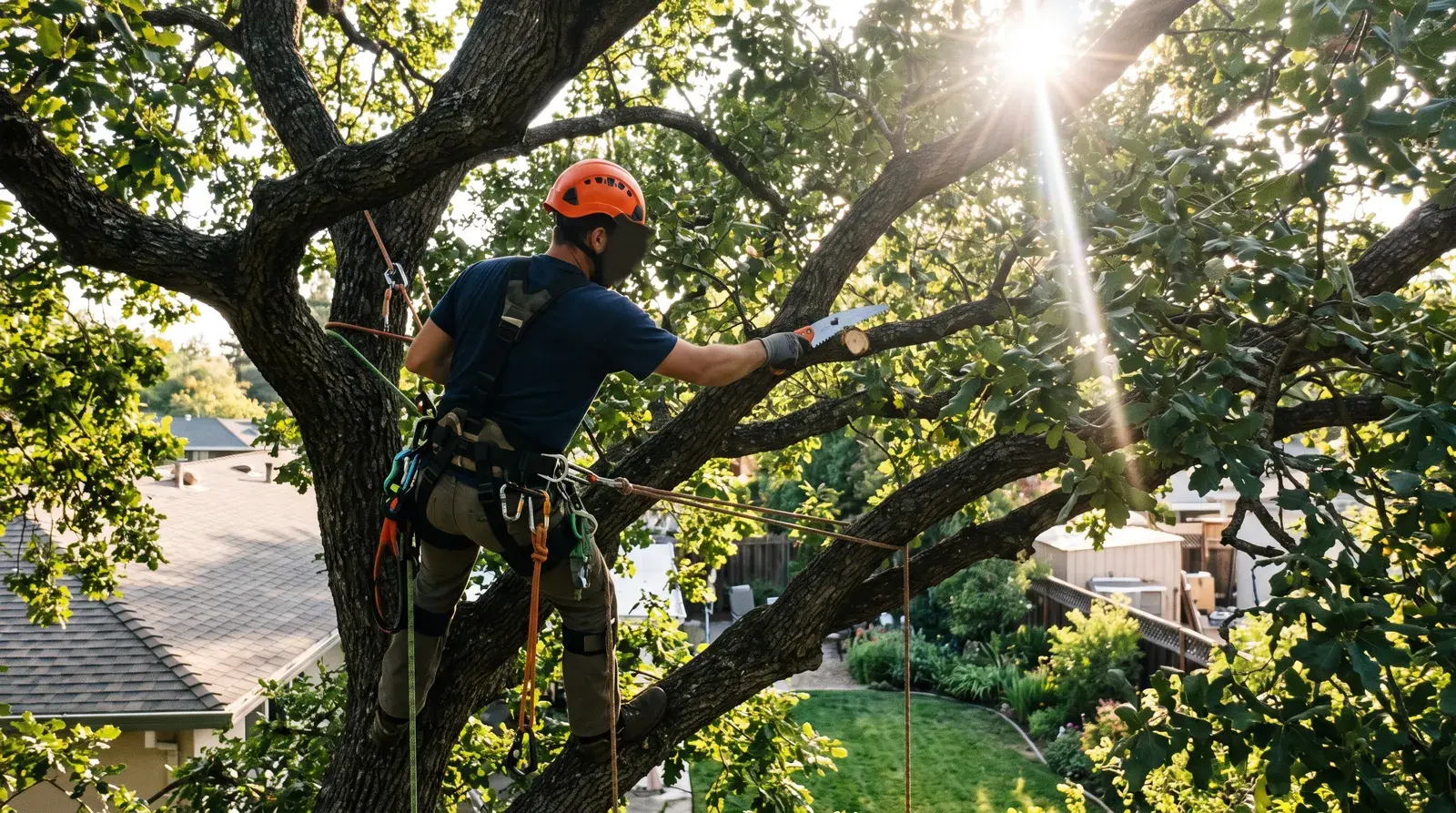
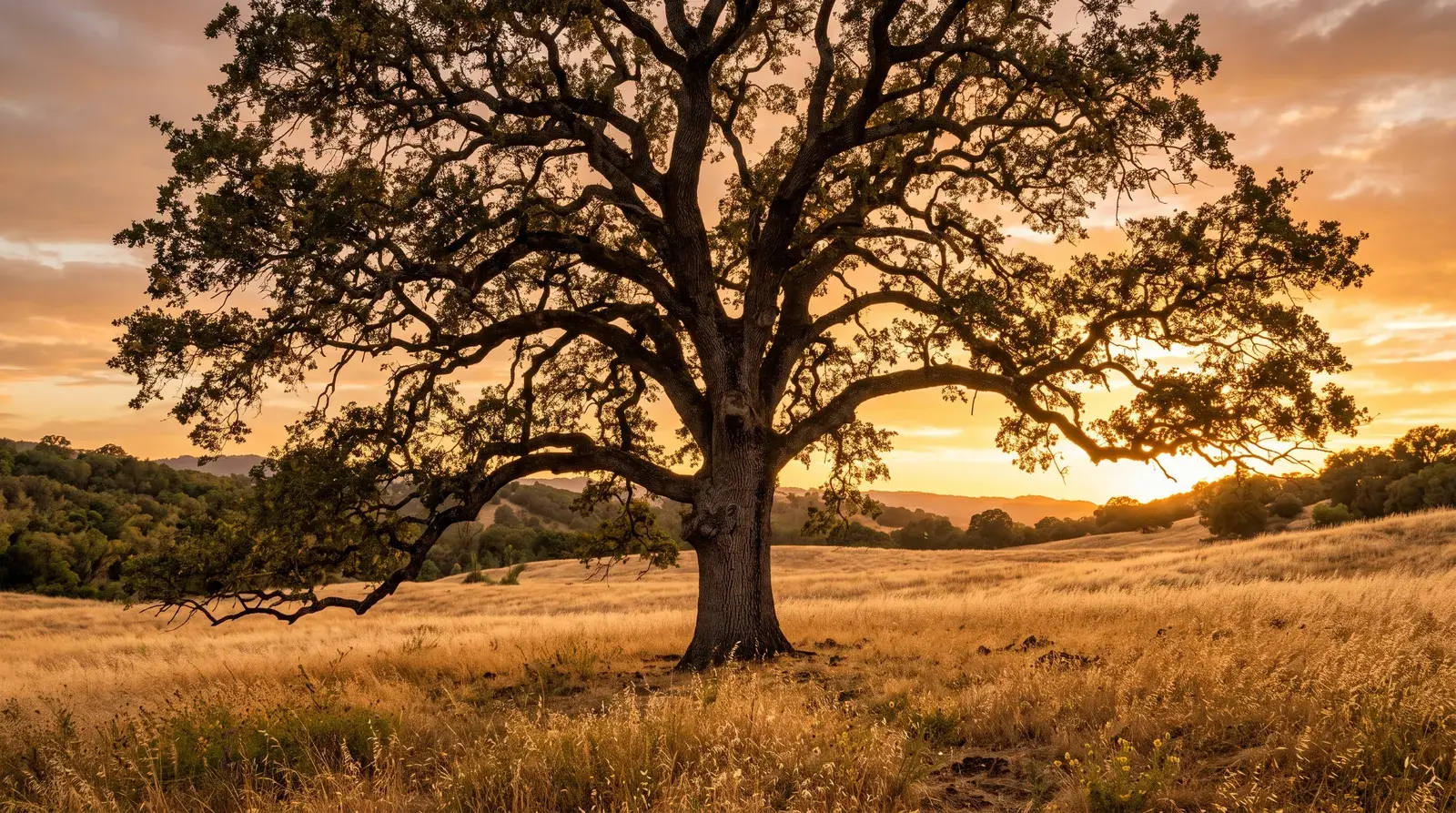
The valley and interior live oaks on Carmichael's larger lots are decades — sometimes a century — old, and they respond badly to careless pruning. Correct oak work is conservative: deadwood out, clearance where needed, and modest weight reduction on over-extended limbs, timed to the dry season.
- Crown cleaning — remove dead, broken, and rubbing limbs; on a big oak this alone removes most of the falling-branch risk.
- End-weight reduction — shorten long horizontal limbs over roofs, driveways, and play areas back to sound laterals.
- No lion-tailing — stripping interior growth pushes weight to the limb tips and makes oaks more likely to break, not less.
- Dry-season timing — heavy oak pruning belongs in the dry months, not the wet season when wounds invite disease, and not in peak summer heat.
Cedars, Redwoods, and the Rest of the Big Canopy
Beyond the oaks, Carmichael carries a lot of large conifers and mature shade trees that each want different handling. The common thread: deadwood at 60 feet is a hazard whatever species it hangs in, and big trees need climbers or a lift, not a guy on a ladder.
- Deodar cedar — deadwood removal and selective thinning; watch co-dominant tops, which are candidates for reduction or cabling before they split.
- Coast redwood — dead-top and deadwood removal on heat-stressed trees; honest advice when a declining redwood is past saving.
- Silver maple and mulberry — regular weight reduction, since both grow fast and break at old wounds.
- London plane and camphor — clearance and structure pruning on the street-side trees along Fair Oaks Boulevard and California Avenue.
Tree Trimming in Carmichael — free, site-specific estimates.
Storm Preparation: Trim Before the Wind, Not After
Carmichael's tree emergencies cluster in winter — saturated soil plus south wind takes limbs and whole trees, and the biggest trees do the most damage. Most of those failures telegraph in advance: over-extended limbs, deadwood, cracked unions, dense canopies acting as sails.
Pre-storm trimming is the cheapest emergency work you will ever buy. Weight reduction and crown thinning cut the wind load a canopy carries, deadwood removal takes out the pieces that fail first, and an inspection while we are in the tree catches decay and cracked unions you cannot see from the ground. Fall is the right window: dry-season timing for the oaks, and the work is done before the first big storm instead of quoted after it.
Need tree trimming in Carmichael?
Share the address and project details — we'll come back with a scoped, site-specific estimate.
Trimming Protected Oaks: What the County Allows
Sacramento County's tree preservation ordinance is aimed at removals, but heavy cutting on a protected native oak can cross into regulated territory — excessive canopy removal can be treated like destruction of the tree. Standard maintenance pruning is fine; stripping half the crown is not.
We keep oak pruning inside sound limits and document what was removed when it matters. If someone quotes you a drastic 'thinning' on a protected valley oak, that is a red flag for both the tree and your permit exposure.
The same crew from estimate to cleanup.
No juggling separate contractors for one tree. Tell us the address and what you're dealing with, and we'll come back with a written, site-specific number.
- Removal, trimming, stumps, and cleanup handled by one crew
- Free, site-specific estimates — priced to your tree, not a flat rate
- Sacramento, Placer, El Dorado, and Yolo counties
Maintenance Cycles for Carmichael Properties
Mature canopies reward a schedule. Most Carmichael estate lots do well with oaks cleaned every 3–5 years, fast-growing and brittle species every 2–3, and a walkthrough after any major windstorm — bundled into one visit so mobilization is paid once, not four times.
Related guides
When to Trim Oak Trees in California
The best window to prune native California oaks, why dry-season timing cuts disease risk, and the pruning mistakes that shorten an oak's life.
Keeping Trees Alive Through Sacramento Summers
Deep watering at the dripline, real mulch, and the heat-stress signs that matter — how Sacramento trees survive months of triple-digit heat.
Sacramento's Heritage Tree Ordinance, Explained
What makes a Sacramento tree a Heritage Tree, what City Code Chapter 12.56 protects, and how to get pruning or removal approved.
What tree trimming costs — and what Carmichael allows
Regional ranges, local permit rules, and the alternatives worth weighing before tree trimming in Carmichael.
How Much Does Tree Trimming Cost in Sacramento? (2026)
Regional range $300–$2,500 — and what moves the number on a real job.
Do You Need a Tree Removal Permit in Auburn?
Where Auburn draws the line before a tree comes down, and who to check with.
Crown Reduction vs. Topping: What's the Difference?
Crown Reduction or Topping — how to tell which one the tree actually needs.
Tree Service in Sacramento County, CA
Tree work in Sacramento County ranges from removing aging valley oaks in East Sacramento to grinding stumps on new-buil…
Crown Reduction Cost in the Sacramento Region (2026)
Regional range $500–$4,000 — and what moves the number on a real job.
Do You Need a Tree Removal Permit in Davis?
Where Davis draws the line before a tree comes down, and who to check with.
Want a sense of the work first? See the kinds of tree trimming jobs we take on and who shows up to do them.
Frequently asked questions
When should oaks be trimmed in Carmichael?
In the dry season. Native valley and interior live oaks should get their heavy pruning in the dry months — late summer through fall works well — avoiding wet-season cuts that spread disease and heavy pruning during peak summer stress. Light deadwood removal and clearance cuts are fine most of the year. If a limb is cracked or hanging, safety overrides seasonality: it comes off now.
Is there a limit to how much of a protected oak I can trim?
Effectively, yes. Sacramento County's tree preservation ordinance protects native oaks in unincorporated areas like Carmichael, and cutting so heavily that the tree is disfigured or destabilized can be treated like unpermitted removal. Standard maintenance pruning — deadwood, clearance, measured weight reduction — is normal and allowed. We keep the work inside sound arboricultural limits, which protects the tree and you. Verify current rules with the county for major work.
How often do big valley oaks need trimming?
Every 3–5 years for most mature oaks. A proper crown cleaning removes deadwood and corrects problem limbs, and a healthy oak does not regrow fast enough to need annual visits — over-pruning does more harm than under-pruning. The exceptions are oaks over roofs and driveways, which may want clearance touch-ups sooner, and any oak after a major storm, which is worth a look regardless of the calendar.
Can trimming save my declining redwood?
Sometimes. Heat- and drought-stressed redwoods across Carmichael benefit from deadwood removal and dead-top removal — the top is the hazard part — combined with deep, infrequent summer watering at the drip line. But pruning does not fix the underlying water problem, and a redwood that keeps browning from the top down year after year is declining, not resting. We will tell you which trajectory yours is on before you spend money.
Do you handle large trees that need climbers or a lift?
Yes — that is most of the Carmichael work. The oaks, cedars, and redwoods here run 60 feet and up, and we prune them with climbers on rope or an aerial lift, with rigging to lower cut limbs when there is a roof or landscape underneath. Brush is chipped on-site, wood hauled or left as firewood, and the cleanup is included in the written estimate.