
PRC 4291 on a Placerville Lot
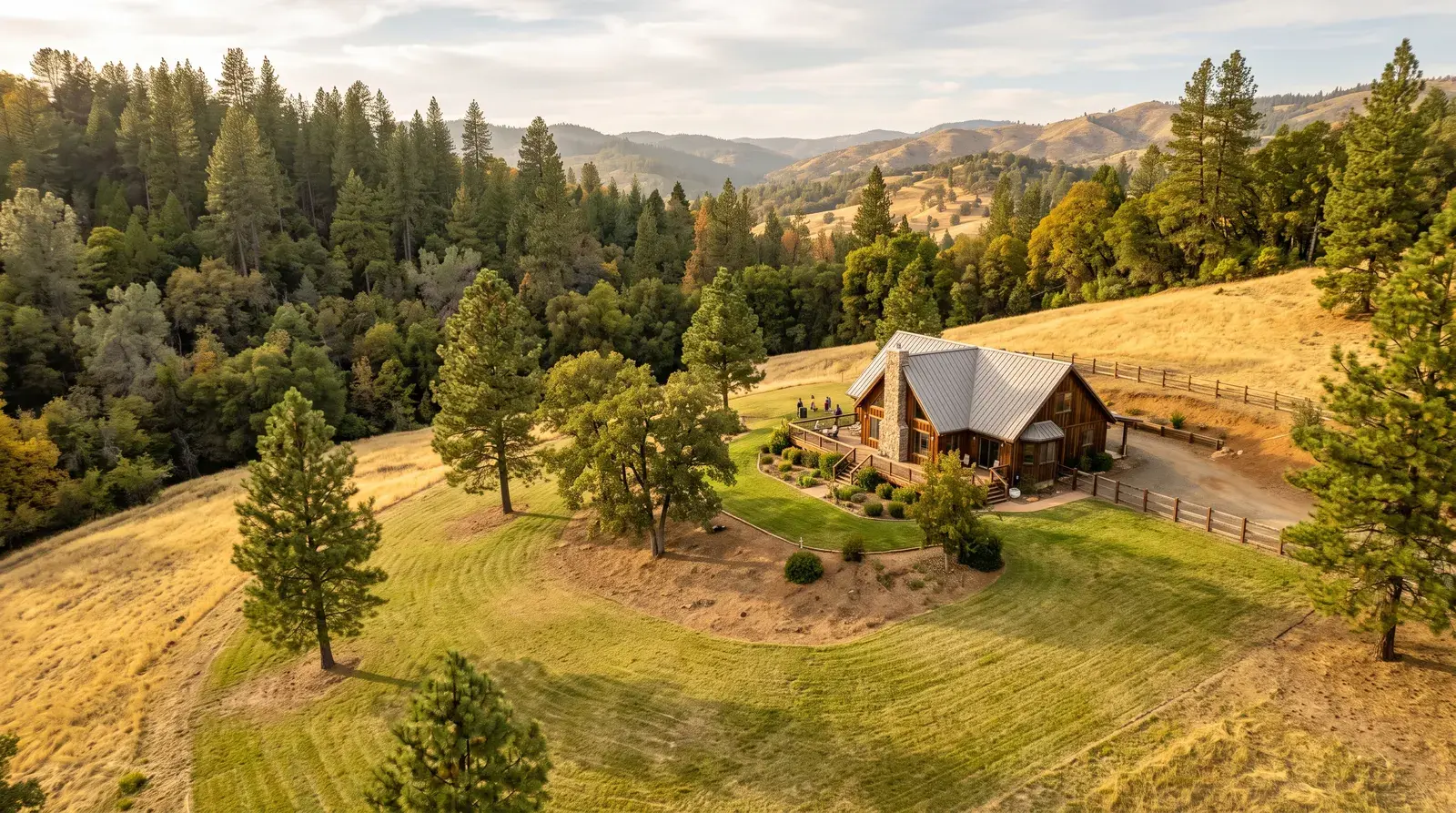
The state standard works outward from the house: Zone 1 (0–30 ft) kept lean, clean, and green; Zone 2 (30–100 ft) thinned to reduced fuel; and an ember-resistant Zone 0 (0–5 ft) being phased in. Current requirements are posted at readyforwildfire.org.
- Zone 0 (0–5 ft) — no needle-covered mulch beds, stacked firewood, or limbs against the structure; this zone is about embers, and Placerville's conifers make a lot of them.
- Zone 1 (0–30 ft) — pine needle litter raked, dead vegetation removed, conifer and oak limbs clear of the roof, canopy spacing between trees.
- Zone 2 (30–100 ft) — brush separated, small conifers thinned so they can't ladder fire into the overstory, grass mowed low.
- Steep ground — ravine lots off Cedar Ravine and around Texas Hill need wider spacing on the downslope side, because fire accelerates uphill.
Timber-Zone Fuels: Pine, Cedar, and Black Oak
Placerville's elevation puts it in mixed conifer, not just oak savanna — and conifer fuels behave differently. Pines and cedars carry fire vertically through their own low limbs, and they drop a fresh bed of needle litter every year. The clearance work reflects that.
- Ponderosa pine — limbed up so ground fire can't climb; drought-stressed and bark-beetle-hit pines near structures should come out entirely.
- Incense cedar — low, dense, flammable foliage right down to the ground; young cedars crowding a house are priority removals.
- California black oak — a keeper once deadwooded; its leaf litter is far less volatile than needle cast.
- Interior live oak and brush — the understory ladder on south-facing slopes; thinned into separated islands.
- Needle litter — raked and hauled from Zones 0 and 1 every season; it's the most ignitable fuel on most Placerville lots.
Defensible Space Clearing in Placerville — free, site-specific estimates.
Beetle-Killed and Dying Pines
Bark beetles follow drought stress, and Placerville's pines have taken hits in every dry cycle. A fading pine — thinning crown, red needles, pitch tubes on the bark — is both a fire problem and a falling problem, and it gets more dangerous to remove the longer it stands.
- Red or fading crowns get evaluated first; a dead pine near the house outranks every other item on the clearance list.
- Standing-dead pines shed tops and limbs in wind, and dry snags are hazardous to climb — early removal is cheaper removal.
- Inspectors and insurance carriers both flag dead conifers immediately; removing them often resolves half the write-up.
- We can assess borderline trees honestly — some stressed pines recover, and we'd rather tell you to wait than bill for a tree that didn't need to come down.
Steep Ravine Lots
Placerville is built on gulches — that's the whole gold-rush layout. Homes above Main Street, off Cedar Ravine, and along Newtown Road often hold their Zone 2 on grades that rule out machines. We work those slopes with hand crews and get the fuel out anyway.
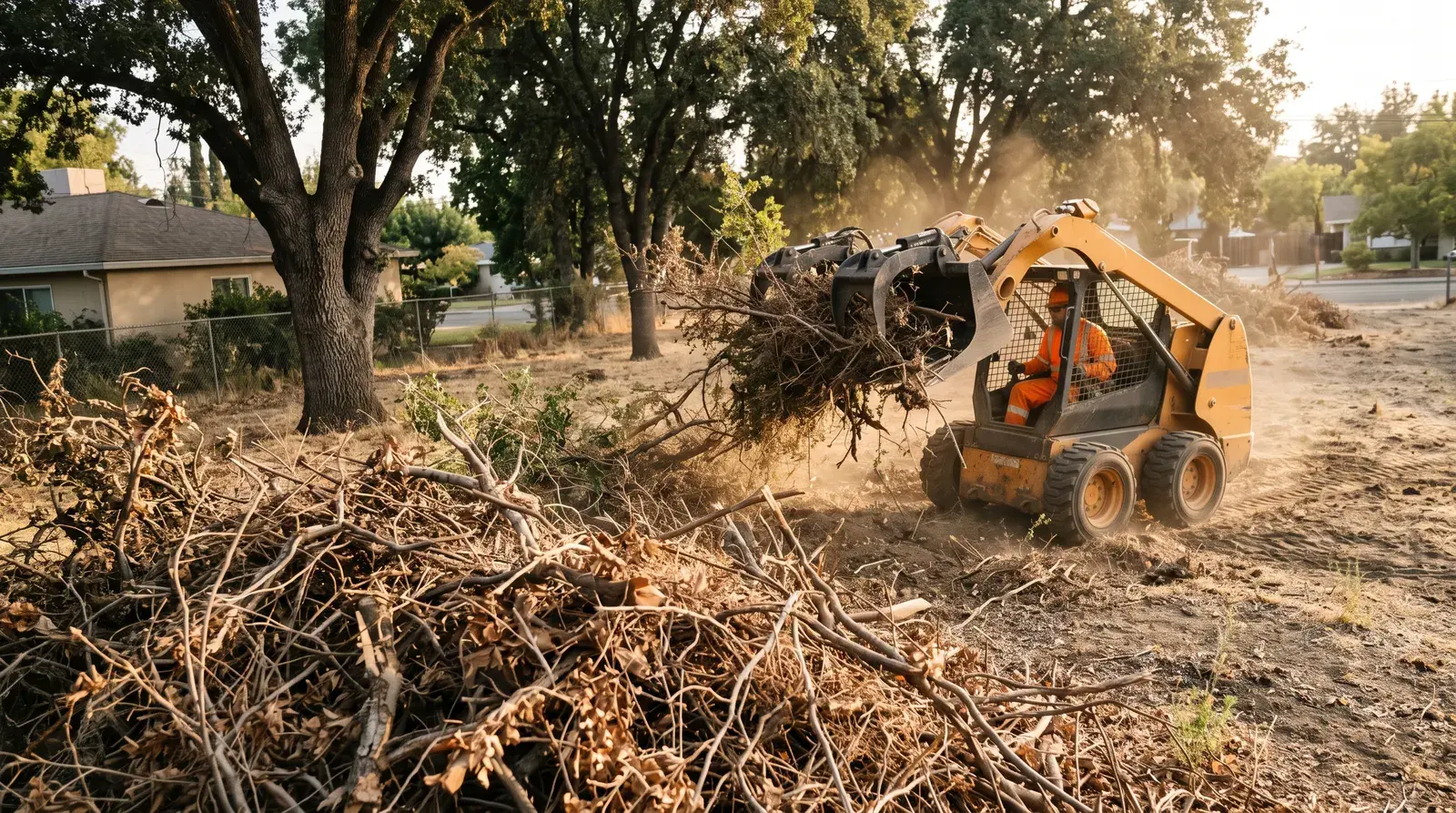
- Hand-crew cutting on steep ground, with brush dragged or winched to where the chipper can stage.
- Downhill-side priority — the slope below the house is where an approaching fire gains speed, so it gets the widest clearance.
- No abandoned piles — cut fuel is chipped or hauled, not stacked on the hillside to dry.
- Soil and roots left intact — this is fuel reduction, not grading; slopes here erode fast when scraped.
Need defensible space clearing in Placerville?
Share the address and project details — we'll come back with a scoped, site-specific estimate.
Insurance Inspection Prep
Carriers have tightened hard in the Placerville zip codes, and many local jobs start with a non-renewal warning letter. The flagged items are consistent: dead conifers, limbs over the roof, needle litter, and continuous brush. We scope from your letter and document the fix.
- Dead and dying trees removed or quoted first — the highest-weight item on carrier checklists.
- Roof clearance — pine, cedar, and oak limbs pruned back from the roofline with proper cuts.
- Zones 0–1 cleared of needle beds and flagged shrubs, where inspection photos concentrate.
- Before-and-after photos supplied so you can answer the carrier with evidence, not promises.
The same crew from estimate to cleanup.
No juggling separate contractors for one tree. Tell us the address and what you're dealing with, and we'll come back with a written, site-specific number.
- Removal, trimming, stumps, and cleanup handled by one crew
- Free, site-specific estimates — priced to your tree, not a flat rate
- Sacramento, Placer, El Dorado, and Yolo counties

Timing and Ongoing Maintenance
Do the heavy work in late winter or spring: fuels are damp, oaks are in the dormant pruning window, and you're finished before inspection season. Then hold it with an annual visit — needle cast and brush regrowth undo a cleared lot in a couple of seasons.
- January–April — best window for brush work, conifer limbing, and dormant-season black oak pruning.
- May–June — pre-season rush; still workable with earlier booking.
- Every fall/spring — needle litter removal in Zones 0 and 1; it renews annually whether you do anything or not.
- Costs: as broad regional figures, standard-lot clearance runs several hundred dollars to low four figures, with acreage, slope, and dead-tree removal scaling up from there. Estimates are free.
Related guides
California Defensible Space Requirements (Zones 0–2)
PRC 4291 defensible space zones explained — what to clear in Zone 0 (0–5 ft), Zone 1 (0–30 ft), and Zone 2 (30–100 ft), and what inspectors look for.
9 Signs a Tree Needs to Come Down
Nine warning signs a tree is hazardous or dying — and when removal is safer than trying to save it.
When to Trim Oak Trees in California
The best window to prune native California oaks, why dry-season timing cuts disease risk, and the pruning mistakes that shorten an oak's life.
What defensible space clearing costs — and what Placerville allows
Regional ranges, local permit rules, and the alternatives worth weighing before defensible space clearing in Placerville.
Defensible Space Clearing Cost in the Sacramento Foothills (2026)
Regional range $1,000–$10,000 — and what moves the number on a real job.
Do You Need a Tree Removal Permit in Auburn?
Where Auburn draws the line before a tree comes down, and who to check with.
Tree Service in El Dorado County, CA
El Dorado County runs from the Sacramento Valley edge at El Dorado Hills up through Placerville and into Pollock Pines…
How Much Does Tree Removal Cost in Sacramento? (2026)
Typical 2026 Sacramento tree removal price ranges by tree size, the factors that move the number, and how to read a quote before you sign it.
Do You Need a Tree Removal Permit in Rancho Cordova?
Where Rancho Cordova draws the line before a tree comes down, and who to check with.
Want a sense of the work first? See the kinds of defensible space clearing jobs we take on and who shows up to do them.
Frequently asked questions
Is defensible space required in Placerville?
Yes, for most properties. Placerville sits in the Sierra foothill fire environment, and parcels in mapped fire hazard severity zones fall under California PRC 4291: Zone 1 (0–30 ft) lean, clean, and green, Zone 2 (30–100 ft) reduced fuel, and an ember-resistant Zone 0 (0–5 ft) being phased in. Requirements and zone maps are at readyforwildfire.org; verify how inspections are handled locally with the city and fire district, since practices differ inside city limits versus surrounding county land.
How is defensible space different in Placerville than lower foothill towns?
Heavier fuels. At Placerville's elevation the canopy shifts from oak savanna to mixed conifer — ponderosa pine, incense cedar, and black oak — and conifers change the job. They carry fire vertically through low limbs, they drop a new bed of needle litter every year, and dead beetle-hit pines are a bigger and more common hazard than dead oaks. Compared to a Cameron Park or El Dorado Hills lot, expect more limbing, more needle removal, and more attention to dead conifers.
I think my pine is dying — does it have to come out?
If it's near the house or driveway, probably, and sooner is better. A pine with a fading or red crown and pitch tubes on the bark is usually beetle-hit, and it won't recover once the crown goes. Standing-dead pines shed tops in wind, become unsafe to climb as they dry, and are automatic write-ups on fire and insurance inspections. We'll look at it honestly during a free estimate — borderline stressed trees sometimes recover, and we'll say so when waiting is the right call.
Can you clear defensible space on a steep lot?
Yes — steep is normal here. Placerville's ravine lots off Cedar Ravine, Texas Hill, and Newtown Road often keep their entire Zone 2 on a grade machines can't touch, so we use hand crews, drag or winch brush to a chipper staging point, and haul everything out. We prioritize the downslope side of the house because fire runs uphill, and we leave roots and topsoil intact so the cleared slope doesn't turn into an erosion problem next winter.
What does defensible space clearing cost in Placerville?
As broad regional figures: a standard city lot needing Zone 1 cleanup and roofline limbing often runs several hundred dollars to low four figures, while acreage parcels with heavy brush, steep ground, or multiple dead pines scale well beyond that — dead conifer removal is priced per tree based on size and what it can hit. Fuel density and slope move the number more than lot size alone. Every estimate is free, written, and based on walking the property, not a photo.