Young-Canopy Pruning: Elk Grove's Main Event
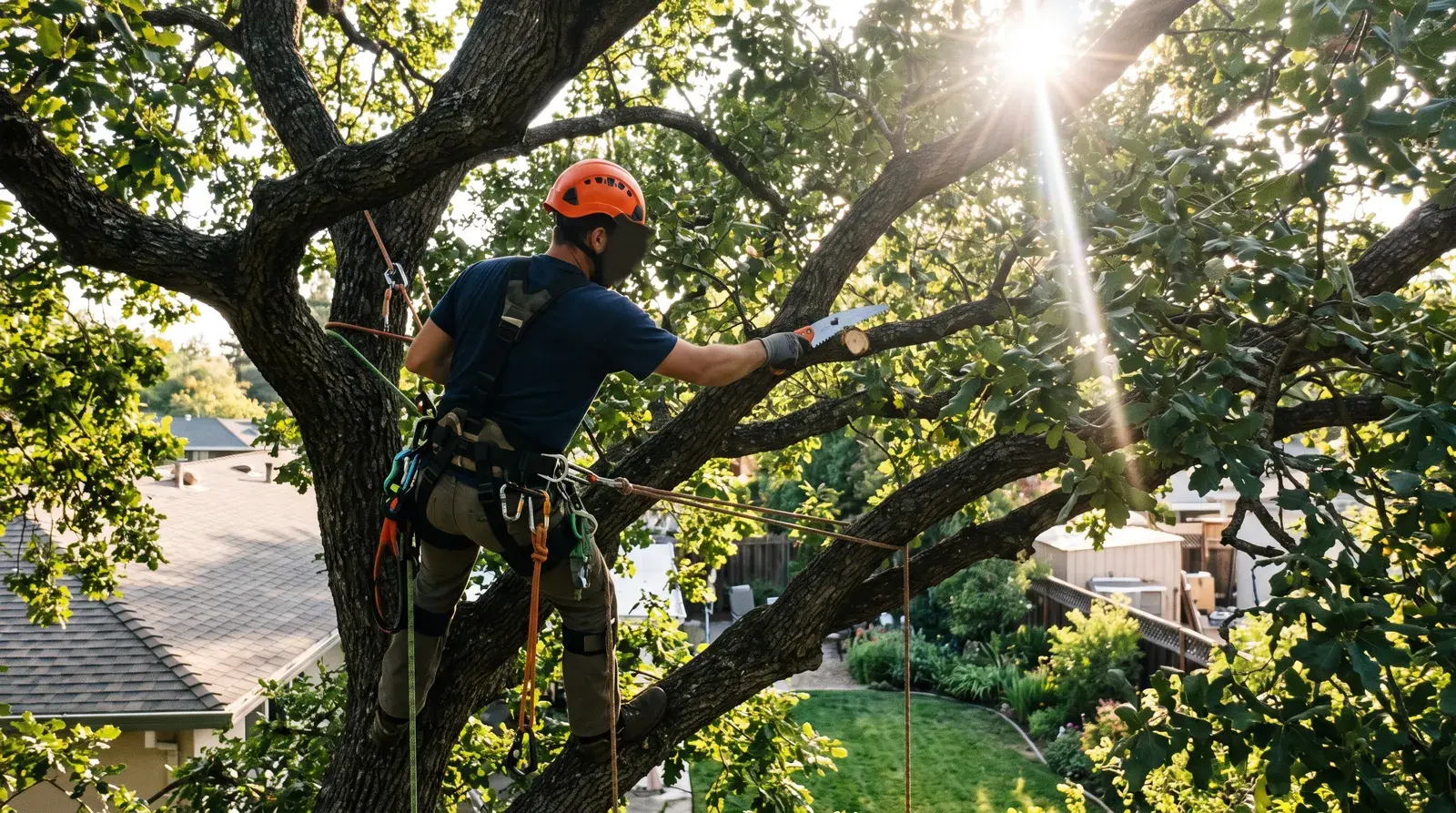
Most Elk Grove trees went in the ground between 1995 and 2015, which puts the whole city in the structural-pruning window. The cuts made now are small, cheap, and permanent — the same corrections in 20 years mean big wounds and big invoices.
- Co-dominant stems — twin tops with included bark are the number-one future failure in subdivision pistache, pear, and ash; we select one leader early.
- Crossing and rubbing limbs get removed while they're wrist-thick, not thigh-thick.
- Clearance raising over sidewalks, driveways, and roofs, done gradually so the tree keeps a balanced crown.
- Stake removal and correction — trees staked past year two never build trunk taper and stay wind-vulnerable.
- A 3-to-5-year cycle is right for most young trees; annual trimming is usually unnecessary and can slow growth.
Why We Never Top Trees
Topping — hacking a crown back to stubs — is the most common trimming mistake in newer neighborhoods, usually done to 'keep the tree small.' It does the opposite: every stub sprouts a broom of weakly attached shoots that grow back faster and fail sooner.
If a tree is genuinely too big for its spot — a redwood against a Laguna fence line, a mulberry swallowing a small backyard — the honest fixes are crown reduction done to lateral branches, or removal and replacement with a right-sized species. Reduction cuts back to a living lateral keep the tree's structure and wound response intact. We'll tell you plainly which option your tree needs, and topping will never be on the menu.
Tree Trimming in Elk Grove — free, site-specific estimates.
Aging Ash and Mulberry Near Old Town
The older streets around Old Town Elk Grove and Elk Grove Boulevard carry the city's mid-century plantings — Modesto ash and fruitless mulberry now past their prime. These trees need weight management, not cosmetic shaping.
- Modesto ash grows brittle with age; thinning end-weight off long horizontal limbs cuts winter failure risk substantially.
- Mulberries that were topped decades ago carry heavy regrowth on weak attachments — those crowns need careful reduction, not another topping.
- Deadwood removal over driveways, sidewalks, and play areas is the first priority on any aging tree.
- Some of these are worth maintaining for shade; some are past saving. We give you a straight answer either way.
Oak Trimming on the Sheldon Side
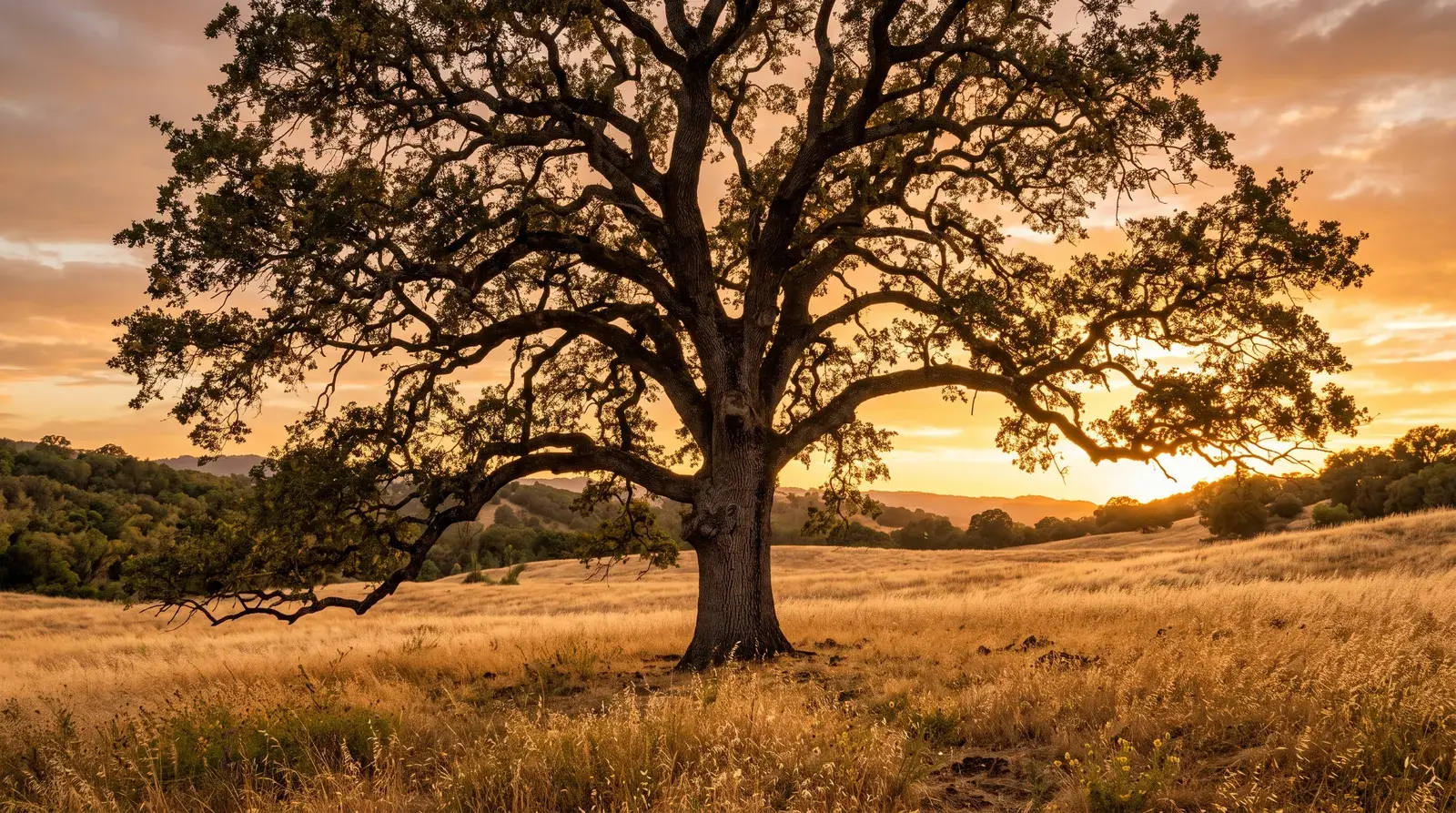
East Elk Grove's rural lots carry mature valley oaks and interior live oaks — a different animal from subdivision trees. Native oaks want minimal, well-timed pruning: dry-season work, deadwood and clearance only, never heavy thinning.
- Prune native oaks in the dry season or dormancy; wet-season cuts invite disease spread.
- Avoid heavy summer pruning — stripping live canopy in July stresses oaks that are already managing heat.
- Deadwood over structures, driveways, and horse paddocks is the usual scope on Sheldon properties.
- Large native oaks may be protected under city ordinance — trimming is generally fine, but major limb removal is worth verifying first.
Need tree trimming in Elk Grove?
Share the address and project details — we'll come back with a scoped, site-specific estimate.
HOA Frontage and Streetscape Standards
Many Elk Grove HOAs write clearance and appearance standards into their CC&Rs — sidewalk clearance heights, uniform street-tree shapes, deadline letters after inspections. We trim to spec so the letter gets closed out the first time.
If you've received an HOA landscape notice, bring it to the estimate. We'll quote the exact scope the association requires — typically sidewalk and street clearance, deadwood removal, and crown cleaning — and leave the cuts clean enough to pass reinspection. For street trees in the city easement, check whether the city's program covers the work before paying for it yourself; we can tell you at the estimate which side of the line your tree sits on.
The same crew from estimate to cleanup.
No juggling separate contractors for one tree. Tell us the address and what you're dealing with, and we'll come back with a written, site-specific number.
- Removal, trimming, stumps, and cleanup handled by one crew
- Free, site-specific estimates — priced to your tree, not a flat rate
- Sacramento, Placer, El Dorado, and Yolo counties
When to Trim in Elk Grove
Timing matters less for young landscape trees than for oaks, but Elk Grove's climate still sets a rhythm: structure work in winter dormancy, clearance anytime, oak work in the dry season, and storm-prep thinning before the November wind season starts.
- Winter (December–February): best window for structural pruning on deciduous trees — the architecture is visible and the tree is dormant.
- Summer: light clearance and deadwood are fine; skip heavy live-canopy removal in 100-degree stretches.
- Fall: end-weight reduction on ash, pear, and pistache before winter storms — the highest-value trim of the year for wind-exposed subdivisions.
- Native oaks: dry season only for anything beyond minor deadwood.
Related guides
When to Trim Oak Trees in California
The best window to prune native California oaks, why dry-season timing cuts disease risk, and the pruning mistakes that shorten an oak's life.
Keeping Trees Alive Through Sacramento Summers
Deep watering at the dripline, real mulch, and the heat-stress signs that matter — how Sacramento trees survive months of triple-digit heat.
Sacramento's Heritage Tree Ordinance, Explained
What makes a Sacramento tree a Heritage Tree, what City Code Chapter 12.56 protects, and how to get pruning or removal approved.
What tree trimming costs — and what Elk Grove allows
Regional ranges, local permit rules, and the alternatives worth weighing before tree trimming in Elk Grove.
How Much Does Tree Trimming Cost in Sacramento? (2026)
Regional range $300–$2,500 — and what moves the number on a real job.
Do You Need a Tree Removal Permit in Elk Grove?
Where Elk Grove draws the line before a tree comes down, and who to check with.
Crown Reduction vs. Topping: What's the Difference?
Crown Reduction or Topping — how to tell which one the tree actually needs.
Tree Service in Sacramento County, CA
Tree work in Sacramento County ranges from removing aging valley oaks in East Sacramento to grinding stumps on new-buil…
Crown Reduction Cost in the Sacramento Region (2026)
Regional range $500–$4,000 — and what moves the number on a real job.
Do You Need a Permit to Remove a Tree in Sacramento?
Which Sacramento trees need a removal permit, how city and county rules differ, and how to check before the saw comes out.
Want a sense of the work first? See the kinds of tree trimming jobs we take on and who shows up to do them.
Frequently asked questions
How often should subdivision trees in Elk Grove be trimmed?
Every 3–5 years for most young trees, with a structural focus: pick a single leader, remove crossing limbs, and fix bad unions while the cuts are still small. Annual trimming is usually overkill and can slow a young tree down. The exceptions are fast, weak-wooded species like ornamental pear and mulberry, which benefit from a shorter cycle, and native oaks, which want less frequent, dry-season-only work.
My HOA sent a letter about my front-yard tree. Can you handle it?
Yes. Bring the notice to the estimate and we'll quote the exact scope — usually sidewalk clearance, street clearance, and deadwood removal to the association's standard. One thing to check first: if the tree sits in the city easement strip, it may be the city's tree, and the city's street-tree program may handle it. We'll tell you which situation you're in before you spend money.
When should oaks on Sheldon-area properties be trimmed?
In the dry season or winter dormancy — not during wet weather, when pruning wounds are most vulnerable to disease, and not with heavy live-canopy removal in peak summer heat. For mature valley oaks and interior live oaks, the right scope is usually deadwood removal and clearance, taking as little live canopy as possible. If a large native oak needs major limb removal, we verify the city ordinance question first.
Can you make my tree smaller instead of removing it?
Often, yes — through crown reduction, which cuts limbs back to living lateral branches and genuinely reduces height and spread while keeping the tree structurally sound. What we won't do is top it, because topped trees regrow faster, weaker, and more dangerous. If reduction can't get the tree to a size that works for your lot, we'll say so and quote replacement with a right-sized species instead.
What does tree trimming cost in Elk Grove?
Small young trees often run in the low hundreds; larger, mature trees — an aging ash over a roof, a big Sheldon valley oak — run more because the work is rigged and slower. Access, tree size, and how much deadwood is overhead drive the price more than species does. Every estimate is free, written, and specific to your trees; we'll also flag which trees actually need work and which can wait a cycle.
What if the tree is too far gone to trim?
We'll say so plainly. Girdled roots, a split co-dominant union, or an ash with heavy internal decay are removal candidates, not pruning candidates, and reduction cuts on a structurally unsound tree just delay the failure. See tree removal in Elk Grove for the permit question, pricing, and how we handle both subdivision trees and Sheldon-area oaks.