What You Can Trim — and What the City Controls
Before scheduling trimming on a Sacramento lot, sort the trees into two piles. Trees fully on your property are yours to maintain. Trees in the right-of-way — the sidewalk strip and beyond — are City Trees, and the city controls their pruning.
- City Trees: pruning requests go through the city, even for the tree shading your own driveway. Cutting one without authorization can mean fines.
- Heritage Trees on private land are protected under City Code Chapter 12.56; removal is regulated, and heavy cutting that damages one invites the same scrutiny.
- Ordinary private trees: trim on your own schedule, though native oaks should still follow dry-season timing.
- When in doubt, verify at cityofsacramento.gov — we sort classification on the estimate so nothing gets cut that shouldn't be.
What Sacramento's Old-Neighborhood Canopy Needs
The trees that define East Sac, Land Park, and Curtis Park are 60 to 100+ years old. At that age, trimming is less about shaping and more about managing weight, deadwood, and clearance on trees too valuable to lose.
- London plane and sycamore — clearance pruning off rooflines and deadwood removal; these dominate the grid streets and drop big dead limbs when neglected.
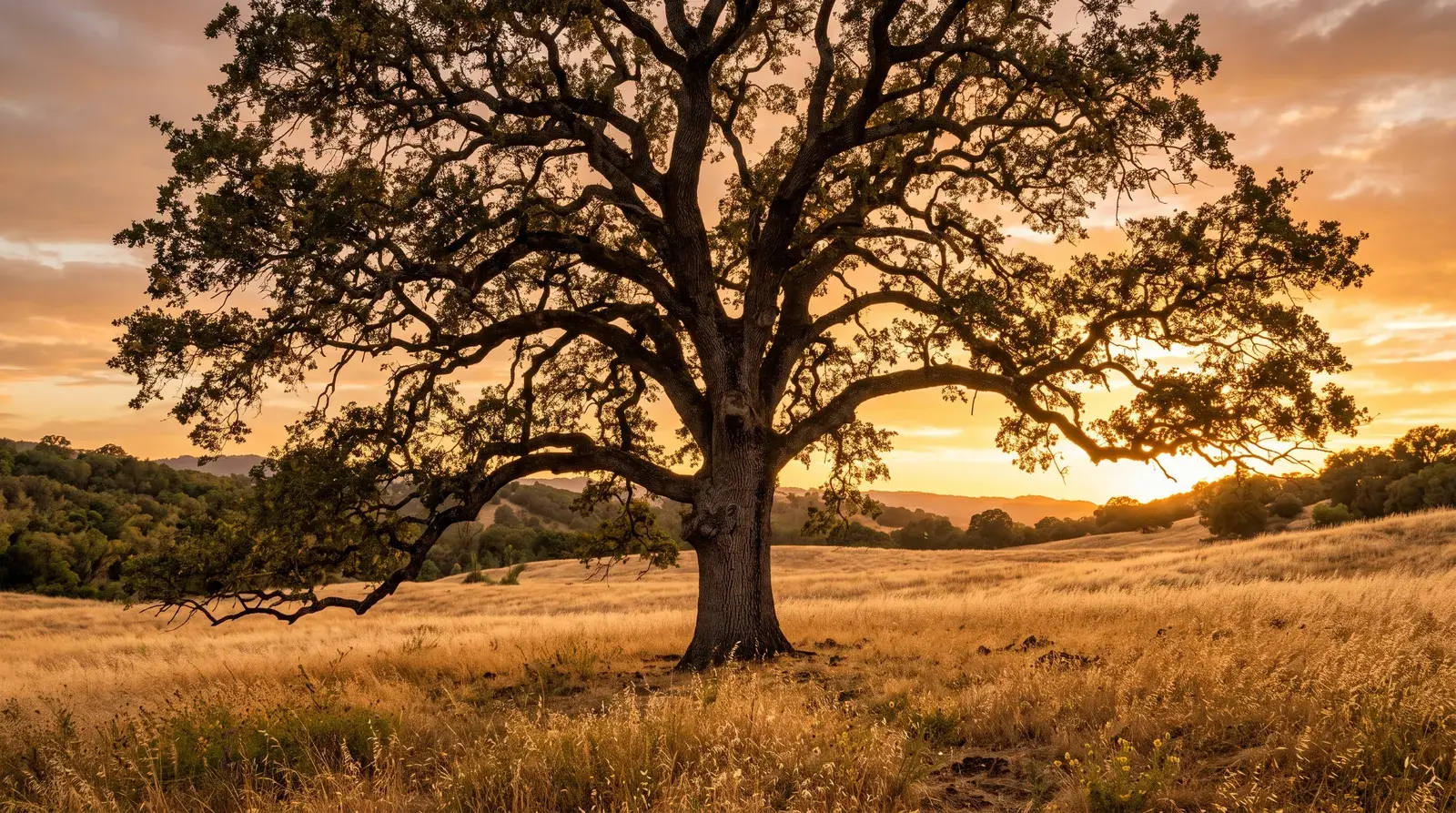
- Valley oak and interior live oak — selective weight reduction on long lateral limbs, timed for the dry season.
- Modesto ash — brittle and aging citywide; regular thinning and end-weight reduction is what keeps limbs out of driveways in winter wind.
- Camphor — dense canopies in older suburbs that need interior thinning so wind passes through instead of pushing on the whole crown.
- Chinese pistache and ornamental pear in newer plantings — young-tree structural pruning now prevents the co-dominant failures later.
Tree Trimming in Sacramento — free, site-specific estimates.
Storm-Prep Trimming Before Sacramento's Wet Season
Most limb failures here happen November through March, when saturated soil and south winds load canopies that grew heavy all summer. The best window for weight-reduction trimming is late summer through fall — before the first big front, not after it.
- End-weight reduction on long horizontal limbs over roofs, driveways, and play areas.
- Deadwood removal — dead limbs shed in wind first, and they're the cheapest failure to prevent.
- Crown thinning to reduce wind-sail on dense canopies like camphor and evergreen oaks.
- Clearance from service drops — work near SMUD lines gets sequenced with the utility, not improvised.
Why We Never Top Trees
Topping — lopping the canopy flat to reduce height — is the fastest way to ruin a Sacramento shade tree. The regrowth is weakly attached, grows back faster than the original canopy, and turns a sound tree into a recurring hazard.
Every cut we make follows ANSI A300 pruning standards: reduction cuts back to a lateral limb that can take over, thinning cuts at the branch collar, and never more of the live canopy removed in one pass than the tree can afford. If a tree is genuinely too big for its spot, crown reduction done correctly — or an honest conversation about removal and replacement — beats topping every time.
Need tree trimming in Sacramento?
Share the address and project details — we'll come back with a scoped, site-specific estimate.
Working Tight City Lots and Alleys
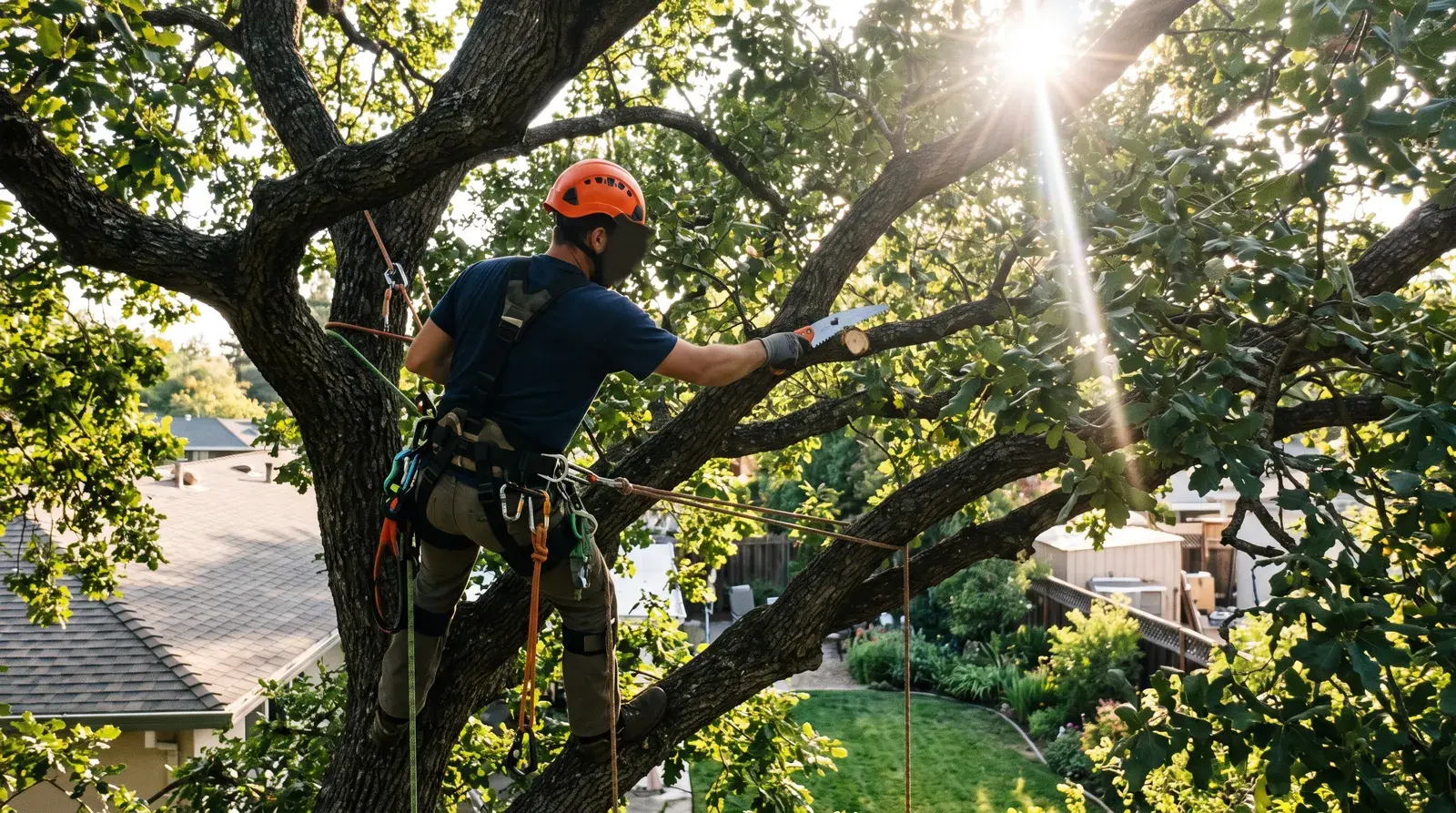
Trimming a big tree in Midtown or East Sac is as much a logistics job as a cutting job. Narrow side yards, shared fences, parked cars under the canopy, and overhead drops all shape how the crew works.
- Alley staging where lots back onto one — the chipper works from the alley and brush never crosses your yard.
- Roped-down limbs over structures, gardens, and hardscape instead of free-dropped wood.
- Ground protection on lawns and irrigated beds under the work zone.
- Full cleanup: brush chipped, rakings hauled, gutters checked for debris we put there.
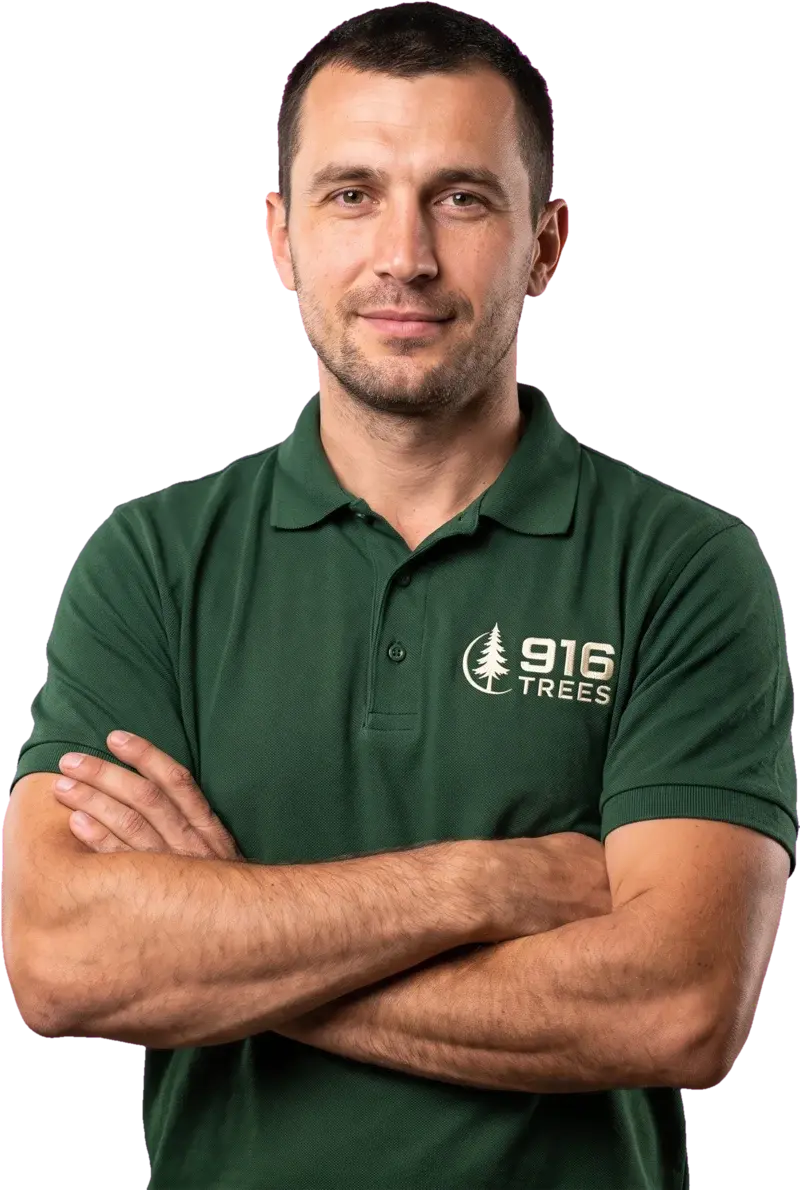
The same crew from estimate to cleanup.
No juggling separate contractors for one tree. Tell us the address and what you're dealing with, and we'll come back with a written, site-specific number.
- Removal, trimming, stumps, and cleanup handled by one crew
- Free, site-specific estimates — priced to your tree, not a flat rate
- Sacramento, Placer, El Dorado, and Yolo counties
Trimming Cost and Cycle in Sacramento
As a broad regional range, professional trimming for a mature shade tree typically runs a few hundred dollars for a small ornamental to $1,000–$2,000+ for a large oak or plane tree needing full-canopy work — access, tree size, and how long it's been since the last pruning drive the number. Most mature trees do well on a 3–5 year cycle; young trees benefit from structural pruning every 2–3 years while problems are still cheap to fix. Estimates are free and site-specific.
Related guides
When to Trim Oak Trees in California
The best window to prune native California oaks, why dry-season timing cuts disease risk, and the pruning mistakes that shorten an oak's life.
Keeping Trees Alive Through Sacramento Summers
Deep watering at the dripline, real mulch, and the heat-stress signs that matter — how Sacramento trees survive months of triple-digit heat.
Sacramento's Heritage Tree Ordinance, Explained
What makes a Sacramento tree a Heritage Tree, what City Code Chapter 12.56 protects, and how to get pruning or removal approved.
What tree trimming costs — and what Sacramento allows
Regional ranges, local permit rules, and the alternatives worth weighing before tree trimming in Sacramento.
How Much Does Tree Trimming Cost in Sacramento? (2026)
Regional range $300–$2,500 — and what moves the number on a real job.
Do You Need a Permit to Remove a Tree in Sacramento?
Which Sacramento trees need a removal permit, how city and county rules differ, and how to check before the saw comes out.
Crown Reduction vs. Topping: What's the Difference?
Crown Reduction or Topping — how to tell which one the tree actually needs.
Curtis Park
Curtis Park's canopy is among Sacramento's oldest — streetcar-era Craftsman bungalows built between 1905 and 1930 along…
Tree Service in Sacramento County, CA
Tree work in Sacramento County ranges from removing aging valley oaks in East Sacramento to grinding stumps on new-buil…
Crown Reduction Cost in the Sacramento Region (2026)
Regional range $500–$4,000 — and what moves the number on a real job.
Sacramento neighborhoods we work in
Housing era, canopy, and access change block to block. These pages cover what tree trimming looks like in each.
East Sacramento
East Sacramento's tree stock is old, large, and tightly regulated.
Land Park
Land Park is one of Sacramento's oldest residential neighborhoods, built out primarily in the 1920s through the 1940s a…
Curtis Park
Curtis Park's canopy is among Sacramento's oldest — streetcar-era Craftsman bungalows built between 1905 and 1930 along…
Midtown
Midtown Sacramento's dense urban grid — roughly 16th Street to 30th Street, between Q Street and Capitol Avenue — packs…
Pocket-Greenhaven
Pocket-Greenhaven is a south Sacramento neighborhood built largely in the 1970s and 1980s in the bend of the Sacramento…
Natomas
Natomas — both North and South — was built mostly between the late 1980s and 2010 on former agricultural and floodplain…
Oak Park
Oak Park sits on ground that was Sacramento's first streetcar suburb, developed in the 1880s around an eight-acre oak g…
Tahoe Park
Tahoe Park was built fast after World War II — mostly late-1940s and 1950s ranch homes and bungalows on Sacramento's ea…
Want a sense of the work first? See the kinds of tree trimming jobs we take on and who shows up to do them.
Frequently asked questions
Can I trim the city street tree in front of my house?
No — trees in the right-of-way, including the sidewalk planting strip, are City Trees, and pruning them requires going through the City of Sacramento. That applies to hired crews too; a reputable company will decline to cut a street tree without authorization. We identify which trees on your frontage are city-controlled during the estimate and trim everything that's legitimately yours.
When is the best time to trim oak trees in Sacramento?
Dry season or dormancy — roughly July through early fall for light work, or winter dormancy for larger structural pruning. Avoid heavy pruning of valley oak and interior live oak in spring and early summer, and avoid wet-season cutting that can spread disease through fresh wounds. Non-oak species are more flexible, but late summer through fall is still the smart window for storm-prep weight reduction citywide.
How often should mature trees in East Sac or Land Park be trimmed?
Every 3–5 years for most mature shade trees — London plane, sycamore, camphor, and the big oaks. Aging Modesto ash often need attention more often because the wood is brittle and end-weight builds fast. If it's been ten years, expect the first pass to be bigger and pricier; after that, the maintenance cycle keeps each visit smaller and the tree safer.
Will trimming reduce the chance of storm damage?
Substantially, yes. Most winter failures involve deadwood, overextended limbs, or dense canopies acting as sails in south winds on saturated soil. Removing deadwood, reducing end-weight over targets, and thinning dense crowns addresses all three. It doesn't make a tree failure-proof — a decayed trunk or lifting root plate is a removal conversation, not a trimming one — but a maintained tree fails far less often than a neglected one.
Do you top trees to reduce their height?
No. Topping creates weakly attached regrowth, invites decay through the stub cuts, and makes the tree more dangerous within a few seasons — while costing you the canopy that keeps your house cool in a Sacramento July. If height is the genuine problem, we do proper crown reduction back to sound lateral limbs, or give you a straight answer about whether removal and replanting is the better long-term move.