Trimming Folsom's Oaks Without Breaking the Rules
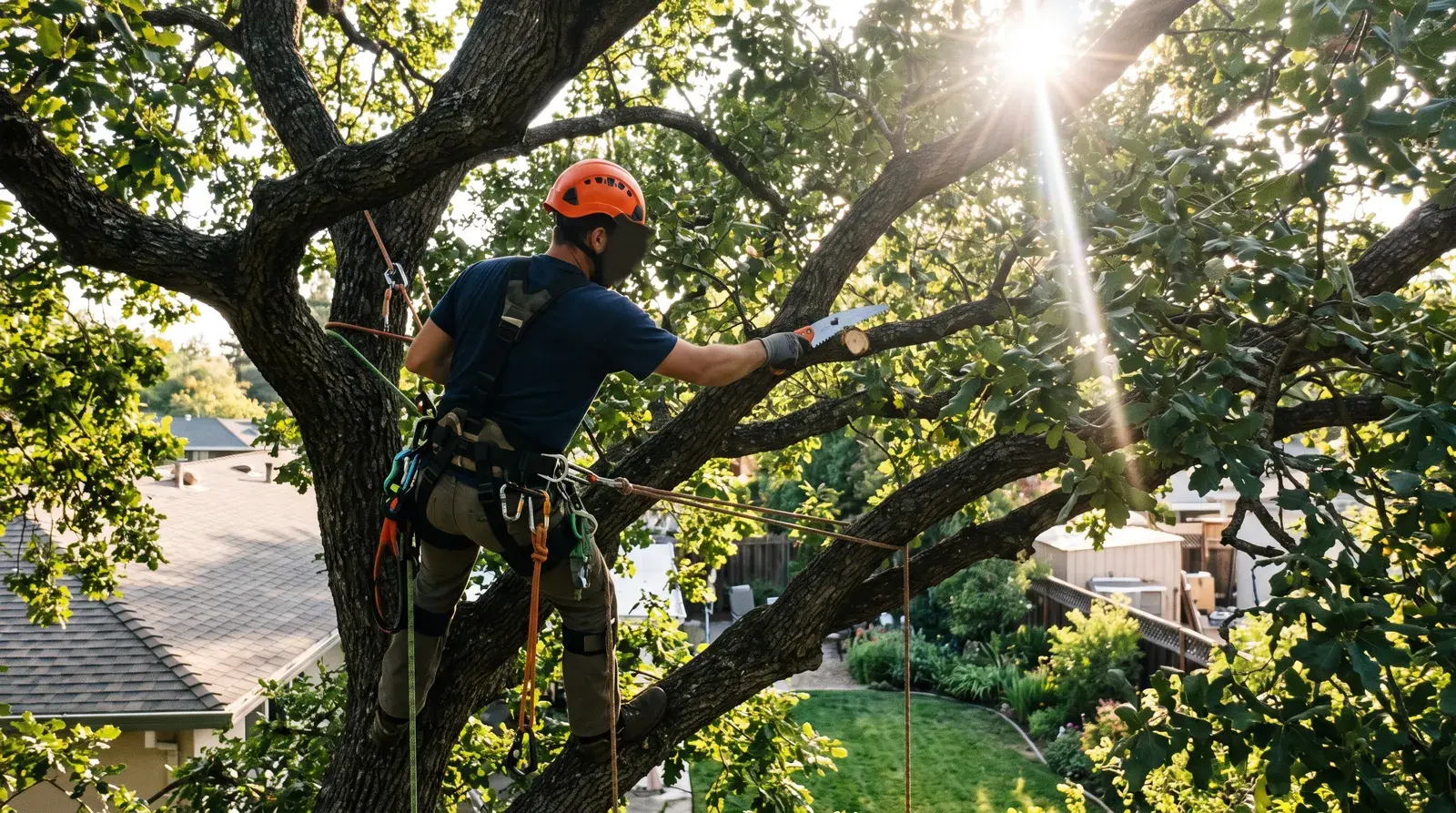
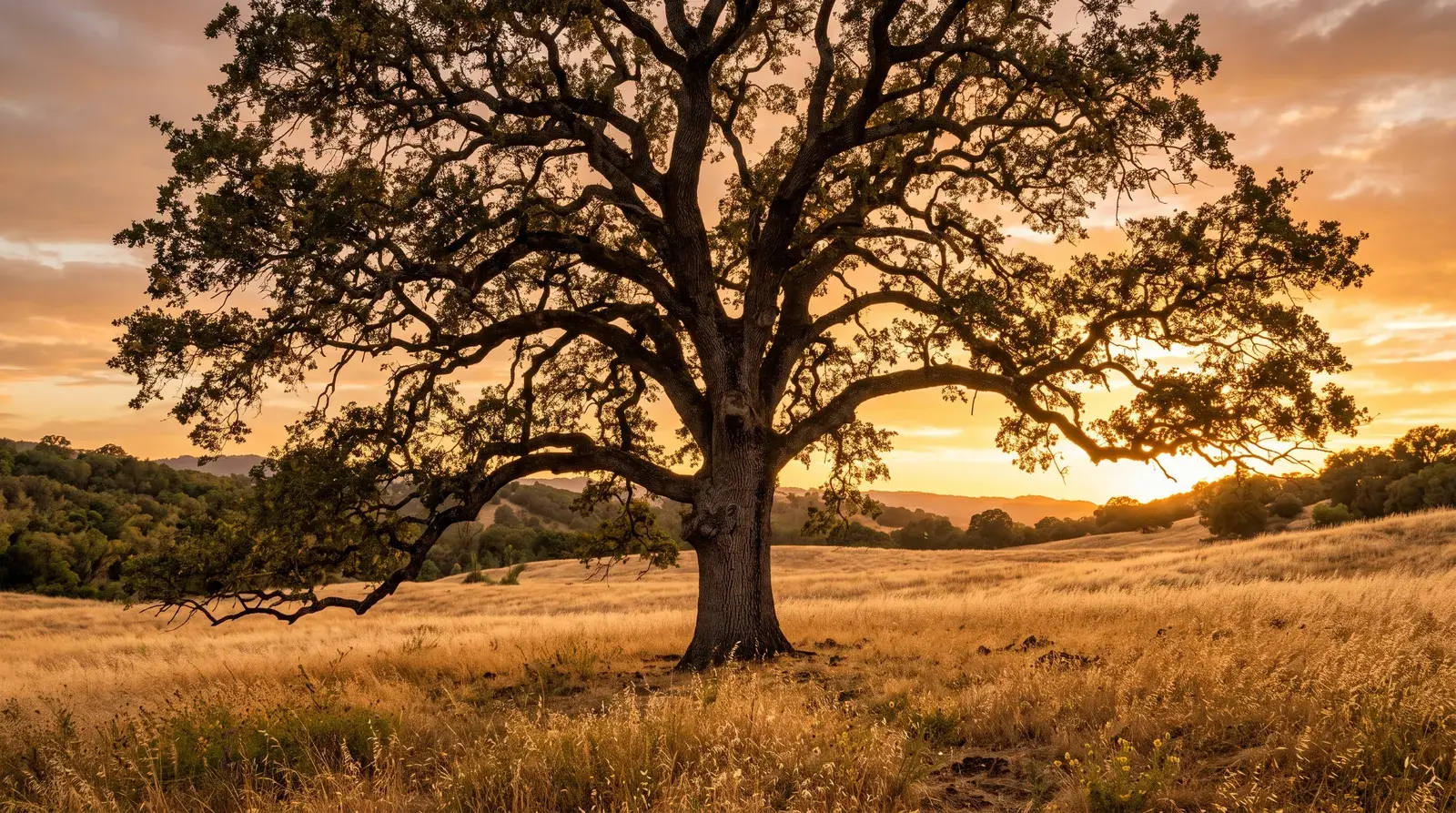
Folsom protects its native oaks, and that extends to how they are pruned — stripping or topping a protected oak can trigger the same enforcement as removing it. Proper oak pruning removes deadwood, reduces end weight, and keeps cuts small and selective.
- Prune native oaks in the dry season or dormancy; wet-season cuts invite disease, and heavy summer pruning stresses trees already coping with heat.
- Deadwood removal is the workhorse job on mature live oaks — dead limbs over patios and play areas are the most common oak hazard in Folsom yards.
- Weight reduction on long horizontal limbs beats topping every time. Topped oaks regrow weakly attached shoots that fail in wind.
- If your oak was preserved during subdivision construction, verify pruning limits with the City of Folsom before any major work.
Clearance Trimming for Folsom Homes
Most trimming calls in Folsom are practical: limbs on the roof, branches over the driveway, canopy blocking a solar array. Standard clearance work keeps trees off structures without butchering their shape.
- Roof clearance — limbs off tiles and gutters, which also cuts down the rat and squirrel highway onto your roofline.
- Solar clearance — panel installs across Empire Ranch and Folsom Ranch mean shading limbs come off; we trim for production without gutting the tree.
- Driveway and sidewalk lift — raising canopies over parking and paths, a routine HOA request in Broadstone and Willow Creek.
- Fence-line and neighbor clearance — trimmed at the property line, cleanly, before it becomes a dispute.
Tree Trimming in Folsom — free, site-specific estimates.
Wind and the Lake Effect
Folsom sits where Delta breezes and winter storm winds funnel up the American River corridor, and full, unthinned canopies act like sails. Selective thinning and end-weight reduction let wind pass through the crown instead of pushing the whole tree over.
The trees that fail in Folsom windstorms are usually the ones with dense, never-pruned crowns and long, heavy limb ends — ornamental pears splitting at weak unions, redwood tops snapping, and overextended oak laterals tearing out. A maintenance trim every few years is cheap compared to emergency work after a January storm.
Need tree trimming in Folsom?
Share the address and project details — we'll come back with a scoped, site-specific estimate.
Builder Trees Growing Up
The 1990s and 2000s subdivisions — Broadstone, Willow Creek, Empire Ranch — planted fast growers that are now 25 to 35 years old. Many were never structurally pruned young, and they show it: crossing limbs, included bark, and co-dominant stems.
- Ornamental pears — notorious for splitting; structural pruning or reduction extends their useful life by years.
- Fruitless mulberry and ash — fast, brittle wood that needs regular thinning to stay safe over patios.
- Chinese pistache and crape myrtle — mostly shaping and clearance; crape myrtles get proper pruning here, not the stubbed 'crape murder' cut.
- Young street trees in Folsom Ranch — early structural pruning now is the cheapest tree work these homes will ever buy.
The same crew from estimate to cleanup.
No juggling separate contractors for one tree. Tell us the address and what you're dealing with, and we'll come back with a written, site-specific number.
- Removal, trimming, stumps, and cleanup handled by one crew
- Free, site-specific estimates — priced to your tree, not a flat rate
- Sacramento, Placer, El Dorado, and Yolo counties
What Trimming Costs in Folsom
Trimming is priced per tree based on size, condition, and access — a young pistache shape-up costs far less than deadwooding a 60-foot live oak over a pool. Most Folsom homeowners bundle several trees into one visit to get the best value from a single mobilization.
We quote from a free on-site walk-through, in writing, per tree, so you can prioritize. All debris is chipped and hauled unless you want the chips for mulch, which we leave free.
Related guides
When to Trim Oak Trees in California
The best window to prune native California oaks, why dry-season timing cuts disease risk, and the pruning mistakes that shorten an oak's life.
Keeping Trees Alive Through Sacramento Summers
Deep watering at the dripline, real mulch, and the heat-stress signs that matter — how Sacramento trees survive months of triple-digit heat.
Sacramento's Heritage Tree Ordinance, Explained
What makes a Sacramento tree a Heritage Tree, what City Code Chapter 12.56 protects, and how to get pruning or removal approved.
What tree trimming costs — and what Folsom allows
Regional ranges, local permit rules, and the alternatives worth weighing before tree trimming in Folsom.
How Much Does Tree Trimming Cost in Sacramento? (2026)
Regional range $300–$2,500 — and what moves the number on a real job.
Do You Need a Tree Removal Permit in Folsom?
Where Folsom draws the line before a tree comes down, and who to check with.
Crown Reduction vs. Topping: What's the Difference?
Crown Reduction or Topping — how to tell which one the tree actually needs.
Tree Service in Sacramento County, CA
Tree work in Sacramento County ranges from removing aging valley oaks in East Sacramento to grinding stumps on new-buil…
Crown Reduction Cost in the Sacramento Region (2026)
Regional range $500–$4,000 — and what moves the number on a real job.
Do You Need a Tree Removal Permit in Elk Grove?
Where Elk Grove draws the line before a tree comes down, and who to check with.
Want a sense of the work first? See the kinds of tree trimming jobs we take on and who shows up to do them.
Frequently asked questions
When should oaks be trimmed in Folsom?
Dry season — roughly summer into early fall for most work, with dormant-season pruning also acceptable. Avoid heavy pruning during wet winter months, when open cuts are most vulnerable to disease, and avoid stripping canopy in the middle of a heat wave. Deadwood can come out any time of year since it involves no live tissue.
Are there limits on trimming protected oaks in Folsom?
Yes. Folsom's tree preservation rules cover major pruning of protected native oaks, not just removal — excessive cutting or topping can be treated as damaging a protected tree. Routine maintenance pruning done to industry standards is generally fine. If a large oak needs significant reduction, we keep the work within accepted standards and can document it if the city asks.
Do you top trees?
No. Topping creates weakly attached regrowth that fails in wind, ruins the tree's structure, and on a protected Folsom oak can also be an ordinance violation. If a tree is too tall for its spot, crown reduction — cutting back to sound lateral limbs — achieves the height goal without wrecking the tree. If even that will not solve it, we will tell you straight.
How often should Folsom trees be trimmed?
Mature oaks typically need attention every 3–5 years, mostly deadwood and weight management. Fast growers like mulberries, ash, and ornamental pears benefit from a pass every 2–3 years. Young trees in Folsom Ranch should get structural pruning in their first decade — small cuts now prevent expensive corrections at 30 feet. We can tell you the realistic cycle for your specific trees at the estimate.
Can you trim limbs hanging over from a neighbor's tree?
Generally, California lets you trim encroaching branches back to your property line as long as the cuts do not seriously injure the tree — and if it is a protected oak, ordinance rules still apply regardless of whose side the trunk is on. We make clean, correct cuts at the line and can coordinate with your neighbor when the healthier long-term fix is pruning the whole tree.
What if the tree needs to come out instead of being trimmed?
We will tell you honestly if a tree is past the point where trimming helps — heavy internal decay, a failed co-dominant union, or root damage are removal calls, not pruning ones. See tree removal in Folsom for permit rules, pricing, and how a removal is handled here, including the oak ordinance check we run on every estimate.