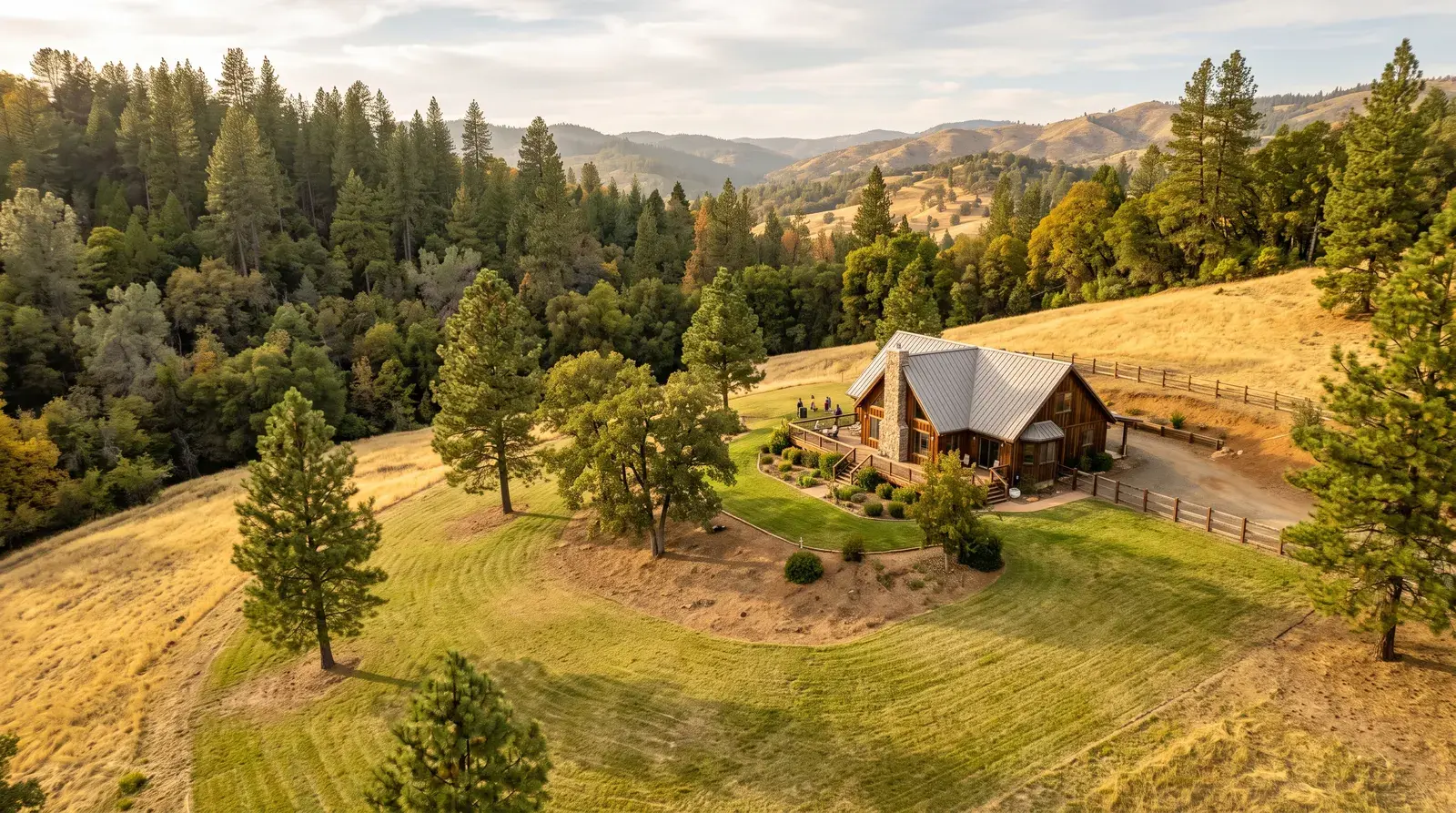
What PRC 4291 Requires on an El Dorado Hills Lot
The law splits your property into zones measured from the structure. Zone 1 (0–30 ft) has to be lean, clean, and green; Zone 2 (30–100 ft or to your property line) needs reduced fuel; and an ember-resistant Zone 0 (0–5 ft) is being phased in. Details at readyforwildfire.org.
- Zone 0 (0–5 ft) — moving toward ember-resistant: no combustible mulch, brush, or limbs touching the structure.
- Zone 1 (0–30 ft) — dead plants and dry leaves removed, tree limbs clear of the roof and chimney, canopy spacing between trees.
- Zone 2 (30–100 ft) — grass mowed down, brush islands separated, ladder fuels cut so ground fire can't climb into the oak canopy.
- Slopes need more — fire runs uphill, so downslope sides of El Dorado Hills pads typically need wider spacing than the flat-lot minimums.
The Fuels That Matter Here
El Dorado Hills fuel is oak woodland fuel: dry annual grass under blue oaks, brush fields of manzanita and toyon, and gray pine that torches hard. The goal isn't a moonscape — it's breaking the ladder from grass to brush to canopy.
- Interior live oak — evergreen, low-limbed, often touching roofs; the most common Zone 1 limbing job in town.
- Blue oak — deciduous natives that carry dead interior wood; we deadwood them rather than remove healthy trees.
- Gray pine — resinous and top-heavy; dead ones near structures should come out, live ones get limbed up.
- Manzanita, toyon, coyote brush — the classic ladder fuels on unbuilt slopes behind Serrano and Blackstone lots.
- Dead trees — drought- and beetle-killed oaks and pines are the first thing any inspector writes up.
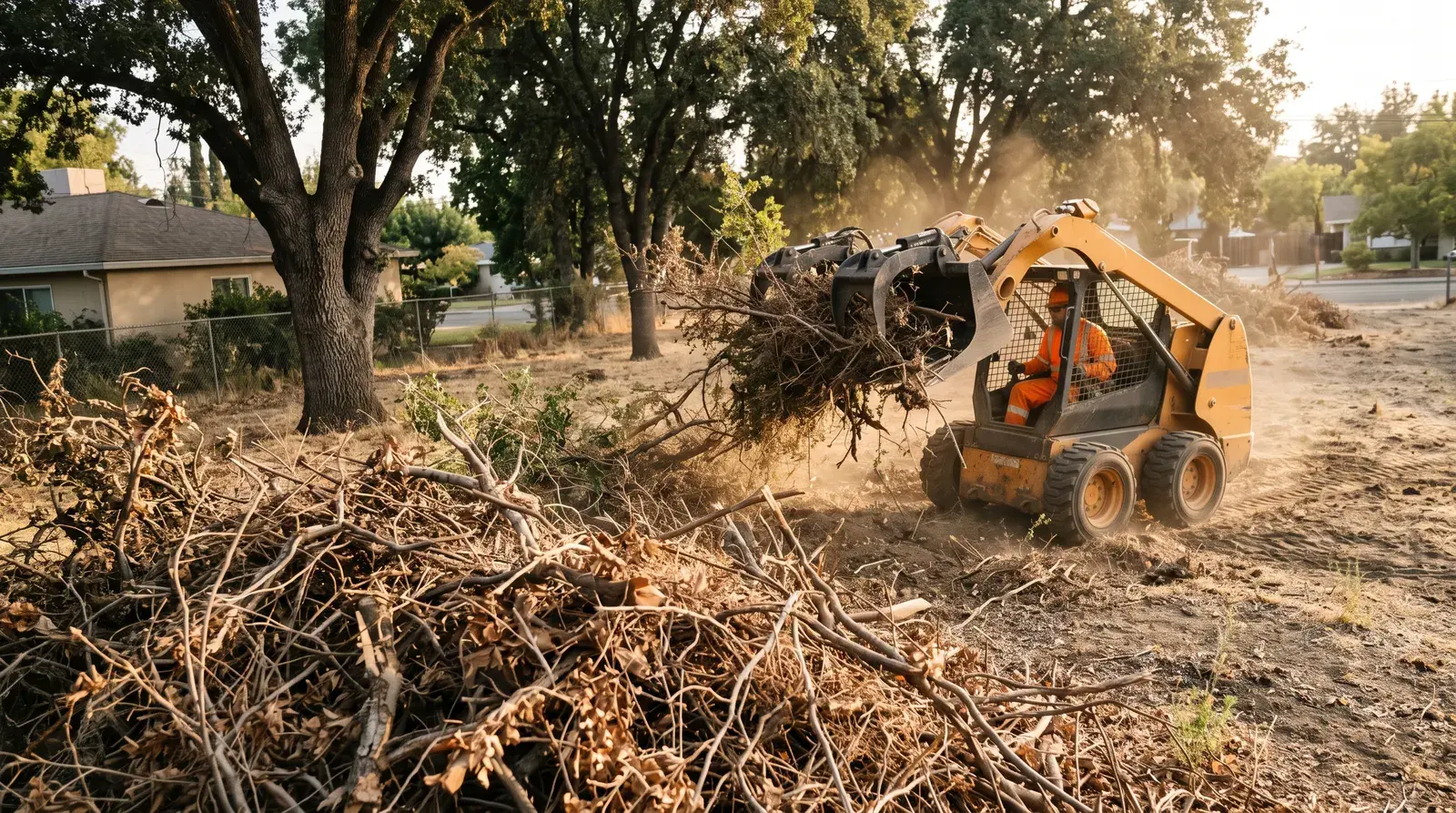
Defensible Space Clearing in El Dorado Hills — free, site-specific estimates.
Insurance Inspection Prep
A growing share of our El Dorado Hills calls start with an insurance letter, not a fire inspection. Carriers are photographing homes in mapped hazard zones and conditioning renewal on visible clearance. We work from the letter and fix what the photos will show.
- Limbs off the roof — overhanging oak limbs are the number-one item in carrier letters; we prune them back with proper cuts, not topping.
- Clean roofline and gutters sightline — vegetation cleared so aerial and street-view photos show separation.
- Brush-to-structure gaps — measurable clearance in Zones 0 and 1, where the camera looks first.
- Before-and-after photos — we document the completed work so you have evidence to send back with your response.
Steep-Lot Zone Work
Plenty of El Dorado Hills homes have their 30–100 ft Zone 2 on a grade you wouldn't walk casually. We cut, drag, and chip on slopes routinely — brush comes uphill to the chipper, and nothing gets piled where it becomes next year's fuel bed.
- Hand crews on grades machines can't work, with brush dragged or winched to accessible staging.
- Chip-on-site where access allows; full haul-off where it doesn't. No burn piles left behind.
- Oak roots and topsoil left intact — clearing fuel, not grading the slope.
- Salmon Falls Road, Green Valley Road, and Bass Lake area parcels with acreage beyond the fence line are a regular part of the route.
Need defensible space clearing in El Dorado Hills?
Share the address and project details — we'll come back with a scoped, site-specific estimate.
When to Do the Work
Late winter through spring is the window. Grass is still green, oaks are dormant or just leafing out, and you're done before inspections and the June grass cure. Waiting until a July inspection notice means competing for crew time with everyone else who waited.
- January–April — best pricing and scheduling; oak pruning lands in the dormant/dry-season window arborists prefer for native oaks.
- May–June — the pre-inspection rush; still workable, book early.
- Fire season — clearance work continues, with equipment precautions on hot, windy days.
- Annual maintenance — grass and brush regrow every year; a standing spring visit costs less than a fresh full clear.
The same crew from estimate to cleanup.
No juggling separate contractors for one tree. Tell us the address and what you're dealing with, and we'll come back with a written, site-specific number.
- Removal, trimming, stumps, and cleanup handled by one crew
- Free, site-specific estimates — priced to your tree, not a flat rate
- Sacramento, Placer, El Dorado, and Yolo counties
What a Typical Job Costs
Defensible space pricing depends on acreage, slope, and how overgrown the lot is. As broad regional figures, standard-lot Zone 1 and 2 work often runs several hundred to a few thousand dollars; acreage parcels and dead-tree removals add from there. Estimates are free and site-specific.
- Standard suburban lot — roof clearance pruning plus Zone 1 cleanup is usually the smallest ticket.
- Half-acre to multi-acre — Zone 2 brush thinning scales with ground covered and slope.
- Dead tree removal — quoted per tree; see our El Dorado Hills tree removal page for what drives those numbers.
- Haul-off vs. chip-back — chips left on site as ground cover (outside Zone 0) trim the disposal cost.
Related guides
California Defensible Space Requirements (Zones 0–2)
PRC 4291 defensible space zones explained — what to clear in Zone 0 (0–5 ft), Zone 1 (0–30 ft), and Zone 2 (30–100 ft), and what inspectors look for.
9 Signs a Tree Needs to Come Down
Nine warning signs a tree is hazardous or dying — and when removal is safer than trying to save it.
When to Trim Oak Trees in California
The best window to prune native California oaks, why dry-season timing cuts disease risk, and the pruning mistakes that shorten an oak's life.
What defensible space clearing costs — and what El Dorado Hills allows
Regional ranges, local permit rules, and the alternatives worth weighing before defensible space clearing in El Dorado Hills.
Defensible Space Clearing Cost in the Sacramento Foothills (2026)
Regional range $1,000–$10,000 — and what moves the number on a real job.
Do You Need a Tree Removal Permit in Auburn?
Where Auburn draws the line before a tree comes down, and who to check with.
Professional vs. DIY Tree Removal: What's Safe to Do Yourself
Professional or DIY — how to tell which one the tree actually needs.
Tree Service in El Dorado County, CA
El Dorado County runs from the Sacramento Valley edge at El Dorado Hills up through Placerville and into Pollock Pines…
How Much Does Tree Removal Cost in Sacramento? (2026)
Typical 2026 Sacramento tree removal price ranges by tree size, the factors that move the number, and how to read a quote before you sign it.
Do You Need a Tree Removal Permit in Rancho Cordova?
Where Rancho Cordova draws the line before a tree comes down, and who to check with.
Want a sense of the work first? See the kinds of defensible space clearing jobs we take on and who shows up to do them.
Frequently asked questions
Is defensible space legally required in El Dorado Hills?
If your home is in a mapped fire hazard severity zone — and much of El Dorado Hills is — California PRC 4291 requires defensible space: Zone 1 (0–30 ft) lean, clean, and green, and Zone 2 (30–100 ft) with reduced fuel, plus an ember-resistant Zone 0 (0–5 ft) being phased in. The local fire district conducts inspections in the area. Check your parcel's zone designation and current requirements at readyforwildfire.org, and verify inspection specifics with the fire district.
My insurance company sent a letter about overhanging limbs and brush. Can you fix what they flagged?
Yes — bring us the letter and any photos the carrier included. Most El Dorado Hills insurance write-ups come down to the same items: oak limbs over the roof, vegetation against the structure, and brush too close in Zones 0 and 1. We prune the limbs back with proper cuts, clear the flagged vegetation, haul the debris, and photograph the finished work so you have documentation to send with your response. Scoping from the letter keeps the job focused on what actually affects your renewal.
Do I have to remove my oaks to meet defensible space rules?
No — and on most lots you shouldn't. PRC 4291 is about fuel arrangement, not clearcutting: healthy blue and live oaks can stay when they're limbed up, deadwooded, and separated from brush underneath. A well-maintained oak canopy can even help by shading out flashy grass fuels. Dead trees are the exception — drought- and beetle-killed oaks and gray pines near structures should come out. El Dorado County also has oak protections, which is one more reason thinning beats removal.
Can you clear the steep slope behind my house?
Yes. Steep back slopes are standard El Dorado Hills terrain — the pad is flat and the Zone 2 ground falls away behind it. We put hand crews on the grade, drag or winch brush up to where the chipper can reach, and haul or chip everything rather than leaving piles that become fuel. Fire moves faster uphill, so the downslope side of your home is actually where clearance matters most, and inspectors look there first.
How often does defensible space work need to be repeated?
Annually, at minimum for the light work. Grass regrows every winter and cures by June, brush resprouts, and oaks keep adding deadwood. The expensive first-year push — dead tree removal, heavy brush clearing, roof-clearance pruning — doesn't repeat if you maintain it; after that, a spring visit for mowing height, new deadwood, and regrowth keeps the property inspection-ready. Most of our repeat El Dorado Hills clients are on a once-a-year cycle scheduled before the grass cures.