
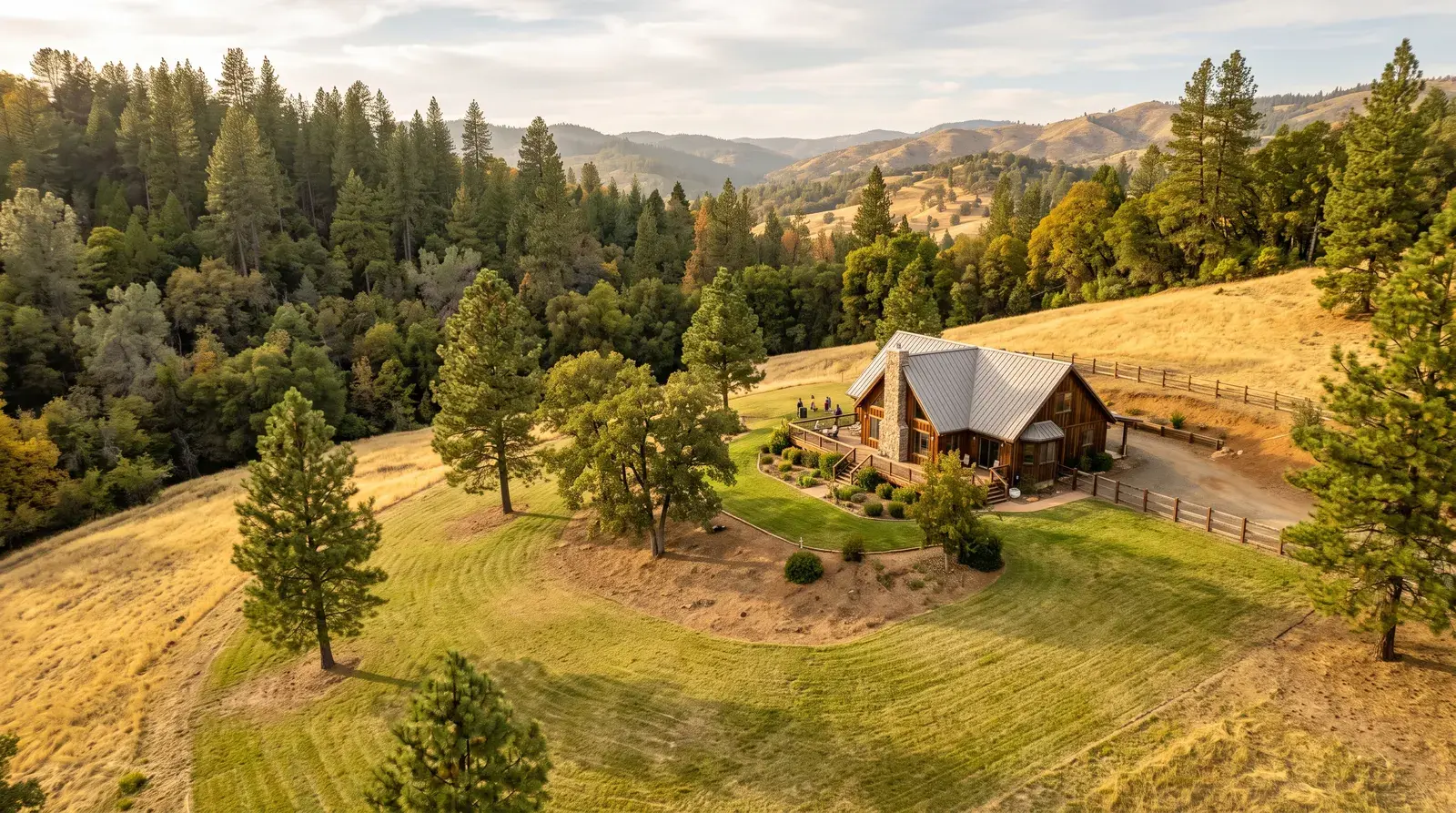
The Zone Standards, Applied to an Auburn Lot
PRC 4291 splits the 100 feet around your home into zones with different rules. On paper it's simple; on a tiered Auburn hillside with oak, pine, and brush, applying it takes judgment about which fuels actually carry fire to the structure.
- Zone 0 (0–5 ft, being phased in) — ember-resistant: no combustible mulch, no shrubs against siding, no limbs over the roof edge.
- Zone 1 (0–30 ft) — lean, clean, and green: dead vegetation out, tree crowns separated, limbs lifted, woodpiles and slash relocated.
- Zone 2 (30–100 ft) — reduced fuel: brush broken into islands, ladder fuels cut, dead trees removed, grass kept down.
- Slopes extend the math — fire preheats fuel uphill, so the downhill side of a canyon-rim lot effectively needs more clearance, not less.
- Full standards at readyforwildfire.org; your insurance carrier may layer requirements on top.
Auburn's Problem Fuels
The fuels that fail inspections here are predictable. Gray pine and dead ponderosa torch; dense interior live oak holds deadwood that catches embers; manzanita and coyote brush burn hot and regrow fast. The work is targeting these, not scalping the lot.
- Dead and dying pine — the number-one item. A beetle-killed ponderosa inside 100 feet is concentrated fuel and a strike hazard in one package.
- Gray pine — resinous, ragged, and quick to torch; near structures it usually warrants removal or aggressive limbing.
- Live oak deadwood — mature interior live oaks carry years of dead interior limbs; cleaning them out keeps the tree and removes the fuel.
- Manzanita, coyote brush, and Scotch broom — continuous brush gets broken into separated islands rather than stripped to bare dirt.
- Ladder fuels — the brush-to-limb-to-canopy stairway is what turns a ground fire into a crown fire; limbing conifers up 6–10 feet breaks the ladder.
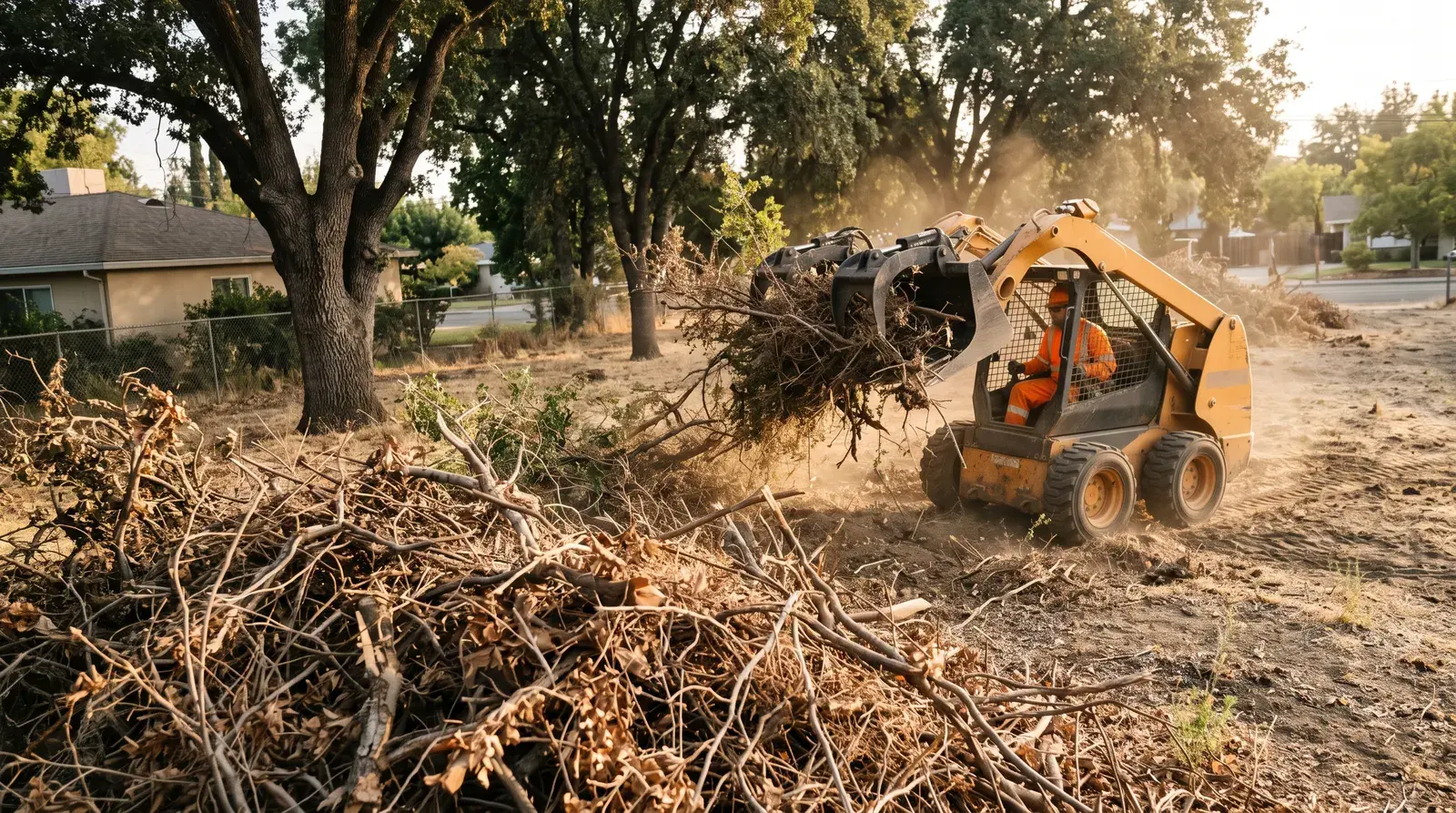
Defensible Space Clearing in Auburn — free, site-specific estimates.
Steep-Slope Clearing Along the Canyon Rim
The lots that most need clearing in Auburn — above the North and Middle Fork canyons, along Robie Point and the trail corridor — are the hardest to work. Slopes too steep for mowers or masticators get cleared by hand crews with chainsaws and brushcutters, working roped where needed.
- Hand crews cut, haul, and chip uphill; on true canyon slope there's no machine shortcut, and bids reflect the labor honestly.
- Slash never stays on the slope — cut brush left in place is worse than the standing fuel was.
- Erosion matters: we cut brush high or leave root systems in ground on raw slopes so winter rain doesn't take the hillside with it.
- Work near the state recreation area and canyon trail corridors respects property boundaries — know where your parcel actually ends.
Need defensible space clearing in Auburn?
Share the address and project details — we'll come back with a scoped, site-specific estimate.
Keep the Oaks, Cut the Ladder
Defensible space done right doesn't mean a moonscape. Healthy, well-pruned native oaks are relatively fire-resistant and shade the fuels below them; the goal is separating canopies, removing deadwood, and clearing what burns underneath — not clear-cutting the lot.
- Mature blue oak and interior live oak generally stay — limbed up, deadwood removed, and brush cleared from beneath.
- Crown separation targets conifers first; oak-to-oak spacing standards are more forgiving.
- Native oaks may be protected under City of Auburn or Placer County rules even in fire work — removals get verified before cutting.
- A cleared lot with healthy oaks is also worth more than a scraped one — fire compliance and property value aren't in conflict here.
The same crew from estimate to cleanup.
No juggling separate contractors for one tree. Tell us the address and what you're dealing with, and we'll come back with a written, site-specific number.
- Removal, trimming, stumps, and cleanup handled by one crew
- Free, site-specific estimates — priced to your tree, not a flat rate
- Sacramento, Placer, El Dorado, and Yolo counties

Inspections, Insurance, and Timing
Defensible space pressure in Auburn comes from two directions: state and local fire inspections, and insurance carriers demanding documented compliance to write or renew policies. Both are easier to satisfy before fire season than during it.
- Best window: late winter through late spring — grass is down or green, ground is workable, and crews aren't booked out the way they are in June.
- Photograph the property before and after; carriers and inspectors respond to documentation.
- Annual maintenance is lighter than the first clearing — brush regrows, grass recurs, and a yearly pass keeps you compliant for a fraction of the initial cost.
- Free on-site estimates; we scope by zone so you can phase the work — Zone 1 first, Zone 2 as budget allows.
Related guides
California Defensible Space Requirements (Zones 0–2)
PRC 4291 defensible space zones explained — what to clear in Zone 0 (0–5 ft), Zone 1 (0–30 ft), and Zone 2 (30–100 ft), and what inspectors look for.
9 Signs a Tree Needs to Come Down
Nine warning signs a tree is hazardous or dying — and when removal is safer than trying to save it.
When to Trim Oak Trees in California
The best window to prune native California oaks, why dry-season timing cuts disease risk, and the pruning mistakes that shorten an oak's life.
What defensible space clearing costs — and what Auburn allows
Regional ranges, local permit rules, and the alternatives worth weighing before defensible space clearing in Auburn.
Defensible Space Clearing Cost in the Sacramento Foothills (2026)
Regional range $1,000–$10,000 — and what moves the number on a real job.
Do You Need a Tree Removal Permit in Auburn?
Where Auburn draws the line before a tree comes down, and who to check with.
Removing vs. Preserving a Native Oak in the Sacramento Region
Oak Removal or Preservation — how to tell which one the tree actually needs.
Tree Service in Placer County, CA
Placer County spans flat valley suburbia in Roseville and Rocklin and rises through the oak-woodland foothills to ponde…
How Much Does Tree Removal Cost in Sacramento? (2026)
Typical 2026 Sacramento tree removal price ranges by tree size, the factors that move the number, and how to read a quote before you sign it.
Do You Need a Tree Removal Permit in Davis?
Where Davis draws the line before a tree comes down, and who to check with.
Want a sense of the work first? See the kinds of defensible space clearing jobs we take on and who shows up to do them.
Frequently asked questions
What are the defensible space requirements for Auburn, CA homes?
California PRC 4291 requires 100 feet of managed vegetation around structures in fire hazard zones, which covers Auburn. Zone 1 (0–30 feet) must be lean, clean, and green — dead vegetation removed, crowns separated, limbs lifted. Zone 2 (30–100 feet) needs reduced fuel: brush broken up, ladder fuels cut, dead trees out. An ember-resistant Zone 0 (0–5 feet) is being phased in. Full current standards are at readyforwildfire.org; on slopes, effective clearance distances grow.
What does defensible space clearing cost in Auburn?
It varies too much by lot to quote a tight range — a flat half-acre needing brush work and limbing is a very different job than a steep canyon-rim acre with dead pine. Broadly, hand-crew brush clearing prices by the day or by area, dead-tree removal follows normal removal pricing ($500–$2,500 typical, more for large or steep-access conifers), and annual maintenance runs a fraction of the initial clearing. Estimates are free and scoped by zone so you can phase the work.
Can you clear brush on a steep slope below my house?
Yes — that's the most important slope on the property, since fire runs uphill and preheats everything above it. Slopes too steep for machines get cleared by hand crews with chainsaws and brushcutters, working roped where necessary. Cut material is hauled up and chipped, never left on the slope, and on raw ground we cut brush high or leave roots in place so winter rain doesn't erode the hillside. Access and slope get priced honestly at the site walk.
Do I have to remove my oak trees for defensible space?
Usually not. Healthy native oaks — blue oak, interior live oak — are relatively fire-resistant and typically stay, with deadwood cleaned out, lower limbs raised, and brush cleared from underneath. The priority removals are dead and dying pines and heavy conifers near the structure. Note that native oaks may be protected under City of Auburn or Placer County rules even in fire mitigation work, so any oak removal gets verified against local ordinances first.
When should I schedule defensible space work in Auburn?
Late winter through late spring is the best window: the ground is workable, brush hasn't fully flushed, and crews aren't booked the way they are once fire season pressure and inspection notices hit in early summer. Dead pine removal shouldn't wait for a season at all — standing dead pine gets more dangerous and more expensive to remove over time. Plan on an annual maintenance pass afterward; regrown brush and grass are much cheaper to knock down than to re-clear.