Tree Service in Auburn, CA
Tree removal, trimming, pruning, stump grinding, and emergency response for Auburn and the surrounding Placer County. Free, site-specific estimates.
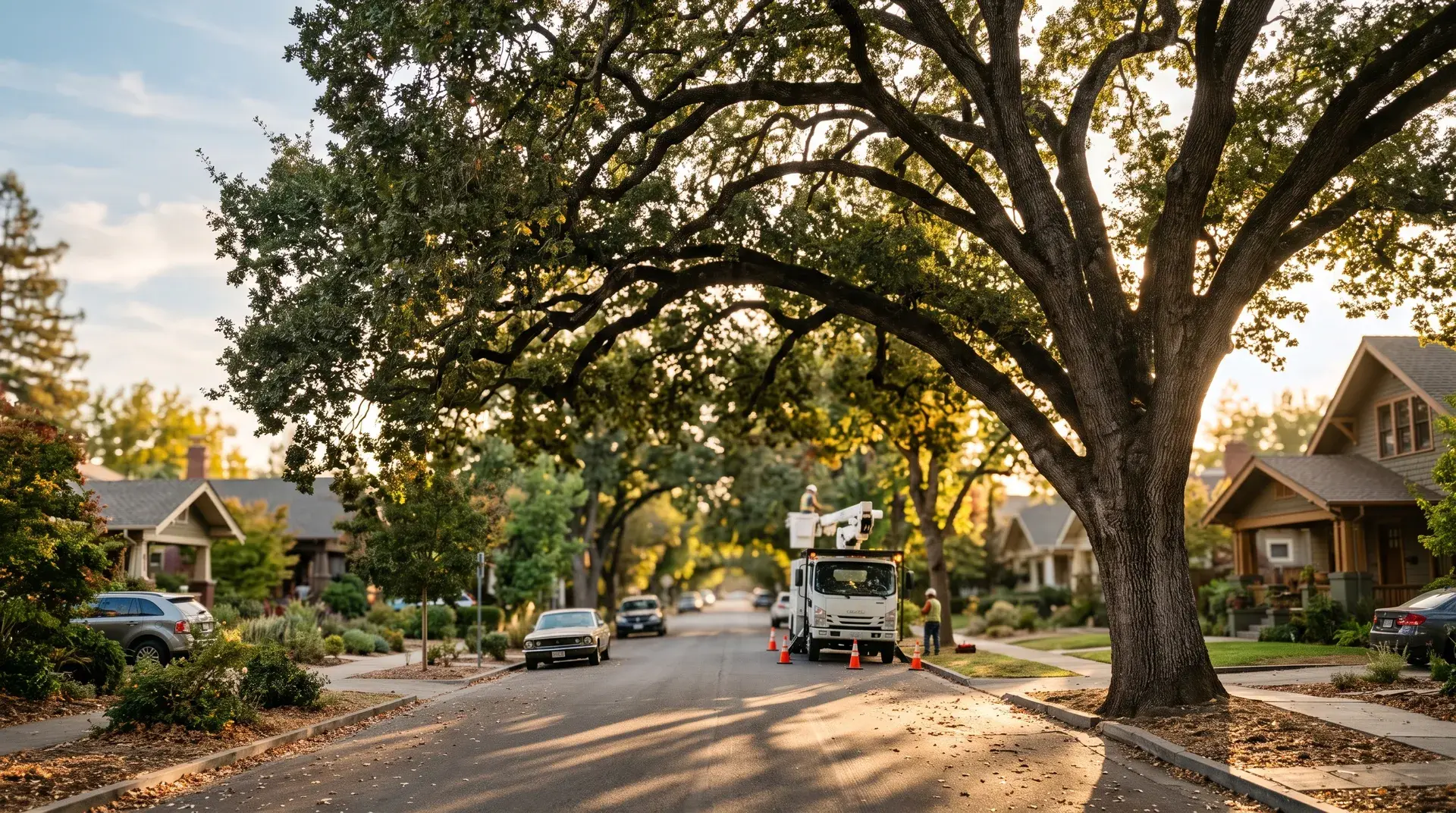
Auburn tree work is canyon work. From Old Town and the courthouse hill out to Robie Point, Skyridge, and the neighborhoods along the Auburn State Recreation Area rim, lots drop off fast into drainages full of gray pine, interior live oak, and brushy black oak — exactly the fuel that carried the 2009 49 Fire. Higher up toward Christian Valley and Bowman, ponderosa pine takes over and dead-tree removals get bigger and more technical. The jobs we run most in Auburn: defensible space clearing for the 0–30 and 30–100 foot zones, hazard tree removal on slopes and tight canyon-edge lots, crown reduction on oaks shading older homes, and stump grinding after dead pine comes out. Dry summers and winter windstorms drive the calendar — most Auburn removals are drought-killed or storm-split trees, and the best time to book fuel reduction is before June, not after the first red-flag warning.
Tree services in Auburn
Every 916 Trees service is available across Placer County.
Tree Removal
Safe removal of hazardous, dead, or unwanted trees — including permit help, cleanup, and haul-off across the Sacramento region.
Emergency Tree Service
Fast response for storm-damaged, fallen, or hazardous trees threatening homes, cars, and power lines across the Sacramento area.
Crane-Assisted Tree Removal
Crane-assisted removal for large, dead, or hazardous trees where tight access or overhead risk rules out a conventional takedown.
Palm Tree Removal
Removal and haul-off of Mexican fan palms and other species — including the tall, heavy palms common in older Sacramento neighborhoods.
Storm Damage Cleanup
Cleanup after winter windstorms — split limbs, uprooted trees, and yard debris removed so your property is safe and clear again.
Tree Trimming
Trimming for clearance, appearance, and long-term health — deadwood removal, canopy shaping, and structure on a sensible cycle.
Structural Tree Pruning
Structural pruning that builds sound branch architecture — training young trees and correcting weak, crowded, or co-dominant limbs.
Crown Reduction & Thinning
Reducing height, spread, and wind-sail on overgrown or heavy canopies — proper reduction cuts, never topping.
Palm Tree Trimming & Skinning
Annual frond and seed-pod removal plus trunk skinning — keeping Sacramento's fan palms clean, safe, and tidy.
Oak Tree Care
Specialized care for native valley, blue, and interior live oaks — dry-season pruning and heritage-tree compliance guidance.
Stump Grinding & Removal
Grinding stumps below grade so you can replant, pave, or reclaim the space — chips and surface roots handled.
Root Pruning & Root Barriers
Managing roots that lift sidewalks, driveways, and foundations — targeted root pruning and barrier installation done without killing the tree.
Lot & Land Clearing
Clearing trees, brush, and undergrowth from building sites and overgrown parcels — including ADU-prep tie-ins.
Brush & Vegetation Clearing
Cutting back overgrown brush, weeds, and undergrowth for access, code compliance, and reduced fire fuel.
Defensible Space Clearing
PRC 4291 fuel reduction — limbing up, thinning, and clearing the defensible space zones around foothill homes.
Tree Health Assessment
Diagnosing disease, pests, and structural risk — with an honest plan to treat, monitor, or remove.
Arborist Reports & Permit Support
Documentation for permits, development, and real estate — including protected and heritage tree review support.
Tree Cabling & Bracing
Structural support for co-dominant stems and heavy limbs — hardware that helps preserve mature, valued trees.
Tree Planting & Replacement
Right-tree, right-place planting and replacement — good species choices for Sacramento's heat, soils, and space.
Commercial & HOA Tree Service
Scheduled trimming, removals, and cleanup for property managers, HOAs, and commercial sites — one crew, one clear scope, clean invoicing.
Wood Chipping & Debris Hauling
On-site chipping plus haul-off of logs, chips, and green waste — the cleanup half of any tree job, done to a clean-site standard.
Nearby service areas in Placer County
Auburn is part of our Placer County tree service area — see county-wide permit rules, species, and terrain notes.
Rules and costs for Auburn tree work
What Placer County requires before a tree comes down, and what the work runs regionally.
Defensible Space Clearing Cost in the Sacramento Foothills (2026)
Regional range $1,000–$10,000 — and what moves the number on a real job.
Do You Need a Tree Removal Permit in Auburn?
Where Auburn draws the line before a tree comes down, and who to check with.
Professional vs. DIY Tree Removal: What's Safe to Do Yourself
Professional or DIY — how to tell which one the tree actually needs.
Tree Service in Placer County, CA
Placer County spans flat valley suburbia in Roseville and Rocklin and rises through the oak-woodland foothills to ponde…
Arborist Report Cost in Sacramento (2026)
Regional range $300–$1,500 — and what moves the number on a real job.
Do You Need a Tree Removal Permit in Roseville?
Where Roseville draws the line before a tree comes down, and who to check with.
New to us? Have a look at the kinds of tree jobs we handle around Auburn, or read how we work across Placer County.
Frequently asked questions
Do I need a permit to remove a tree in Auburn?
It depends on where the parcel sits and what the tree is. The City of Auburn has its own tree regulations, and unincorporated Placer County protects certain native oaks — so a blue oak on an acreage parcel outside city limits can be treated differently than a pine inside town. Before we cut, we tell you whether the tree looks like it triggers a city or county review, and we point you to the right office to confirm. Dead and hazardous trees usually have a faster path.
What are the defensible space requirements around Auburn?
Most of Auburn falls under California PRC 4291. Zone 1 (0–30 feet from the house) should be lean, clean, and green: no dead vegetation, limbs cleared away from the roof and chimney, and spacing between tree crowns. Zone 2 (30–100 feet) is reduced-fuel: mow, thin, and break up continuous brush and ladder fuels. An ember-resistant Zone 0 covering the first 5 feet is being phased in. Details and checklists are at readyforwildfire.org.
What trees cause the most problems in Auburn?
Gray pine and drought-stressed ponderosa top the removal list — they die fast, get brittle, and often lean over houses or the canyon edge. Black oaks drop big limbs in winter windstorms, and interior live oaks growing into rooflines are a constant trimming job. On the flip side, healthy blue and live oaks are worth keeping: they are fire-resilient compared to pine and are often protected, so pruning usually beats removal.
Can you work on steep canyon-edge lots?
Yes. A lot of Auburn work is rigging trees down in pieces on slopes where nothing can be dropped whole — above the American River canyon, along ravines off Auburn Folsom Road, or behind homes near the Recreation Area boundary. We climb or use a crane where access allows, lower wood on ropes, and haul debris up rather than leaving fuel on the hillside. Steep access affects price, which is why every estimate is done on site.
When should oaks be trimmed in Auburn?
Prune native oaks in the dry season or winter dormancy, and keep summer pruning light — heavy cuts on a heat-stressed oak invite decline. Wet-season pruning can spread disease between trees, so we avoid major oak work right after rain. For pines and cedars, timing matters less than condition: dead or beetle-hit conifers should come out promptly regardless of season, before they dry out and become both a falling hazard and standing fuel.