
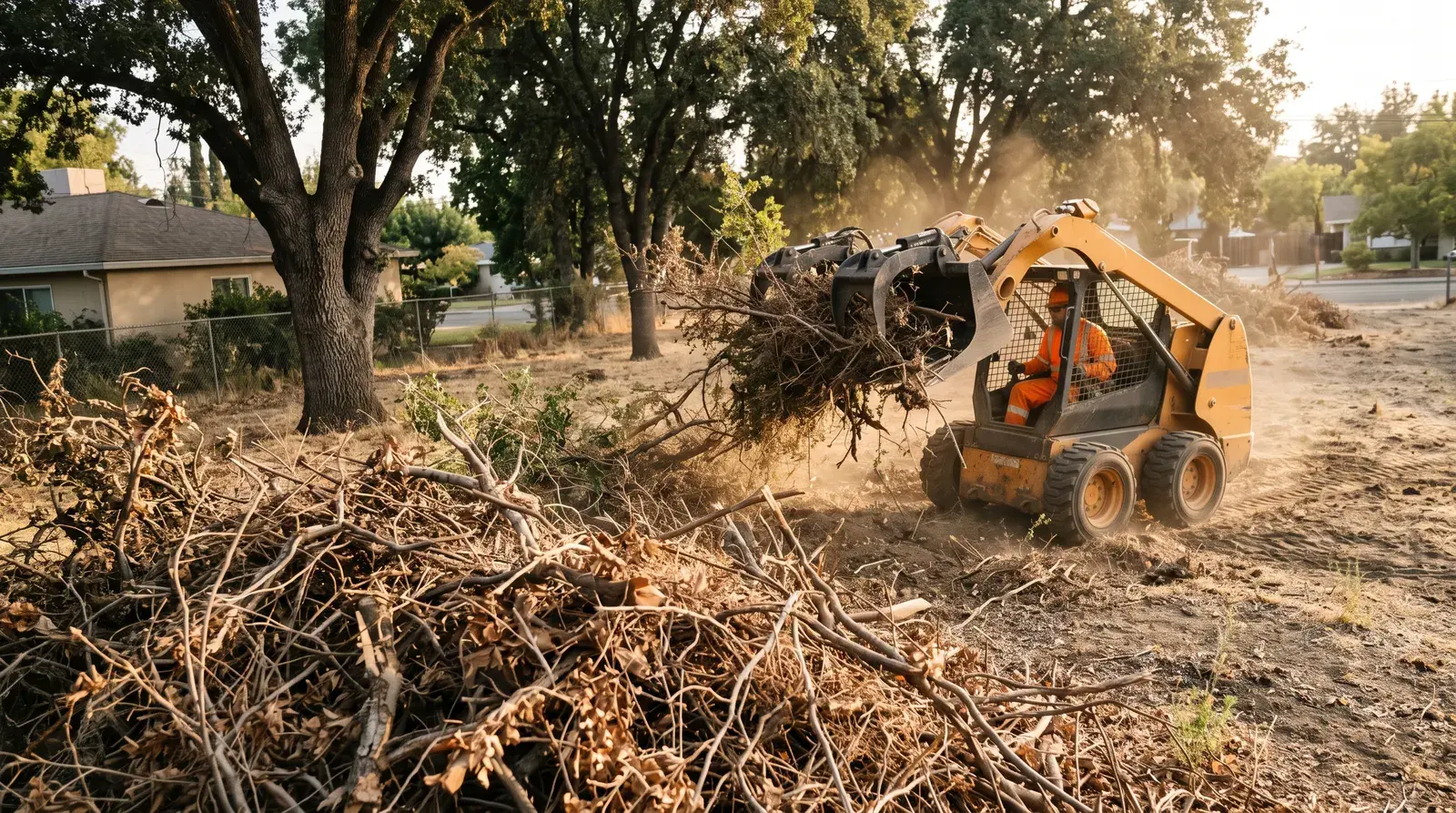
What Brush Clearing Covers
Brush clearing handles the vegetation layer below the trees: annual grasses, weeds, shrubs, vines, and volunteer saplings that take over when a property goes unmaintained. The job is cutting it to grade, dealing with the debris, and leaving ground you can walk, mow, and see.
- Overgrown weeds and annual grasses — the cured tan fuel that drives most abatement notices, cut low before or during fire season.
- Woody brush — Himalayan blackberry, scotch broom, privet, pyracantha gone feral, and coyote brush, cut and removed rather than just knocked over.
- Volunteer trees — tree-of-heaven, black locust suckers, and oak and ash seedlings that turn a lot into a thicket in three unmanaged years.
- Vines and ivy — Algerian ivy and wild grape pulled off fences, outbuildings, and tree trunks before they do structural or tree damage.
- Debris handling — everything chipped on-site or hauled off; nothing left in piles that become next year's fire and rodent problem.
Code Compliance and Weed Abatement Cleanups
Every late spring, Sacramento-area code enforcement and fire districts send out weed abatement notices with deadlines attached. Ignore one and the jurisdiction can hire its own contractor and bill you through a tax lien — always the most expensive way to get a lot mowed.
- Typical requirements — annual vegetation cut short, brush and dead material removed, and clearance maintained along structures, fences, and property lines. The exact standard is on your notice; follow it, not a generic rule.
- Deadlines are real — most notices give a compliance window of a few weeks. Call early; late May and June are the busiest clearing weeks of the year for every crew in the region.
- Vacant and inherited lots — absentee-owned parcels draw complaints first. An annual clearing keeps the lot off the enforcement list entirely.
- Documentation — we can photograph the cleared lot on completion so you have dated proof if the jurisdiction re-inspects.
- Repeat service — jurisdictions expect the lot maintained through fire season, not just cut once. We can schedule a mid-summer follow-up where growth warrants it.
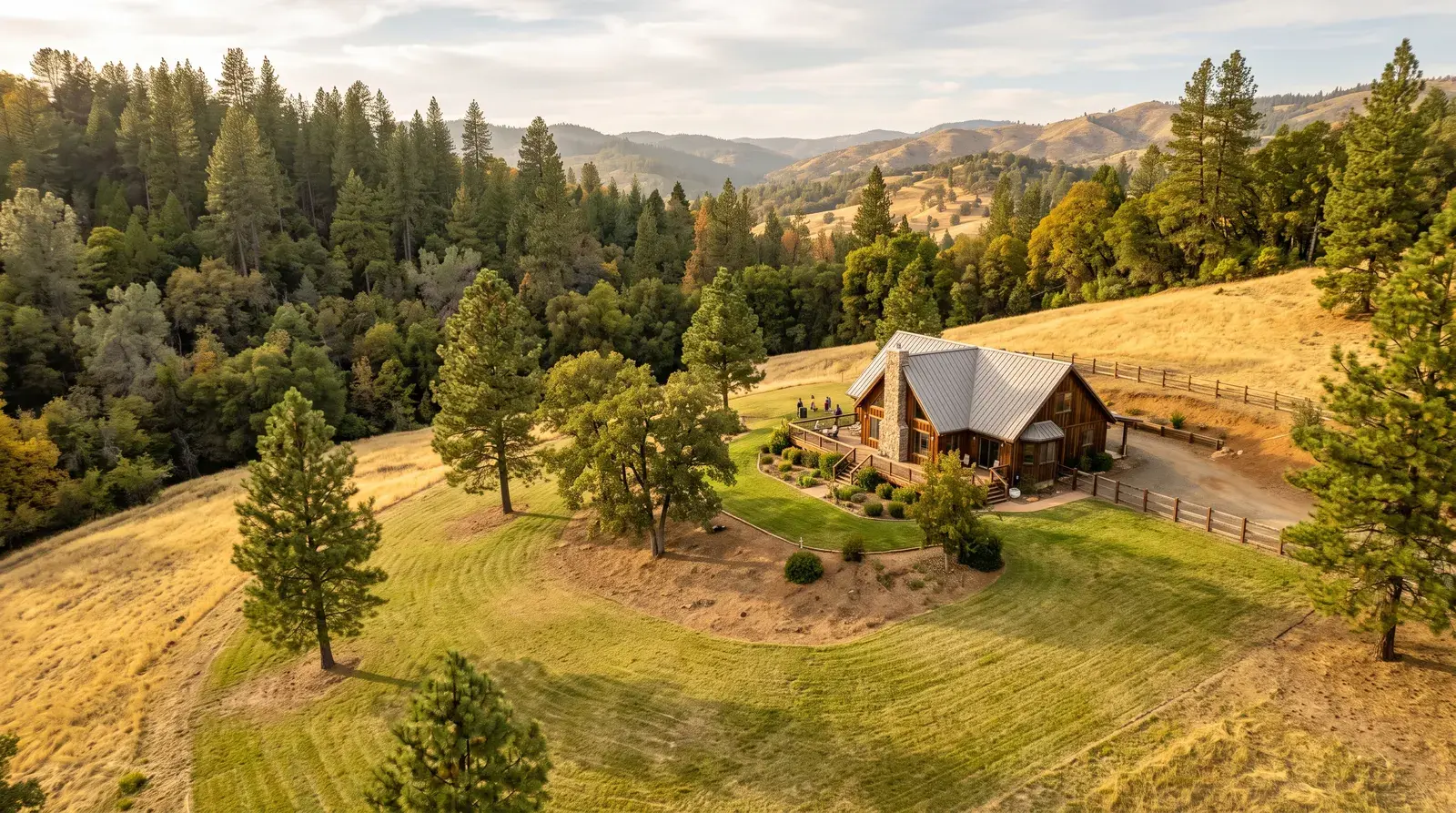
Brush & Vegetation Clearing across Sacramento, Placer, El Dorado, and Yolo counties.
Fuel Reduction: Cutting What Carries Fire
Fine fuels — cured grass, dead brush, and litter — are what move fire across a property, and ladder fuels are what carry it up into tree canopies. Brush clearing is fuel reduction at its most basic: remove the carrier, and fire has less to work with. No clearing makes a property fireproof; it changes the odds.
On foothill parcels in Auburn, Cameron Park, Shingle Springs, and Placerville, brush clearing and defensible space work usually run as one project — the zones around the house to the PRC 4291 standard, and the rest of the parcel to a general fuel-reduction standard.
- Fine fuel removal — cured annual grass cut to grade across the parcel, the single highest-value cut on most Sacramento-area lots.
- Ladder fuels — brush and low limbs beneath oaks and pines removed so ground fire can't climb into the canopy.
- Dead material — drought-killed shrubs, downed limbs, and old slash piles removed; dead fuel burns hotter and ignites easier than live growth.
- Spacing — where brush is kept for screening or habitat, we break it into separated islands instead of continuous fuel beds.
- Around structures — fuel work in the 0–100 ft around a home follows PRC 4291's zone standards; see our defensible space service for that specific scope.
Timing: Work With Sacramento's Growth Cycle, Not Against It
Sacramento's Mediterranean climate makes brush work seasonal. Winter rain drives a big spring growth flush; summer heat cures it into fuel; fall and winter are for structural cleanup. Clearing at the right point in that cycle means paying for one cut instead of two.
- Late spring (April–May) — the prime window: the annual crop is fully up but not yet cured, and one cut typically holds through fire season.
- Summer (June–September) — cured-fuel season. Clearing still happens constantly (abatement deadlines land here), but with spark-safe practices: mowing early in the day, metal-blade caution, water on hand, and no work under red flag conditions.
- Fall — good for woody brush, blackberry, and cleanup work; cooler weather and no fine-fuel ignition pressure.
- Winter — the season for heavy grubbing and access work, though soft ground limits equipment on some parcels.
- Bird nesting note — heavy brush removal in spring can run into active nests; where habitat is obvious we work around it or adjust timing.
Need brush & vegetation clearing on your property?
Share the address and project details — we'll come back with a scoped, site-specific estimate.
Watch for the Trees Hiding in the Brush
Overgrown lots hide things — including protected trees. A blue oak or valley oak sapling buried in blackberry is easy to flatten with a masticator and hard to explain to the county afterward. Part of our clearing scope is sorting what's brush from what's a tree with legal standing.
- Native oak seedlings and saplings — valley oak, interior live oak, and blue oak get flagged and preserved unless the owner decides otherwise and the local ordinance allows it.
- Sacramento County's Tree Preservation and Protection Ordinance protects native oaks on unincorporated parcels; city and foothill-county rules vary. Verify before removing anything oak-shaped.
- Keeper shrubs — established toyon, manzanita specimens, and screening plants can be kept and cleaned up rather than cleared, if you want them.
- Invasives get no mercy — tree-of-heaven, scotch broom, and blackberry are removed as thoroughly as the method allows.
- Property lines — we confirm boundaries before clearing fence lines; cutting a neighbor's vegetation is a dispute you don't want.
Equipment and Methods
The right tool depends on density, terrain, and what the ground has to look like afterward. Most residential jobs are handled with brush cutters and chippers; bigger or nastier parcels justify machinery. We match the method to the parcel instead of forcing one tool onto every job.
Broad cost frame: light residential clearing often lands in the hundreds to low thousands; dense brush on acreage with haul-off runs higher. Access, slope, and debris destination move the number most. Every estimate is free and based on walking the actual ground.
- Hand crews with brush cutters and saws — tight lots, slopes, work around keeper trees and structures, and anywhere finesse beats horsepower.
- Brush mowers — open ground with grass and light brush; fast and clean on vacant lots and pasture edges.
- Chippers — brush converted to chips on-site; keep them as free mulch and weed suppression or have them hauled.
- Grubbing — root crowns of blackberry and broom dug out where regrowth control matters more than speed.
- Haul-off — full debris removal for lots that need to be clean-slate, including green waste disposal.
The same crew from estimate to cleanup.
No juggling separate contractors for one tree. Tell us the address and what you're dealing with, and we'll come back with a written, site-specific number.
- Removal, trimming, stumps, and cleanup handled by one crew
- Free, site-specific estimates — priced to your tree, not a flat rate
- Sacramento, Placer, El Dorado, and Yolo counties

After the Clearing: Keeping It Clear
Cleared ground in the Sacramento climate does not stay cleared on its own — the same rain that grew this year's brush grows next year's. A realistic maintenance plan costs a fraction of the initial clearing and keeps you off the abatement list permanently.
- Annual spring cut — one scheduled mow after the growth flush holds most lots for the year.
- Chip mulch — a deep chip layer over cleared beds suppresses regrowth and holds soil on slopes at no material cost.
- Blackberry and broom follow-up — plan on a second pass the first year; root-sprouters don't quit after one cut.
- Watch the volunteers — tree-of-heaven and locust suckers reappear fast; pulling them at knee height is trivial, at fifteen feet it's a removal job.
- Bundle it — many owners pair the annual brush cut with tree trimming or defensible space maintenance so one visit covers the property.
Related services
Lot & Land Clearing
Clearing trees, brush, and undergrowth from building sites and overgrown parcels — including ADU-prep tie-ins.
Defensible Space Clearing
PRC 4291 fuel reduction — limbing up, thinning, and clearing the defensible space zones around foothill homes.
Wood Chipping & Debris Hauling
On-site chipping plus haul-off of logs, chips, and green waste — the cleanup half of any tree job, done to a clean-site standard.
Related guides
California Defensible Space Requirements (Zones 0–2)
PRC 4291 defensible space zones explained — what to clear in Zone 0 (0–5 ft), Zone 1 (0–30 ft), and Zone 2 (30–100 ft), and what inspectors look for.
Keeping Trees Alive Through Sacramento Summers
Deep watering at the dripline, real mulch, and the heat-stress signs that matter — how Sacramento trees survive months of triple-digit heat.
Before you book brush & vegetation clearing
What it runs, where permits bite, and how brush & vegetation clearing stacks up against the alternatives.
Want to see what this looks like on a real property? Browse the brush & vegetation clearing jobs we take on, or read how our crew scopes and prices work before you call anyone out.
Frequently asked questions
I got a weed abatement or code violation notice — can you handle it?
Yes, and it's one of our most common brush calls. Sacramento-area cities and fire districts send abatement notices in late spring requiring weeds and brush cut before fire season, usually with a compliance deadline and the threat of a contractor lien if you don't act. We clear to the standard the notice describes — typically vegetation cut to a few inches, brush removed, and debris hauled — and we can photograph the finished lot so you have proof of compliance for the file.
What's the best time of year to clear brush in Sacramento?
Late spring is the sweet spot. Sacramento's winter rains push up a heavy annual grass and brush crop through March and April; by late May it cures into the tan fuel that carries fire. Clearing after the growth flush but before full cure-out means one cut handles the season. Clearing too early means regrowth; clearing in high summer means working cured fuel with spark-safe practices on red-flag-aware scheduling. Fall clearing works fine for access and cleanup goals.
How much does brush clearing cost?
It depends on density, acreage, terrain, and what happens to the debris. A weedy residential lot that a brush mower can knock down in a few hours sits at the low end — often a few hundred to low four figures. Acreage choked with blackberry, scotch broom, or manzanita, on slope, with full haul-off, costs meaningfully more. Chipping debris on-site is cheaper than hauling it. We quote from a site walk, and estimates are free.
Is brush clearing the same as defensible space work?
They overlap but aren't identical. Brush clearing is the general task — cutting overgrown vegetation anywhere on a property for any reason. Defensible space work applies California's PRC 4291 standard specifically to the 0–100 feet around a structure: Zone 1 (0–30 ft) kept lean, clean, and green, and Zone 2 (30–100 ft) with reduced, spaced fuel. If your goal is passing a defensible space inspection in the foothills, start with our defensible space service; brush clearing handles everything beyond those zones.
Can you clear blackberry and keep it from coming back?
We can clear it; keeping it gone takes follow-through. Himalayan blackberry is the Sacramento region's most stubborn brush problem — it root-sprouts, so a single cut buys you a season, not a cure. We cut canes to grade and remove the debris, and where practical grub out root crowns, which slows regrowth considerably. Plan on a follow-up pass or ongoing mowing for the first year or two. We'll tell you honestly what your patch will need rather than pretend one visit ends it.