Tree Service in Placerville, CA
Tree removal, trimming, pruning, stump grinding, and emergency response for Placerville and the surrounding El Dorado County. Free, site-specific estimates.
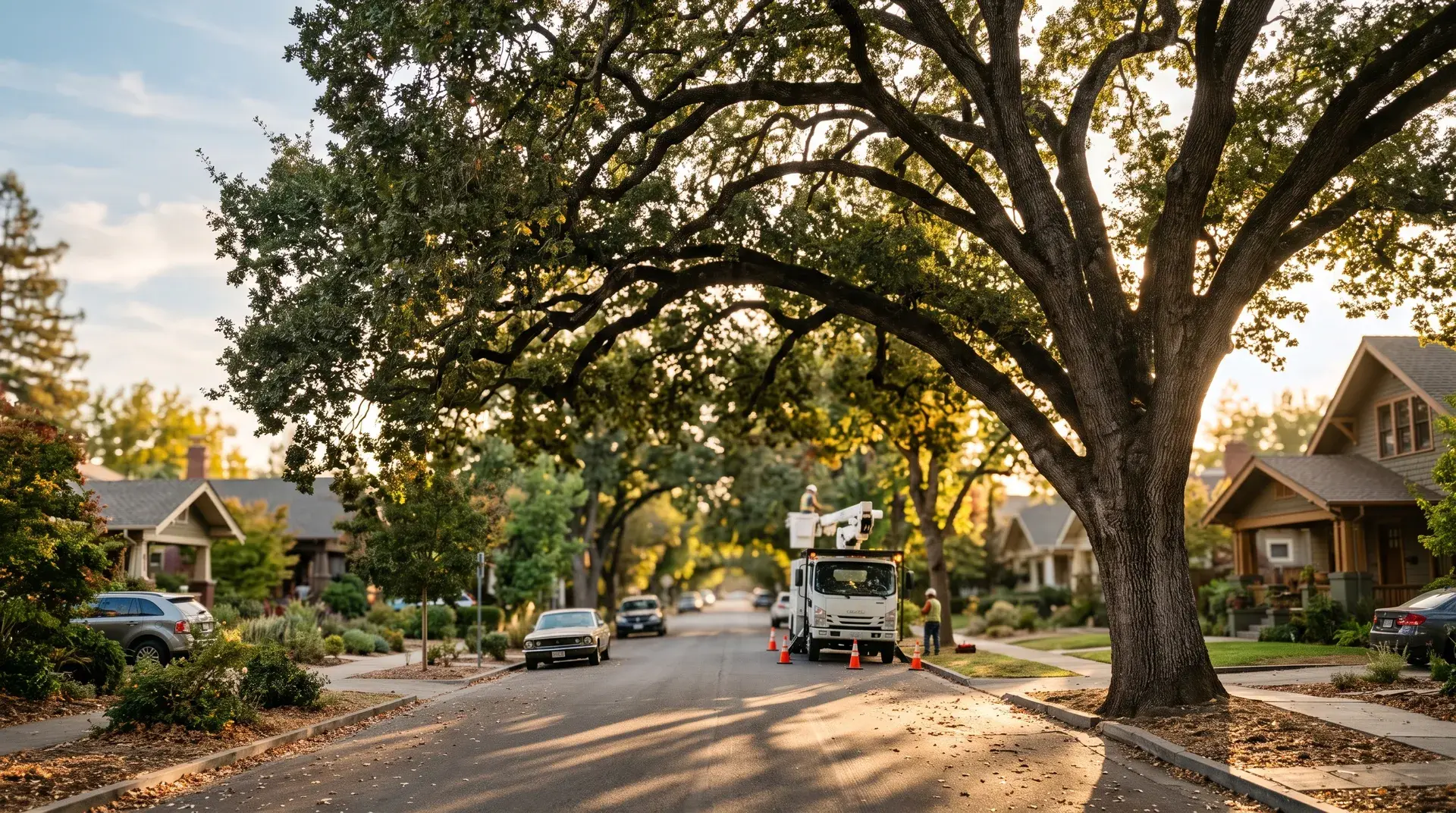
Placerville tree work is mountain-edge work. The old Gold Rush town core along Main Street holds mature street trees and tight historic lots, while the hillsides above — Texas Hill, the streets climbing off Cedar Ravine and Coloma Street, and the ridge parcels toward Apple Hill — carry a real conifer mix: ponderosa pine, incense cedar, Douglas fir, black oak. Steep ground is the defining problem here. Half our Placerville removals involve rigging trees down slopes where a mistake rolls a log into a house below, and access on the narrow historic streets takes planning. Bark-beetle-killed ponderosas are the most urgent removals, defensible space clearing is year-round given the very high fire-severity zones surrounding town, and winter brings storm work — wind-thrown firs and, some years, wet-snow limb failures that valley crews rarely deal with. City of Placerville street trees have their own rules, so we check jurisdiction before street-adjacent work.
Tree services in Placerville
Every 916 Trees service is available across El Dorado County.
Tree Removal
Safe removal of hazardous, dead, or unwanted trees — including permit help, cleanup, and haul-off across the Sacramento region.
Emergency Tree Service
Fast response for storm-damaged, fallen, or hazardous trees threatening homes, cars, and power lines across the Sacramento area.
Crane-Assisted Tree Removal
Crane-assisted removal for large, dead, or hazardous trees where tight access or overhead risk rules out a conventional takedown.
Palm Tree Removal
Removal and haul-off of Mexican fan palms and other species — including the tall, heavy palms common in older Sacramento neighborhoods.
Storm Damage Cleanup
Cleanup after winter windstorms — split limbs, uprooted trees, and yard debris removed so your property is safe and clear again.
Tree Trimming
Trimming for clearance, appearance, and long-term health — deadwood removal, canopy shaping, and structure on a sensible cycle.
Structural Tree Pruning
Structural pruning that builds sound branch architecture — training young trees and correcting weak, crowded, or co-dominant limbs.
Crown Reduction & Thinning
Reducing height, spread, and wind-sail on overgrown or heavy canopies — proper reduction cuts, never topping.
Palm Tree Trimming & Skinning
Annual frond and seed-pod removal plus trunk skinning — keeping Sacramento's fan palms clean, safe, and tidy.
Oak Tree Care
Specialized care for native valley, blue, and interior live oaks — dry-season pruning and heritage-tree compliance guidance.
Stump Grinding & Removal
Grinding stumps below grade so you can replant, pave, or reclaim the space — chips and surface roots handled.
Root Pruning & Root Barriers
Managing roots that lift sidewalks, driveways, and foundations — targeted root pruning and barrier installation done without killing the tree.
Lot & Land Clearing
Clearing trees, brush, and undergrowth from building sites and overgrown parcels — including ADU-prep tie-ins.
Brush & Vegetation Clearing
Cutting back overgrown brush, weeds, and undergrowth for access, code compliance, and reduced fire fuel.
Defensible Space Clearing
PRC 4291 fuel reduction — limbing up, thinning, and clearing the defensible space zones around foothill homes.
Tree Health Assessment
Diagnosing disease, pests, and structural risk — with an honest plan to treat, monitor, or remove.
Arborist Reports & Permit Support
Documentation for permits, development, and real estate — including protected and heritage tree review support.
Tree Cabling & Bracing
Structural support for co-dominant stems and heavy limbs — hardware that helps preserve mature, valued trees.
Tree Planting & Replacement
Right-tree, right-place planting and replacement — good species choices for Sacramento's heat, soils, and space.
Commercial & HOA Tree Service
Scheduled trimming, removals, and cleanup for property managers, HOAs, and commercial sites — one crew, one clear scope, clean invoicing.
Wood Chipping & Debris Hauling
On-site chipping plus haul-off of logs, chips, and green waste — the cleanup half of any tree job, done to a clean-site standard.
Nearby service areas in El Dorado County
Placerville is part of our El Dorado County tree service area — see county-wide permit rules, species, and terrain notes.
Rules and costs for Placerville tree work
What El Dorado County requires before a tree comes down, and what the work runs regionally.
Defensible Space Clearing Cost in the Sacramento Foothills (2026)
Regional range $1,000–$10,000 — and what moves the number on a real job.
Do You Need a Tree Removal Permit in Citrus Heights?
Where Citrus Heights draws the line before a tree comes down, and who to check with.
Tree Service in El Dorado County, CA
El Dorado County runs from the Sacramento Valley edge at El Dorado Hills up through Placerville and into Pollock Pines…
Do You Need a Tree Removal Permit in Auburn?
Where Auburn draws the line before a tree comes down, and who to check with.
New to us? Have a look at the kinds of tree jobs we handle around Placerville, or read how we work across El Dorado County.
Frequently asked questions
Do you work on steep lots in Placerville?
Yes — steep ground is the norm here, not the exception. Trees on the hillsides off Cedar Ravine, Texas Hill, and the ravine lots near downtown usually can't just be felled; they get climbed, pieced down, and rigged so nothing runs downhill into a structure, road, or neighbor's yard. Where equipment can't reach, we do the work by rope. Slope, access, and what sits below the tree are the main cost drivers, which is why every Placerville estimate starts with actually walking the lot.
Do I need a permit to remove a tree in Placerville?
It depends on where the tree stands. Trees in the public right-of-way — the street trees around the historic downtown — belong to the City of Placerville's jurisdiction, and work on them goes through the city. Trees on private property inside city limits are generally the homeowner's call, while parcels outside city limits fall under El Dorado County, where oak removals tied to development can need review. We sort out jurisdiction and any required approvals as part of the free estimate, before anything is scheduled.
Why are ponderosa pines dying around Placerville?
The drought-and-beetle cycle. Extended dry years weaken ponderosas, western pine beetles move into stressed trees, and the tree fades from green to yellow to red over a season. Once a ponderosa has turned, it will not recover, and dead pines lose limb and trunk strength quickly — they become the trees that fail in winter windstorms. A fading pine within striking distance of a house, driveway, or line should come down while it can still be climbed and rigged safely; fully dead ones often force more expensive crane or bucket work.
What does defensible space require on a Placerville property?
PRC 4291 standards apply through the fire-severity zones around town: Zone 1 (0–30 feet from the house) lean, clean, and green — dead material out, limbs clear of the roof and chimney; Zone 2 (30–100 feet) reduced fuel, with ladder fuels cut and canopy spacing opened so fire can't climb or crown. An ember-resistant Zone 0 within 5 feet of structures is being phased in. Conifer lots need extra attention to needle litter and low limbs. Current requirements are at readyforwildfire.org, and insurers here increasingly ask for proof.
How much does tree removal cost in Placerville?
As broad regional figures, most removals run $500–$2,500, and large or crane-assisted removals can exceed $5,000–$10,000+. Placerville jobs skew above the valley average because the trees are bigger — a 100-foot ponderosa is a different project than a valley street tree — and steep lots demand slower, rigging-heavy work. Dead conifers cost more than live ones because they can't be climbed as freely. Multi-tree jobs bring per-tree costs down. Estimates are free and reflect the actual tree, slope, and access.