Mature Oak Pruning on the East Side
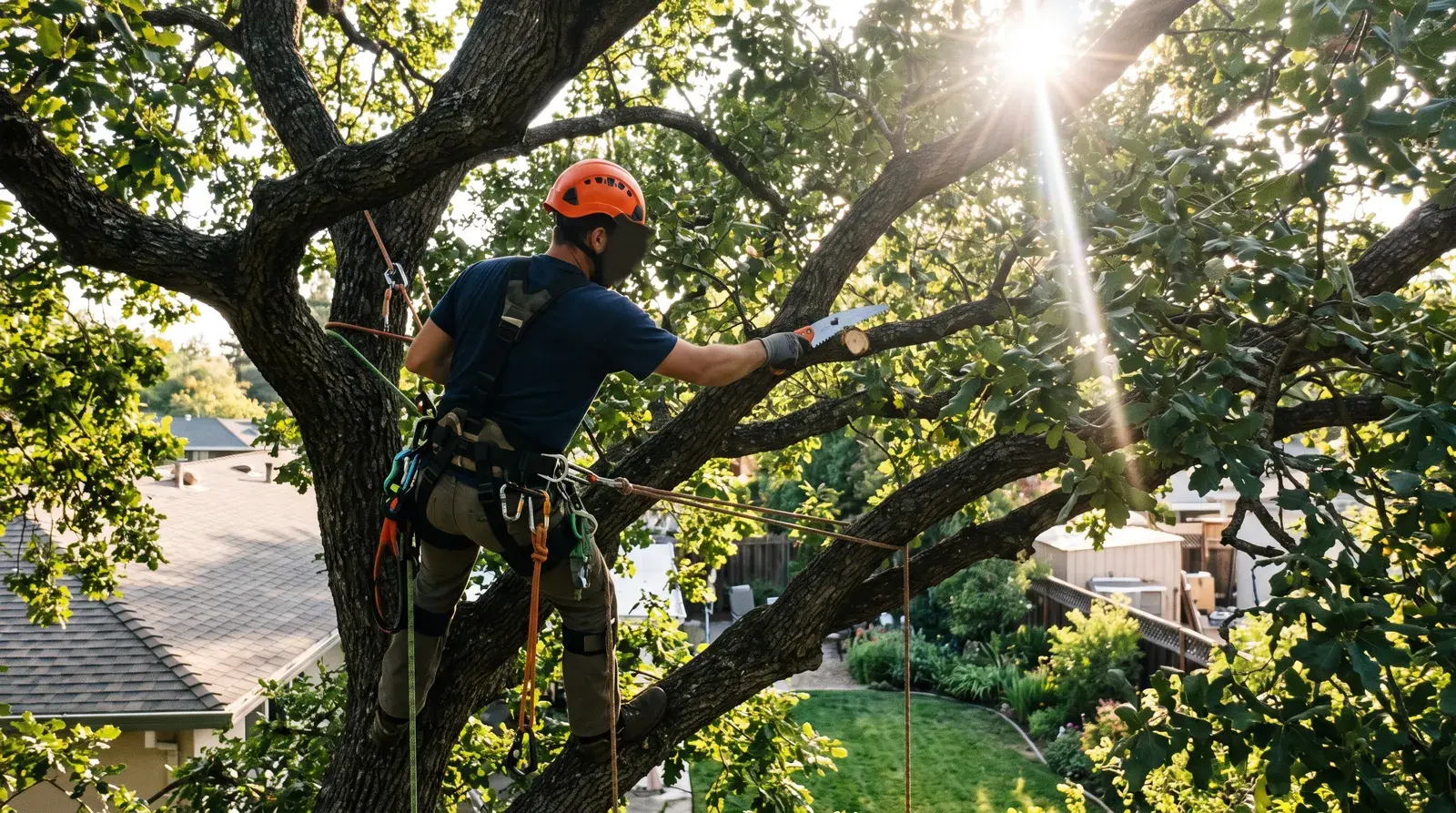
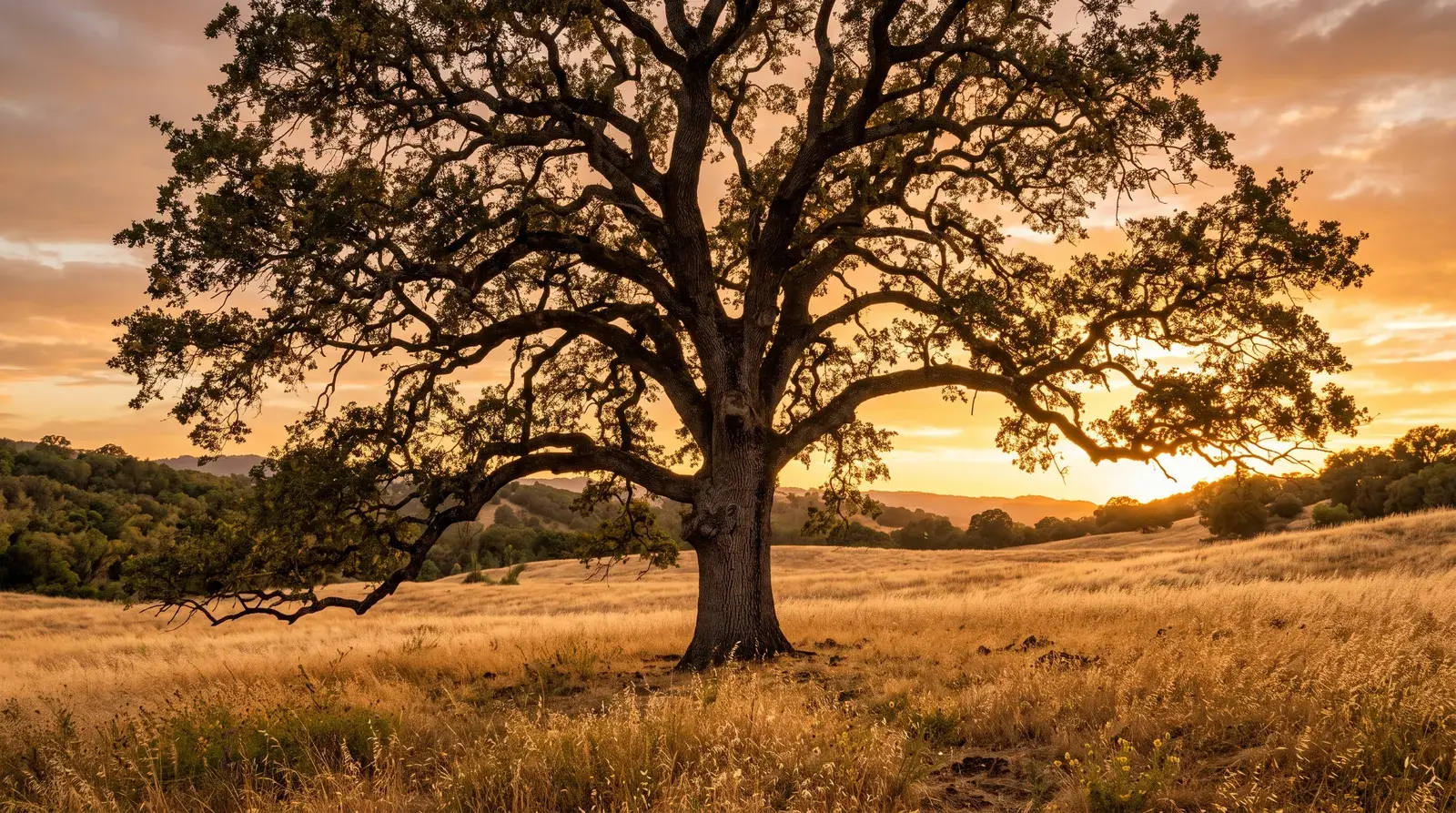
East Roseville's valley oaks and interior live oaks predate the neighborhoods around them, and they want minimal intervention: deadwood removal, clearance over structures, and light end-weight reduction — taking as little live canopy as possible, at the right time of year.
- Prune native oaks in the dry season or winter dormancy; wet-season wounds are the disease-vulnerable ones.
- Skip heavy summer pruning — stripping live canopy from an oak managing 100-degree heat adds stress it doesn't need.
- Deadwood over roofs, driveways, patios, and play areas is priority one on any mature oak — big dead oak limbs fall without wind.
- End-weight reduction on long horizontal limbs beats interior thinning; over-thinned ('lion-tailed') oaks fail more, not less.
- Large protected oaks: routine trimming is generally fine, but verify with the city before major limb removal.
Young-Tree Structural Pruning in West Roseville
The west side's canopy went in the ground between 2000 and 2020, which means the whole area is in the structural-pruning window right now. Small corrective cuts today decide whether these trees survive their first big storm decade.
- Select a single leader on pistache, pear, and ash before co-dominant stems with included bark set up the classic wind split.
- Remove crossing and rubbing limbs while they're wrist-thick — the same cut in 15 years is a wound the tree may not close.
- Raise clearance over sidewalks and driveways gradually, keeping the crown balanced against West Roseville's wind exposure.
- Pull stakes after the first year or two; trees staked longer never build trunk taper and stay tip-over candidates.
- A 3-to-5-year cycle covers most young trees — more than that is usually wasted money.
Tree Trimming in Roseville — free, site-specific estimates.
Why Topping Is Never the Answer
Topping — cutting a crown back to stubs to 'control size' — creates exactly the hazard it claims to prevent. Every stub sprouts a broom of fast, weakly attached regrowth that reaches the original height in a few seasons and fails far more readily.
We see topped mulberries and ash around Old Town Roseville still paying for cuts made decades ago. If a tree is genuinely too big for its spot, the honest options are crown reduction — cutting limbs back to living laterals, which keeps structure and wound response intact — or removal and replacement with a right-sized species. On a protected oak, topping isn't just bad arboriculture; damaging a protected tree can itself be an ordinance problem. We'll tell you which option your tree actually needs.
HOA Frontage Standards and Violation Letters
West Roseville HOAs write specific landscape standards — sidewalk clearance heights, uniform streetscape shapes, deadwood limits — and they inspect. We trim to the letter's spec so it gets closed out on the first reinspection.
- Bring the HOA notice to the estimate; we quote the exact required scope, not a generic trim.
- Common asks: 7–8 feet of sidewalk clearance, street clearance over the curb lane, deadwood removal, and crown cleaning.
- Sun City Roseville and WestPark associations often maintain approved-species and appearance standards for frontage trees — worth knowing before any reshaping.
- Trees in the public planting strip belong to the city's urban forestry program; check whether the city handles the work before paying for it yourself.
Need tree trimming in Roseville?
Share the address and project details — we'll come back with a scoped, site-specific estimate.
Timing: Roseville's Trimming Calendar
The calendar here is set by two things — native oak biology and storm season. Structure work happens in winter dormancy, oak work in the dry months, and wind-prep weight reduction in fall before the first big fronts arrive.
- Winter (December–February): structural pruning on young deciduous trees — architecture visible, tree dormant, best window of the year.
- Late summer into fall: dry-season oak work — deadwood, clearance, light reduction on the east side's mature canopy.
- October–November: end-weight reduction on ash, pear, and pistache in wind-exposed west-side neighborhoods, ahead of storm season.
- Anytime: hazard deadwood over targets — that never waits for a season.
The same crew from estimate to cleanup.
No juggling separate contractors for one tree. Tell us the address and what you're dealing with, and we'll come back with a written, site-specific number.
- Removal, trimming, stumps, and cleanup handled by one crew
- Free, site-specific estimates — priced to your tree, not a flat rate
- Sacramento, Placer, El Dorado, and Yolo counties
What Trimming Costs in Roseville
Young west-side trees often run in the low hundreds per tree; mature east-side oaks run more because the work is climbed, rigged, and slower. Access, tree size, and the amount of deadwood overhead drive price more than species does.
- Multiple trees per visit lowers the per-tree cost — a whole-frontage HOA trim beats piecemeal work.
- Large oaks over structures need rigging on every cut, which is where the labor goes.
- We'll tell you which trees actually need work this cycle and which can wait — an honest scope beats a padded one.
- Estimates are free, written, and site-specific.
Related guides
When to Trim Oak Trees in California
The best window to prune native California oaks, why dry-season timing cuts disease risk, and the pruning mistakes that shorten an oak's life.
Keeping Trees Alive Through Sacramento Summers
Deep watering at the dripline, real mulch, and the heat-stress signs that matter — how Sacramento trees survive months of triple-digit heat.
Sacramento's Heritage Tree Ordinance, Explained
What makes a Sacramento tree a Heritage Tree, what City Code Chapter 12.56 protects, and how to get pruning or removal approved.
What tree trimming costs — and what Roseville allows
Regional ranges, local permit rules, and the alternatives worth weighing before tree trimming in Roseville.
How Much Does Tree Trimming Cost in Sacramento? (2026)
Regional range $300–$2,500 — and what moves the number on a real job.
Do You Need a Tree Removal Permit in Roseville?
Where Roseville draws the line before a tree comes down, and who to check with.
Crown Reduction vs. Topping: What's the Difference?
Crown Reduction or Topping — how to tell which one the tree actually needs.
Tree Service in Placer County, CA
Placer County spans flat valley suburbia in Roseville and Rocklin and rises through the oak-woodland foothills to ponde…
Crown Reduction Cost in the Sacramento Region (2026)
Regional range $500–$4,000 — and what moves the number on a real job.
Do You Need a Tree Removal Permit in Elk Grove?
Where Elk Grove draws the line before a tree comes down, and who to check with.
Want a sense of the work first? See the kinds of tree trimming jobs we take on and who shows up to do them.
Frequently asked questions
When is the best time to trim oak trees in Roseville?
Dry season or winter dormancy — roughly late summer through the dormant months, avoiding wet weather when pruning wounds are most vulnerable to disease. Avoid heavy live-canopy removal in peak summer heat, too. For mature valley oaks and interior live oaks around Stoneridge, Maidu, and the Granite Bay edge, the right scope is usually deadwood, structure clearance, and modest end-weight reduction — mature natives want as little live wood removed as possible.
Do I need city permission to trim a protected oak in Roseville?
Routine maintenance pruning — deadwood, minor clearance — is generally fine on your own tree. Where it gets regulated is major work on protected native oaks: removing large limbs, cutting a significant share of the live canopy, or anything that damages the tree can fall under the city's tree preservation rules. If your oak needs substantial work, we verify the current requirements with the city first, and we can document the tree's condition if an approval is needed.
How often should the young trees in my West Roseville yard be trimmed?
Every 3–5 years, with a structural focus: one dominant leader, no crossing limbs, sound branch unions. That schedule catches problems while the fix is a small cut. Fast, weak-wooded species like ornamental pear benefit from the shorter end of that range — pears are the west side's most frequent storm-split tree. Annual trimming on young trees is usually unnecessary; over-pruning slows them down.
My HOA says my tree needs to be trimmed to their standard. Can you match it?
Yes — bring the letter or the association's landscape standard to the estimate and we quote that exact scope, typically sidewalk and street clearance, deadwood removal, and crown cleaning to a stated height. One check first: if the tree sits in the public planting strip, it's a city street tree under the urban forestry program, and the city — not you or the HOA — controls the work. We'll tell you which case applies before you spend anything.
Can trimming reduce the storm risk from my big oak?
Substantially, if it's the right trimming. Removing deadwood eliminates the limbs most likely to drop, and reducing end weight on long horizontal limbs cuts the leverage wind gets on them. What doesn't help is aggressive interior thinning — lion-tailing shifts weight to branch tips and makes failure more likely. For oaks with split unions or co-dominant stems, cabling and bracing can supplement pruning. We'll assess which combination your tree needs.