
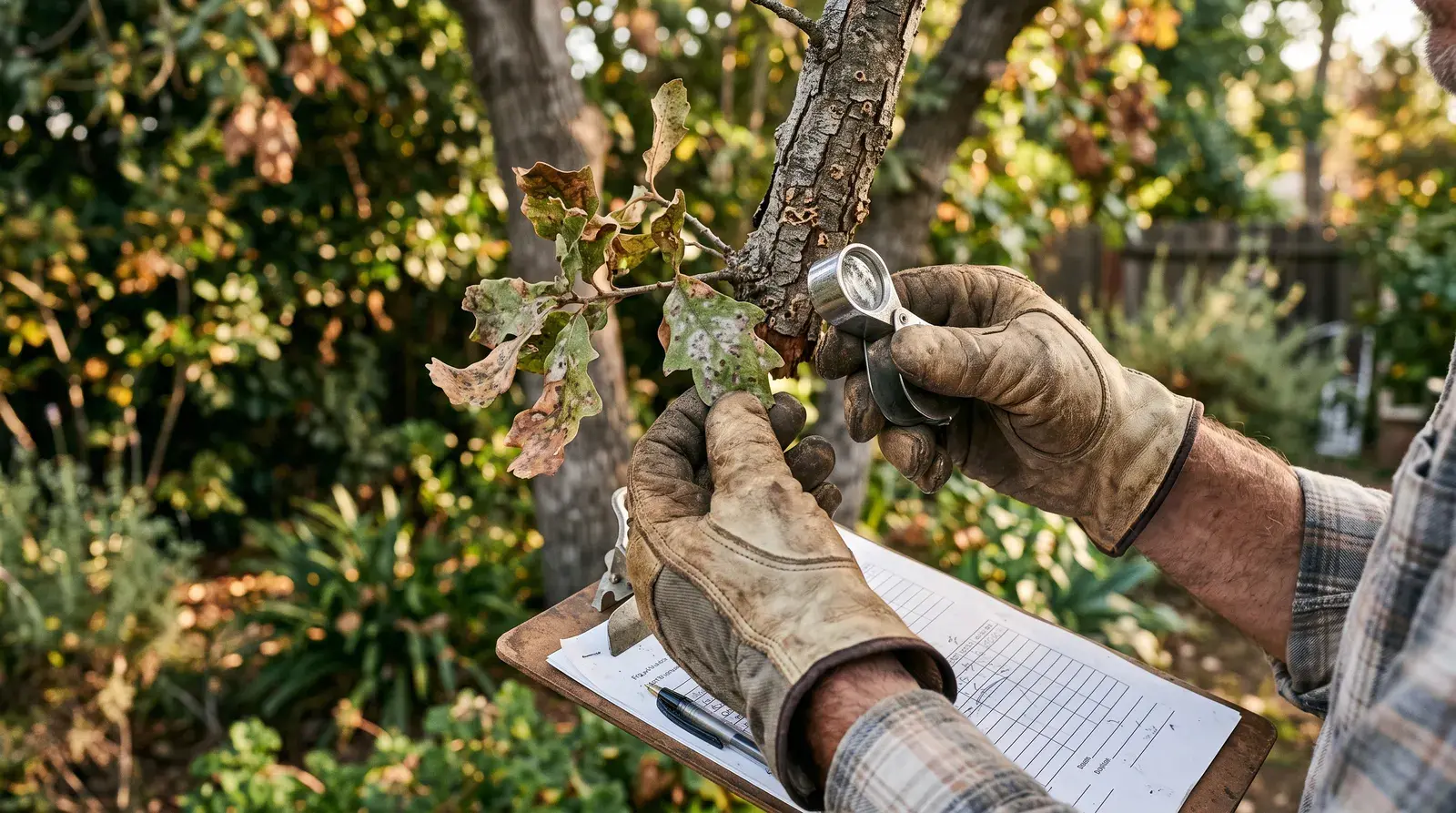
Roseville Protects Oaks More Formally Than Its Neighbors
The reason "do I need a permit" is a real question in Roseville and a shrug in some nearby towns is that Roseville built its oak protection into the zoning code with a review body and a mitigation fund behind it. Treat a mature native oak here as regulated until you have confirmed otherwise.
Verify current thresholds, forms, and fees with the City of Roseville — code sections get amended and staff interpretation is the authority on your specific parcel. What we can do is tell you what the tree is, what condition it is in, and whether it looks like the kind of tree the ordinance cares about.
- Tree preservation lives in Chapter 19.66 of the Roseville Municipal Code, alongside the zoning rules rather than tucked into a public-works chapter.
- The protected species are the natives: valley oak, interior live oak, and blue oak. These are what the ordinance was written to keep.
- The code contains specific provisions for removing native oaks on commercial and undeveloped residential lots — the situations where oaks historically disappeared quietly during site prep.
- Mitigation is real, not nominal: approved removals typically require replacement planting or a payment into the city's Oak Tree Preservation Fund, which the city uses to plant native oaks in other parts of Roseville.
- Significant impacts on protected oaks can route to the Planning Commission rather than being decided over a counter. That changes your timeline, so find out early which path you are on.
Who Is Allowed to Write the Report — Read This Before You Hire Anyone
Roseville is more specific than most jurisdictions about the credential behind a tree report, and it would be dishonest of us to gloss over it. The city's code points to certification by the International Society of Arboriculture when arborist reports come into play.
The field work is where we are genuinely useful: getting eyes and hands on the tree, measuring it correctly, documenting defects and condition with photographs, sorting out which rules apply to your address, and doing the removal, pruning, cabling, or protection fencing once the city approves it.
- ISA Certified Arborist is a professional certification from the International Society of Arboriculture, earned by examination and maintained with continuing education. It is verifiable through the ISA's public directory — look up anyone who claims it.
- It is not a contractor's license. The California license that covers performing tree work is issued by the Contractors State License Board and can be checked free at cslb.ca.gov. A company can hold one, both, or neither, and the difference matters.
- 916 Trees does not ask you to take our word for either one. Ask us for our qualifications and insurance documentation before work starts — the same thing our licensing and insurance page tells you to demand of every tree service, ours included.
- If your Roseville application requires a report authored by a specific credential, we will say so plainly instead of selling you documentation the city will not accept. Finding that out early is cheaper than finding out at submittal.
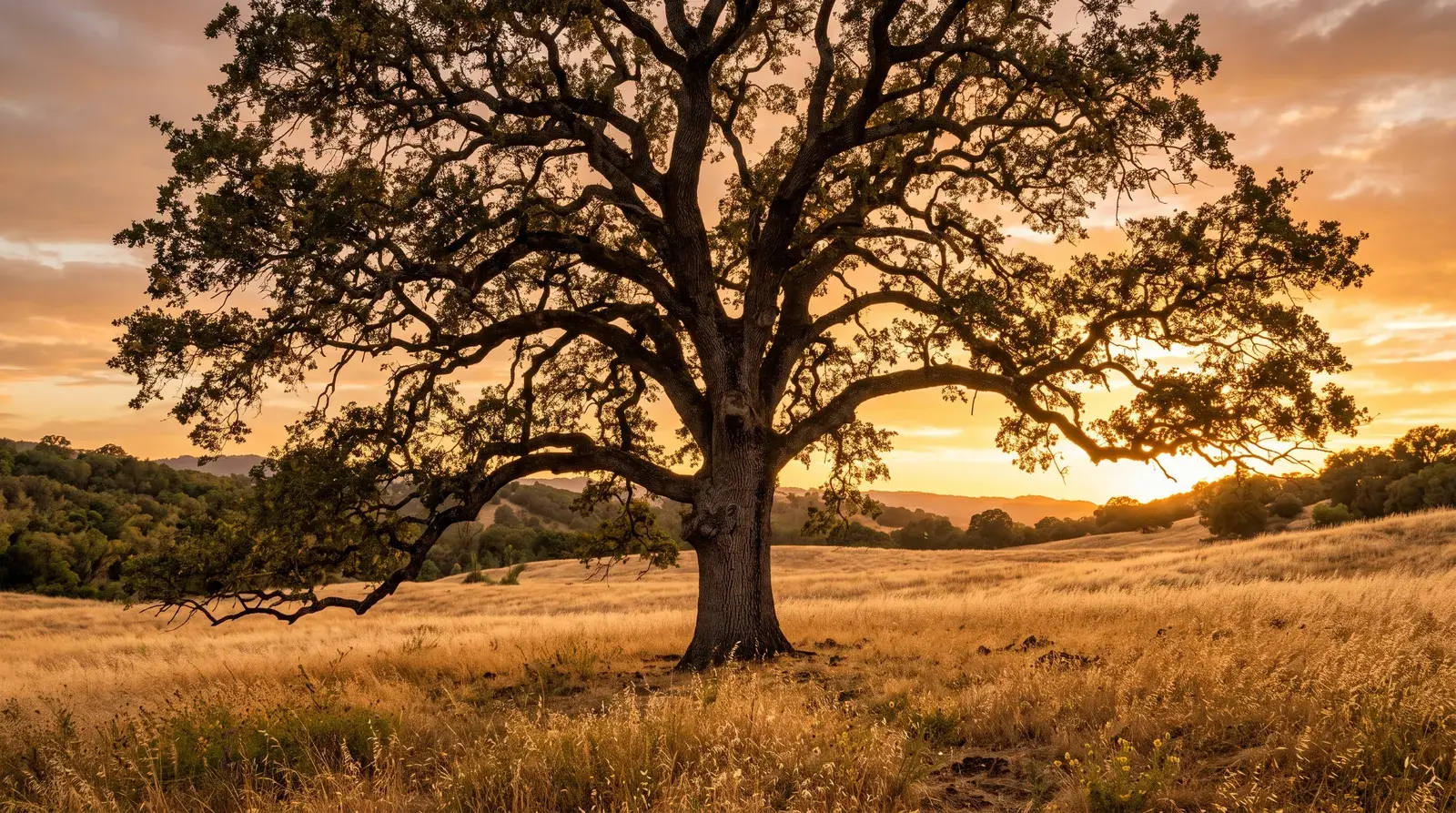
Arborist Reports & Permit Support in Roseville — free, site-specific estimates.
East Side Oaks, West Side Development
Report work in Roseville splits along the same line the rest of the city's tree work does. East of downtown you have mature native oaks on established lots; west and north you have newer ground where the oak question shows up during development rather than in a backyard.
The pattern we see repeatedly: someone buys an east-side property with a magnificent oak, plans a pool or an addition, and discovers the root zone and the ordinance at the same time. An assessment up front turns that from a surprise into a design constraint.
- Stoneridge, Olympus Pointe, the Maidu area, and the older streets off Cirby Way carry Roseville's heaviest native oak population — valley oaks and interior live oaks that predate the subdivisions around them.
- Toward the Granite Bay line, lots get larger and the oak woodland character is the reason people bought there. Removals here draw scrutiny, and rightly so.
- Fiddyment Farm, WestPark, and Sun City sit on ground that was oak savanna and grassland before it was neighborhoods — remnant valley oaks left standing in and between lots are frequently the regulated ones.
- Undeveloped and commercial parcels are called out specifically in the code, which is why anyone buying a lot to build on in Roseville should get the trees inventoried before the offer, not after.
Development Reports and Mitigation Plans
On larger Roseville projects the report is not a single-tree document — it covers every native oak on the site and the ones immediately adjacent, because a neighbor's oak can be damaged by your grading just as easily as your own.
Root damage from a trench or a season of compaction usually takes two to five years to show as canopy dieback — long after the contractor has been paid and left. A protection plan that is actually enforced during construction is far cheaper than removing a declining oak after the house sells.
- Inventory — every native oak on the parcel and overhanging it, located, measured at standard height, and evaluated for health and structure.
- Impact analysis — which trees the grading, trenching, or footprint actually affects, and how much of each root zone is in play.
- Protection zones — fencing distances scaled to trunk diameter, with generous zones for valley oaks, which are shallow-rooted relative to their canopy spread.
- Construction specs — no grade change, soil stockpiling, trenching, or equipment parking inside the protection zone; utilities bored beneath rather than trenched through.
- Mitigation plan — replacement planting at the ratio the city applies, or payment into the Oak Tree Preservation Fund where replanting on site is not workable.
Need arborist reports & permit support in Roseville?
Share the address and project details — we'll come back with a scoped, site-specific estimate.
Sales, Insurance, and Neighbor Disputes
Not every reason to document a tree involves the city. A written, dated condition assessment settles arguments that opinions cannot — particularly around a big oak that two parties value very differently.
- Pre-sale — a mature valley oak over the roofline is either a documented asset or an open-ended liability in a buyer's mind. Documentation moves it to the first column.
- Pre-purchase — a failing oak on a Stoneridge lot is a five-figure line item worth knowing about before close, not during the first January windstorm.
- Insurance — carriers increasingly ask about tree condition near structures. Documented assessment and completed work is what you have to show them.
- Neighbor disputes — California treats a tree straddling the boundary as jointly owned, and encroaching limbs and roots have limits on what you may cut. Condition documentation frames what is reasonable before anyone escalates.
- After a failure — photographs and a written condition record taken before cleanup are worth more to an adjuster than anything reconstructed later.
The same crew from estimate to cleanup.
No juggling separate contractors for one tree. Tell us the address and what you're dealing with, and we'll come back with a written, site-specific number.
- Removal, trimming, stumps, and cleanup handled by one crew
- Free, site-specific estimates — priced to your tree, not a flat rate
- Sacramento, Placer, El Dorado, and Yolo counties
From Site Visit to Approved Work
A single-tree question moves fast. A development parcel scales with the number of regulated oaks and how much protection planning the site needs.
If the tree is not a protected native oak, or the work does not rise to what the ordinance regulates, we tell you and you skip the process. That answer is free.
Free site visit
We look at the trees, the targets under them, and which rules apply at your Roseville address.
Evaluation
Species, trunk diameter at standard height, height and spread, crown condition, structural defects, and photographs.
Written findings
Condition, risk, and a stated recommendation with the reasoning attached.
Application support
You know what to submit, what path your project is likely to take, and where the mitigation question lands.
The work
Once approved, removal, pruning, cabling, protection fencing, and any required replacement planting.
Related guides
Do You Need a Permit to Remove a Tree in Sacramento?
Which Sacramento trees need a removal permit, how city and county rules differ, and how to check before the saw comes out.
Sacramento's Heritage Tree Ordinance, Explained
What makes a Sacramento tree a Heritage Tree, what City Code Chapter 12.56 protects, and how to get pruning or removal approved.
Neighbor Tree Disputes in California: Your Rights
Who owns the tree on the fence line, what you can legally trim, and who pays when a neighbor's tree falls — California's general rules, explained.
What arborist reports & permit support costs — and what Roseville allows
Regional ranges, local permit rules, and the alternatives worth weighing before arborist reports & permit support in Roseville.
Arborist Report Cost in Sacramento (2026)
Regional range $300–$1,500 — and what moves the number on a real job.
Do You Need a Tree Removal Permit in Roseville?
Where Roseville draws the line before a tree comes down, and who to check with.
Crane vs. Climbing Tree Removal: Which Method and Why
Crane Removal or Climbing Removal — how to tell which one the tree actually needs.
Tree Service in Placer County, CA
Placer County spans flat valley suburbia in Roseville and Rocklin and rises through the oak-woodland foothills to ponde…
Oak Tree Care & Trimming Cost in Sacramento (2026)
Regional range $400–$3,500 — and what moves the number on a real job.
Do You Need a Tree Removal Permit in Auburn?
Where Auburn draws the line before a tree comes down, and who to check with.
Want a sense of the work first? See the kinds of arborist reports & permit support jobs we take on and who shows up to do them.
Frequently asked questions
Does Roseville require an arborist report to remove an oak?
It depends on the tree and the project. Roseville's tree preservation rules sit in Chapter 19.66 of the municipal code, and report requirements scale with scope — a major project generally needs documentation covering every native oak on and immediately adjacent to the site, plus a mitigation plan, while a single-tree question on a developed residential lot may be simpler. Significant cases can route to the Planning Commission rather than being decided over a counter. Confirm what your specific application requires with the city before commissioning anything.
Does Roseville require an ISA Certified Arborist to write the report?
The city's code points to certification by the International Society of Arboriculture where arborist reports are involved, so plan on that requirement and confirm the specifics with the City of Roseville for your application. That is worth knowing before you hire anyone: ask any company for its credentials in writing and verify them through the ISA directory. We will tell you plainly what your application requires rather than sell you documentation that gets rejected, and we handle the field assessment and the tree work itself.
What is the Oak Tree Preservation Fund?
It is the city's mitigation mechanism. When a protected native oak is approved for removal and replanting on the property is not practical or sufficient, the city can require a payment into the fund instead, and uses that money to plant native oaks elsewhere in Roseville. Practically, it means an approved oak removal has a cost beyond the tree work, and that cost scales with the tree. Factor it in when you are weighing removal against preserving the tree with pruning or cabling.
How much does an arborist report cost in Roseville?
Broad regional figures: single-tree documentation for a removal application typically runs a few hundred dollars, while a development report covering every native oak on and adjacent to a site scales with tree count and the protection planning involved — often into the low thousands on a larger parcel. The inventory work drives most of the cost, so the number of regulated oaks matters more than the acreage. The initial assessment visit is free.
I'm buying an undeveloped lot in Roseville. Should I inventory the oaks first?
Yes, before you are committed. The code has specific provisions for native oak removal on undeveloped and commercial lots, and mitigation obligations attach to the trees, not to whoever happened to own the parcel when they were planted. A pre-purchase inventory tells you how many regulated oaks are on the ground, roughly where a buildable footprint can go around them, and what mitigation exposure comes with the site. That is far better economics than discovering it during entitlement.
My oak looks sick. Does that mean it can be removed?
Not automatically, and not without documentation. Declining condition is a legitimate basis for a removal application, but the city wants evidence rather than an impression — measurements, condition observations, defect documentation, photographs. It is also worth knowing that many declining Roseville oaks are suffering from something fixable, usually summer irrigation inside the root zone or root damage from past construction. We would rather find that and stabilize the tree than write it off.