
Three Sets of Rules Can Apply to One Lincoln Tree
Lincoln is unusual in how many layers a single tree can sit under. The city has grown by annexation into what was county ground, so the boundary between city and county rules runs through neighborhoods rather than around them — and private CC&Rs sit on top of both.
Getting this straight first is not bureaucratic caution — it is the difference between a routine removal and a violation with a mandatory replacement planting attached. We establish which authority governs your address as the first step of any assessment.
- Inside City of Lincoln limits, the city's own tree regulations apply through its zoning code. Verify current requirements and thresholds directly with the city before removing significant trees.
- Unincorporated Placer County — the acreage west and north toward Sheridan, out along Wise and Nicolaus Roads, and toward Camp Far West — falls under the Woodland Conservation Ordinance in Placer County Code Article 19.50.
- That county ordinance protects oaks at 5 inches diameter at breast height and larger, a lower bar than the 6 inches for other single-stem native trees or 10 inches combined for multi-trunk.
- HOA standards in Lincoln Crossing, Twelve Bridges, and Sun City Lincoln Hills frequently govern frontage and street trees regardless of what city code allows. Check your CC&Rs — approval from one authority is not approval from the other.
- Street and parkstrip trees are commonly the city's, not yours, even when you water and rake them. Confirm before pruning heavily or removing.
Development-Phase Reports in a City Still Being Built
Lincoln keeps adding subdivisions, shops, outbuildings, and ADUs, and most of the tree documentation we do here is tied to a project. The pattern is consistent: the trees that survive construction are the ones somebody planned around before the equipment arrived.
Root damage typically takes two to five years to appear as canopy dieback. That timeline is why so many mature trees on newer Lincoln parcels are dying now for reasons that happened during construction — and why a protection plan enforced during the build is cheaper than a removal after the sale.
- Inventory first — every regulated tree on the parcel and overhanging it, located, measured at breast height, and evaluated. On county ground that inventory is also what mitigation calculations are built from.
- Placer County can require an arborist's report when a removal's scope is significant or when mitigation fees need to be calculated, even where a minor permit would otherwise suffice.
- Protection zones scale with trunk diameter. Valley oaks need generous ones — their root systems run far wider and shallower than the canopy suggests.
- Utilities and irrigation get bored under root zones rather than trenched through them. Open trenching through oak roots is the most common cause of the slow decline that shows up years after the project closed.
- No grade change, spoil stockpiling, or equipment parking inside the protection zone. Compaction on Lincoln's heavy clay soils is particularly unforgiving, because it drains poorly to begin with.
Arborist Reports & Permit Support in Lincoln — free, site-specific estimates.
Valley Oaks on the Rural Edge
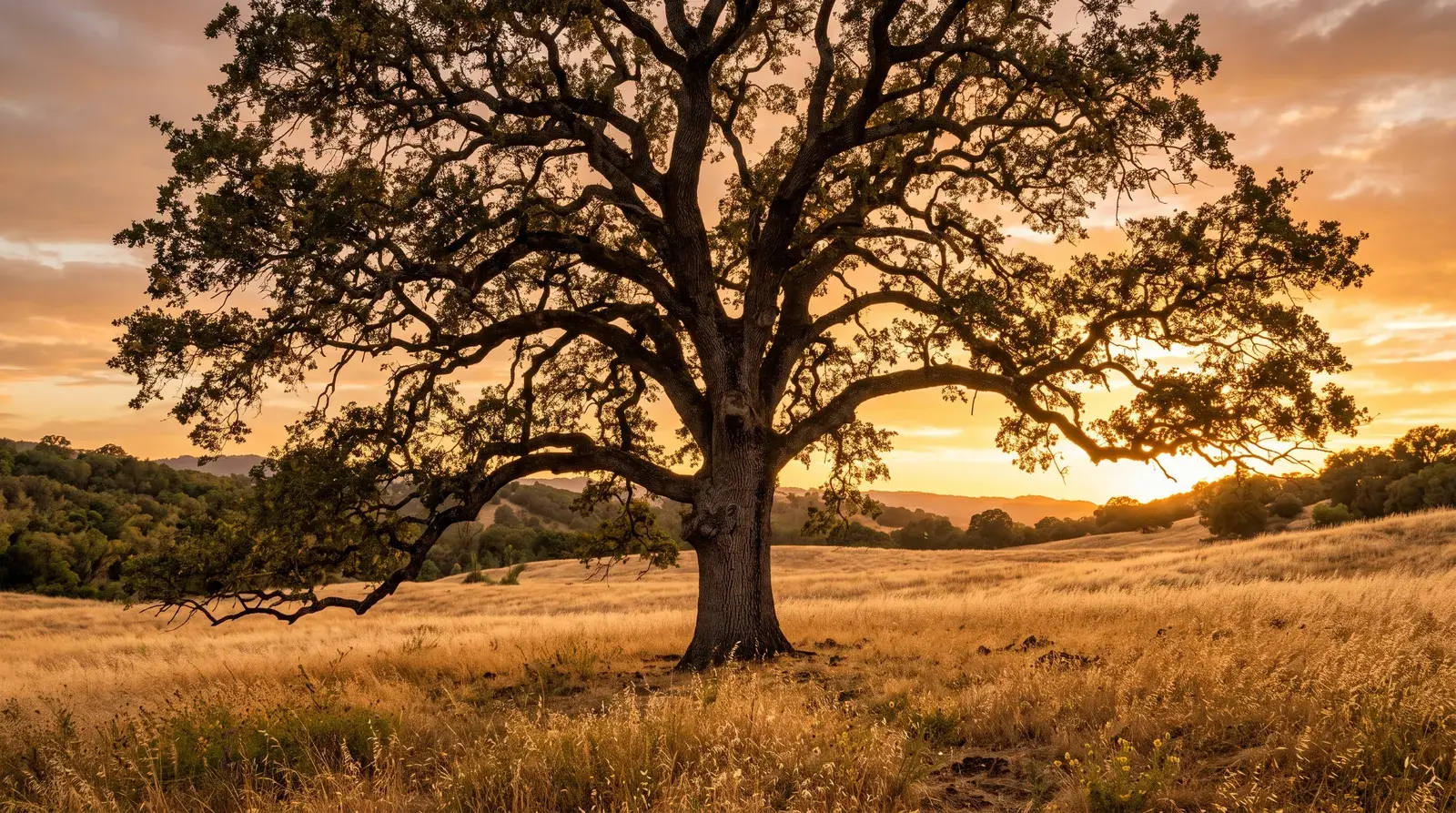
The trees most worth documenting in Lincoln are the old valley oaks scattered across the grazing ground and orchard land west and north of town. Many are older than the town's subdivisions by a century, and their condition is genuinely hard to read from the ground.
- Valley oak in the open grows enormous lateral limbs — canopy spread on a mature specimen can exceed its height, and those limbs are what fail.
- Isolated pasture oaks often have root systems compacted by decades of stock traffic and equipment, which shows up as thinning canopy long before anything visible happens to the trunk.
- Summer irrigation from new landscaping around an old oak is a slow killer — these are dry-summer trees, and warm wet soil around the root crown favors the fungi that rot them.
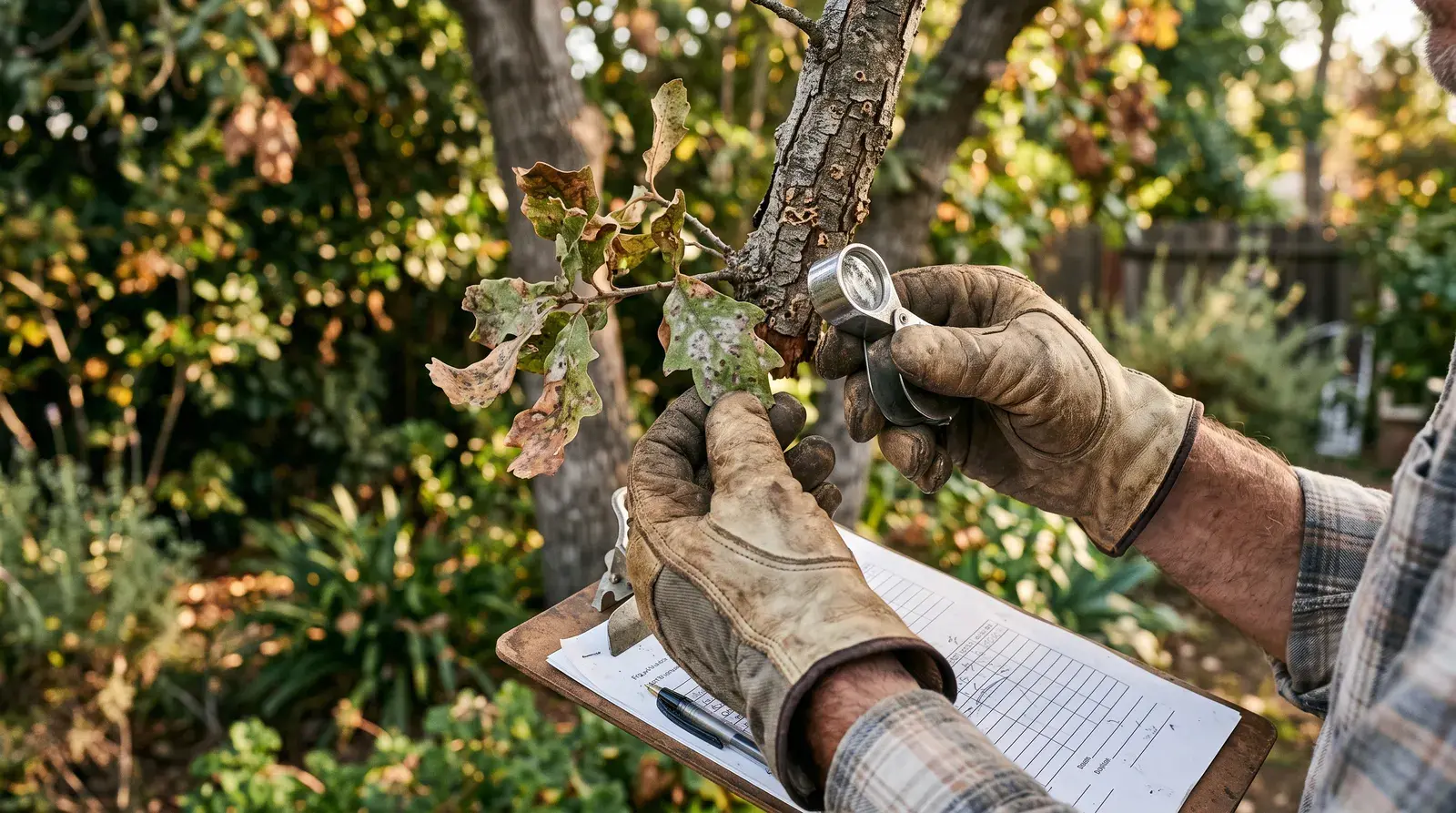
- Fungal conks at the base, open cavities, and included-bark unions on major scaffolds are the defects worth documenting properly before a decision gets made.
- Many of these are worth cabling and reducing rather than removing. A 200-year-old valley oak is not replaceable on any timeline that matters to the current owner.
Who Signs the Report, and How to Check Them
A tree report attached to a Lincoln development application goes through plan check, where somebody reads the qualifications page. It is worth knowing what those qualifications are before you commission anything, because the two credentials people conflate are not the same thing at all.
The field work is where we earn it: correct species identification, diameters measured the way the ordinance defines them, defects photographed and described, the jurisdiction question settled for your parcel number, and the removal, pruning, cabling, or protection fencing once it is approved.
- ISA Certified Arborist — a professional certification from the International Society of Arboriculture, earned by exam and kept current with continuing education. It is listed in a public directory, so verify it rather than accepting a logo on a truck.
- CSLB contractor's license — issued by the Contractors State License Board and required to perform the physical tree work, which is a completely separate question from who evaluated the tree. Any number, its status, and its workers' comp record can be checked free at cslb.ca.gov.
- Requirements differ by authority. What the City of Lincoln expects on a residential removal, what Placer County expects on a county parcel, and what an HOA architectural committee expects are three different bars. Find out which one you are clearing.
- Hold us to the same standard. Ask 916 Trees for qualifications and insurance documentation in writing before work starts — our licensing and insurance page says to demand that of every tree service, and it means us too.
Need arborist reports & permit support in Lincoln?
Share the address and project details — we'll come back with a scoped, site-specific estimate.
Sales, Disputes, and Insurance
Not every reason to document a tree involves a permit counter. A dated, written condition assessment settles things that opinions cannot, particularly between parties who value the same tree very differently.
- Pre-sale — a large valley oak over a house is either a documented asset or an unquantified liability. Documentation puts it in the first category before a buyer's inspector puts it in the second.
- Pre-purchase on acreage — knowing whether the oaks on a Lincoln parcel are sound, and how many are regulated, changes what the land is worth to build on.
- Neighbor disputes — California treats a tree on the boundary as jointly owned, and there are limits on cutting encroaching limbs and roots. Condition documentation frames what is reasonable before it escalates.
- Insurance and claims — condition documented before a failure, or photographs taken before cleanup after one, is worth more than any account reconstructed later.
- Windrow and shelter-row questions — old eucalyptus and orchard rows on shared boundaries generate more disputes here than any other tree situation.
The same crew from estimate to cleanup.
No juggling separate contractors for one tree. Tell us the address and what you're dealing with, and we'll come back with a written, site-specific number.
- Removal, trimming, stumps, and cleanup handled by one crew
- Free, site-specific estimates — priced to your tree, not a flat rate
- Sacramento, Placer, El Dorado, and Yolo counties

How the Assessment Runs
A single-tree question is quick. A development parcel or a rural inventory scales with how many regulated trees are actually on the ground.
If the tree is under threshold or outside the ordinance entirely, we tell you that and you skip the paperwork. If it can be saved with reduction or cabling instead of removed, we say that too.
Free site visit
We look at the trees and establish whether your parcel is city or county, and whether an HOA is also in play.
Evaluation
Species, diameter at breast height, height and spread, crown condition, structural defects, root zone, and what sits in the fall zone.
Documentation
Written findings, a stated recommendation, and photographs that show what the words describe.
Permit path
Which office, which permit type, and whether your scope is likely to require a report or trigger mitigation.
The work
Removal, pruning, cabling, or protection fencing once approved, plus replacement planting where required.
Related guides
Do You Need a Permit to Remove a Tree in Sacramento?
Which Sacramento trees need a removal permit, how city and county rules differ, and how to check before the saw comes out.
Sacramento's Heritage Tree Ordinance, Explained
What makes a Sacramento tree a Heritage Tree, what City Code Chapter 12.56 protects, and how to get pruning or removal approved.
Neighbor Tree Disputes in California: Your Rights
Who owns the tree on the fence line, what you can legally trim, and who pays when a neighbor's tree falls — California's general rules, explained.
What arborist reports & permit support costs — and what Lincoln allows
Regional ranges, local permit rules, and the alternatives worth weighing before arborist reports & permit support in Lincoln.
Arborist Report Cost in Sacramento (2026)
Regional range $300–$1,500 — and what moves the number on a real job.
Do You Need a Tree Removal Permit in Roseville?
Where Roseville draws the line before a tree comes down, and who to check with.
Cabling & Bracing vs. Removal: Can This Tree Be Saved?
Cabling & Bracing or Removal — how to tell which one the tree actually needs.
Tree Service in Placer County, CA
Placer County spans flat valley suburbia in Roseville and Rocklin and rises through the oak-woodland foothills to ponde…
Oak Tree Care & Trimming Cost in Sacramento (2026)
Regional range $400–$3,500 — and what moves the number on a real job.
Do You Need a Tree Removal Permit in Folsom?
Where Folsom draws the line before a tree comes down, and who to check with.
Want a sense of the work first? See the kinds of arborist reports & permit support jobs we take on and who shows up to do them.
Frequently asked questions
Do I need a permit to remove an oak in Lincoln, CA?
Possibly, and the answer depends on which side of the city line the parcel sits on. Inside City of Lincoln limits, the city's own tree regulations apply — verify current thresholds with the city before cutting. On unincorporated Placer County ground outside city limits, the Woodland Conservation Ordinance in Article 19.50 applies and protects oaks at 5 inches diameter at breast height and larger. If you are in an HOA community, check the CC&Rs as well; HOA approval and city approval are separate things.
Which rules apply to my property — city or county?
Lincoln grew by annexing county land, so the boundary runs through areas rather than neatly around the town, and neighboring parcels can genuinely fall under different authorities. The practical answer is to confirm your parcel's jurisdiction with the City of Lincoln before assuming either way — a parcel number settles it in one phone call. We establish this as the first step of any assessment, because it determines the permit path, the thresholds, and whether mitigation attaches.
Does Placer County require an arborist report for a tree permit?
Not always. For a single-family lot with no other discretionary permit involved, a minor tree permit is the usual path and often does not require a full arborist's report — the county arborist can issue one in the field. A report can be required when the removal scope is significant, or when mitigation fees need to be calculated from a tree inventory. Development projects are a different matter and generally do need documentation. Confirm current requirements with the county for your specific scope.
How much does a tree report cost in Lincoln?
The initial assessment visit is free. Written documentation prices by scope: single-tree reports for a removal application typically run a few hundred dollars regionally, while multi-tree inventories for development or acreage scale with tree count — often into the low thousands on larger parcels. The number of regulated trees drives the cost far more than the acreage does, so a large open pasture with six oaks is cheaper to document than a small wooded lot with forty.
I'm building on a lot with a big valley oak. Can I keep it?
Frequently yes, if the protection is designed in rather than added later. The critical variables are how much of the root zone the footprint, driveway, and utilities take, and whether the grade changes. Protection zones for valley oaks need to be generous — the roots run wider and shallower than the canopy suggests. Bore utilities under the root zone instead of trenching through, keep spoil and equipment out of it, and fence it before work starts. Moving a trench on a drawing is free; a dying oak three years later is not.
My oak looks fine but the canopy is thinner than it used to be. Is that worth documenting?
Yes, and it is worth investigating before it becomes a removal question. Gradual canopy thinning on a mature Lincoln oak usually points at the root zone rather than the crown — soil compaction from equipment or stock, grade change from past work, or summer irrigation added around a tree that evolved for dry summers. Caught early, several of those are reversible. Caught after years of dieback, the root damage is done. An assessment tells you which situation you are in.