
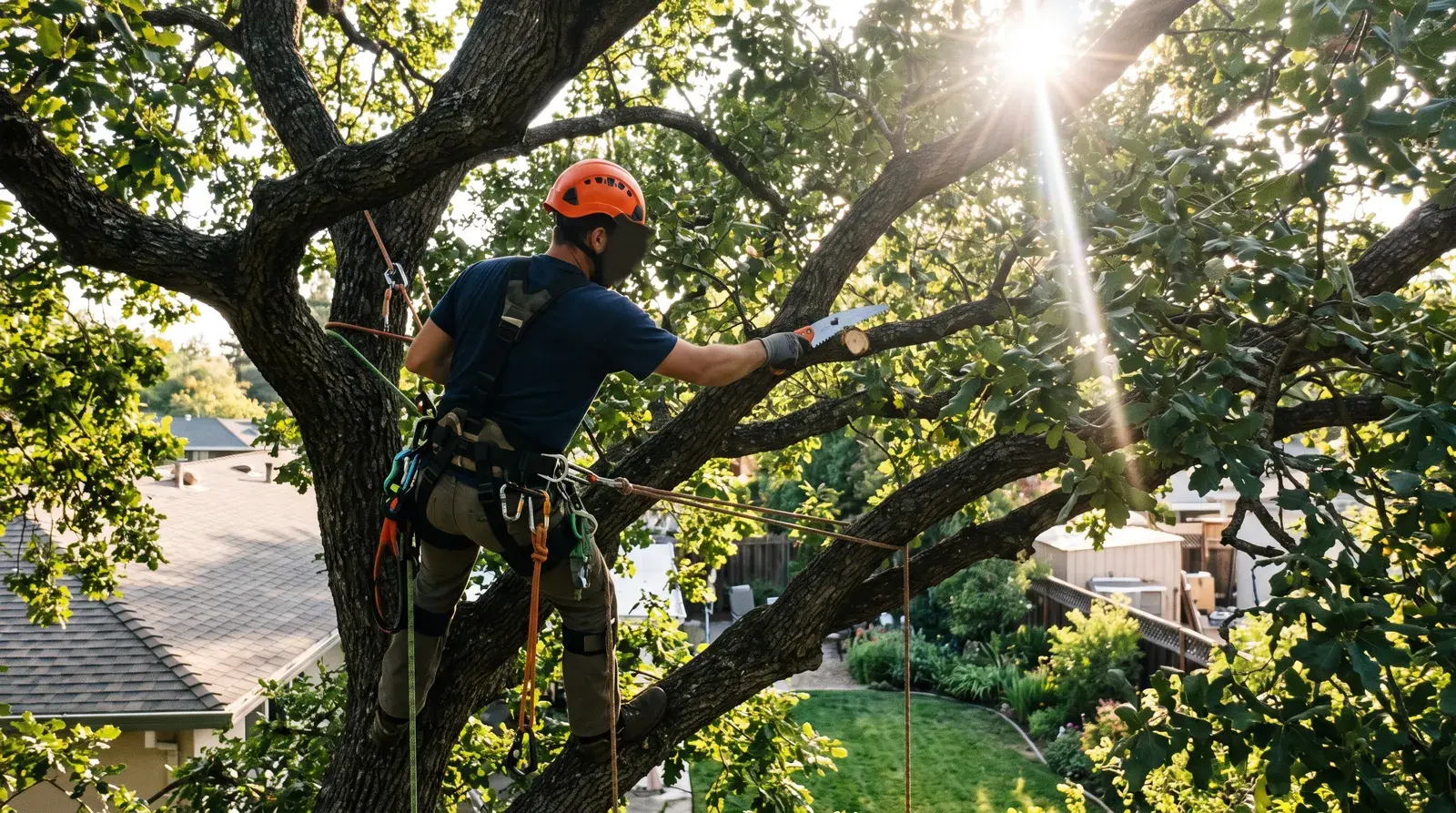
What Trimming Fixes on Citrus Heights Lots
Most trimming calls here come down to four problems: limbs on the roof, too much weight on old wood, privacy trees gone vertical, and oaks that have never been cleaned. Each has a specific pruning answer — none of them is topping.
- Roofline and gutter clearance — limbs lifted off shingles before they abrade them and give roof rats a highway.
- End-weight reduction on Modesto ash and mulberry — shortening long, heavy limbs so brittle wood carries less load in winter wind.
- Height and face reduction on fence-line redwoods, pines, and cypress — kept as a screen without becoming a sail.
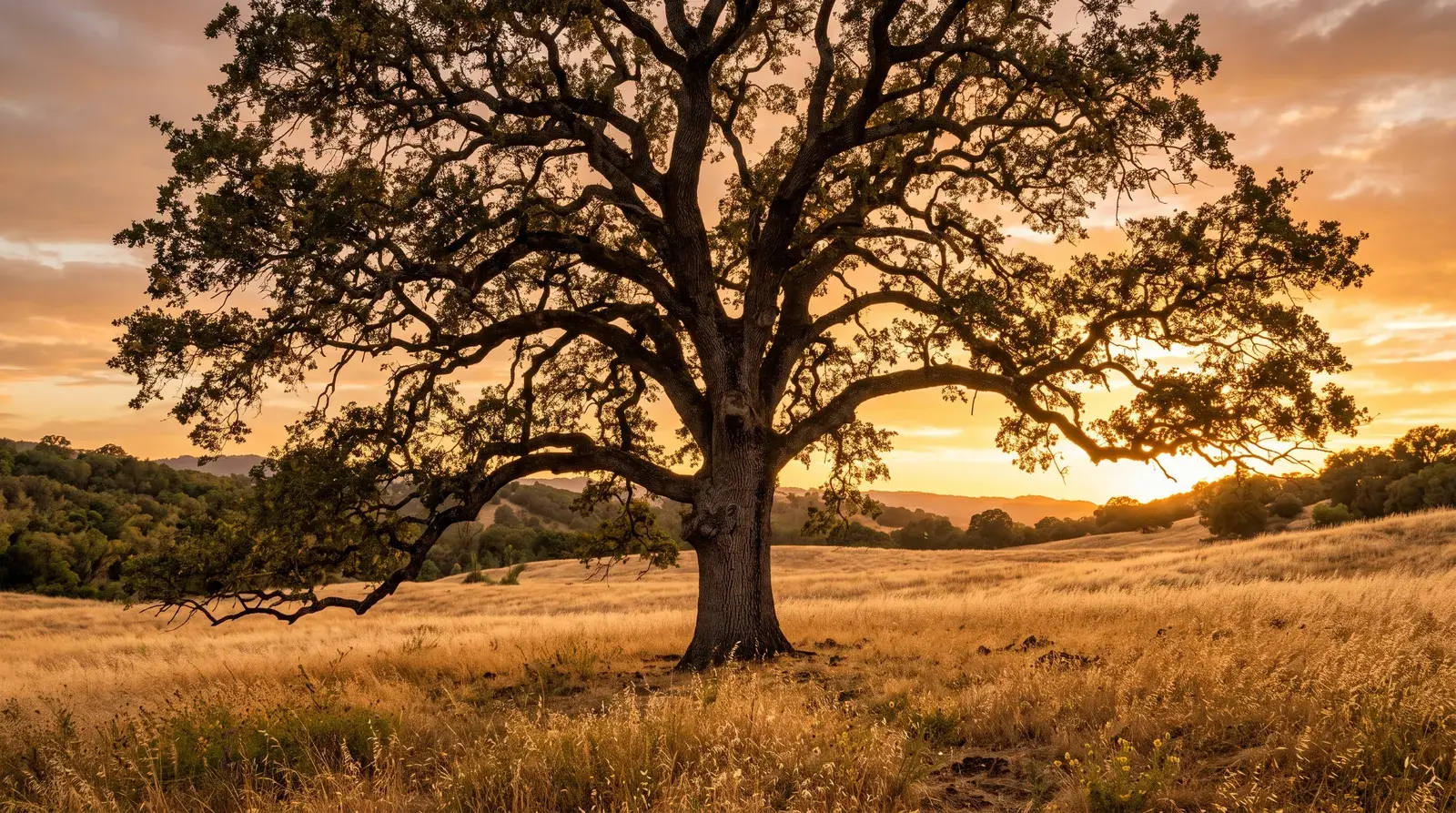
- Crown cleaning on mature valley and interior live oaks — deadwood out, rubbing limbs corrected, canopy weight balanced.
- Driveway, sidewalk, and street clearance along collector roads like San Juan Avenue and Antelope Road.
Timing: When to Trim in Citrus Heights
Season matters more than most homeowners think, especially for oaks. Native oaks should be pruned in the dry season or dormancy — heavy summer pruning stresses them, and wet-season cuts spread disease. Most other species are flexible, with a few caveats.
- Valley and interior live oak — schedule for the dry months; avoid heavy pruning in the peak of summer heat.
- Modesto ash and mulberry — late dormancy works well; the goal is weight off before the December–February storm winds.
- Ornamental pear — prune after bloom; fix the narrow, split-prone crotches while limbs are still small.
- Redwood and cypress screens — trim on a regular cycle rather than one drastic cut; conifers do not regrow from old wood the way hardwoods do.
Tree Trimming in Citrus Heights — free, site-specific estimates.
Why We Do Not Top Trees — and What to Do Instead
Half the ugly, hazardous trees in Citrus Heights are old topping jobs. Topping a tree does not make it safer: the regrowth is weakly attached, comes back fast, and turns one manageable canopy into a thicket of failure-prone shoots.
The correct alternative is crown reduction — cutting limbs back to properly sized lateral branches so the tree gets smaller while keeping sound structure. It costs more per visit than topping because it takes skill and time, but it holds for years instead of eighteen months, and the tree stays healthy enough to be worth keeping. If a company quotes you a topping job on a mature ash or oak, get a second opinion before you sign.
Need tree trimming in Citrus Heights?
Share the address and project details — we'll come back with a scoped, site-specific estimate.
Oaks Get Special Handling
Many of the big oaks in Citrus Heights predate the subdivisions around them, and the city's tree preservation rules can restrict how much of a protected oak you can remove — trimming included, in some cases. Pruning stays within sound limits: deadwood, clearance, and measured weight reduction, never stripping the interior canopy.
Over-thinning ('lion-tailing') pushes all the foliage to the limb tips and makes oaks more likely to break, not less. We prune oaks to standard, in the right season, and document the work if a permit condition or a nervous neighbor requires it.
The same crew from estimate to cleanup.
No juggling separate contractors for one tree. Tell us the address and what you're dealing with, and we'll come back with a written, site-specific number.
- Removal, trimming, stumps, and cleanup handled by one crew
- Free, site-specific estimates — priced to your tree, not a flat rate
- Sacramento, Placer, El Dorado, and Yolo counties
Maintenance Cycles That Actually Work Here
Mature trees on small lots need a schedule, not a crisis response. Most Citrus Heights properties do well with oaks on a 3–5 year cycle, ash and other brittle species every 2–3 years, and fast-growing privacy screens annually — and bundling all of it into one visit keeps the mobilization cost down.
Related guides
When to Trim Oak Trees in California
The best window to prune native California oaks, why dry-season timing cuts disease risk, and the pruning mistakes that shorten an oak's life.
Keeping Trees Alive Through Sacramento Summers
Deep watering at the dripline, real mulch, and the heat-stress signs that matter — how Sacramento trees survive months of triple-digit heat.
Sacramento's Heritage Tree Ordinance, Explained
What makes a Sacramento tree a Heritage Tree, what City Code Chapter 12.56 protects, and how to get pruning or removal approved.
What tree trimming costs — and what Citrus Heights allows
Regional ranges, local permit rules, and the alternatives worth weighing before tree trimming in Citrus Heights.
How Much Does Tree Trimming Cost in Sacramento? (2026)
Regional range $300–$2,500 — and what moves the number on a real job.
Do You Need a Tree Removal Permit in Citrus Heights?
Where Citrus Heights draws the line before a tree comes down, and who to check with.
Crown Reduction vs. Topping: What's the Difference?
Crown Reduction or Topping — how to tell which one the tree actually needs.
Tree Service in Sacramento County, CA
Tree work in Sacramento County ranges from removing aging valley oaks in East Sacramento to grinding stumps on new-buil…
Crown Reduction Cost in the Sacramento Region (2026)
Regional range $500–$4,000 — and what moves the number on a real job.
Do You Need a Tree Removal Permit in Folsom?
Where Folsom draws the line before a tree comes down, and who to check with.
Want a sense of the work first? See the kinds of tree trimming jobs we take on and who shows up to do them.
Frequently asked questions
When is the best time to trim oak trees in Citrus Heights?
The dry season or dormancy. Native valley and interior live oaks should not be heavily pruned in the wet winter months, when pruning wounds are most vulnerable to disease, and heavy summer pruning adds heat stress. Late summer through fall is usually the practical window. Deadwood removal and light clearance work can be done almost any time — it is the heavy structural cuts that need to be timed.
Can you cut my neighbor's tree back where it hangs over my fence?
Generally, California law lets you trim branches back to the property line at your own expense, as long as the cuts do not destabilize or kill the tree — which matters, because butchering a shared tree can create liability. We make the clearance cuts to proper laterals so the work is clean and defensible, and we will tell you honestly if what you are asking for would harm the tree.
How often should fence-line redwoods and cypress be trimmed?
Annually or every other year once they have reached the height you want. Conifer screens are the one category where small, frequent trims beat big corrections, because redwood, cypress, and pine do not resprout reliably from old interior wood — cut too far back once and the bare spots are permanent. A regular cycle keeps the screen dense, the height controlled, and each visit cheap.
Is trimming enough to make my old Modesto ash safe?
Often, yes — for a while. End-weight reduction takes load off brittle limbs and meaningfully cuts the failure risk in winter storms. But trimming cannot fix trunk decay: if the main stems have cavities, seams, or large old topping wounds, pruning is a postponement, not a solution. We look at the trunk first and give you a straight answer on whether you are buying years or months.
Do trimming quotes include cleanup and haul-off?
Yes. Brush gets chipped on-site, wood is hauled off or left as firewood rounds if you want it, and the yard gets raked before we leave. On gated Citrus Heights backyards we hand-carry brush to the chipper at the curb, and that access is factored into the quote up front — no surprise labor charges. Estimates are free and specific to your trees.