What a Tree Health Assessment Covers
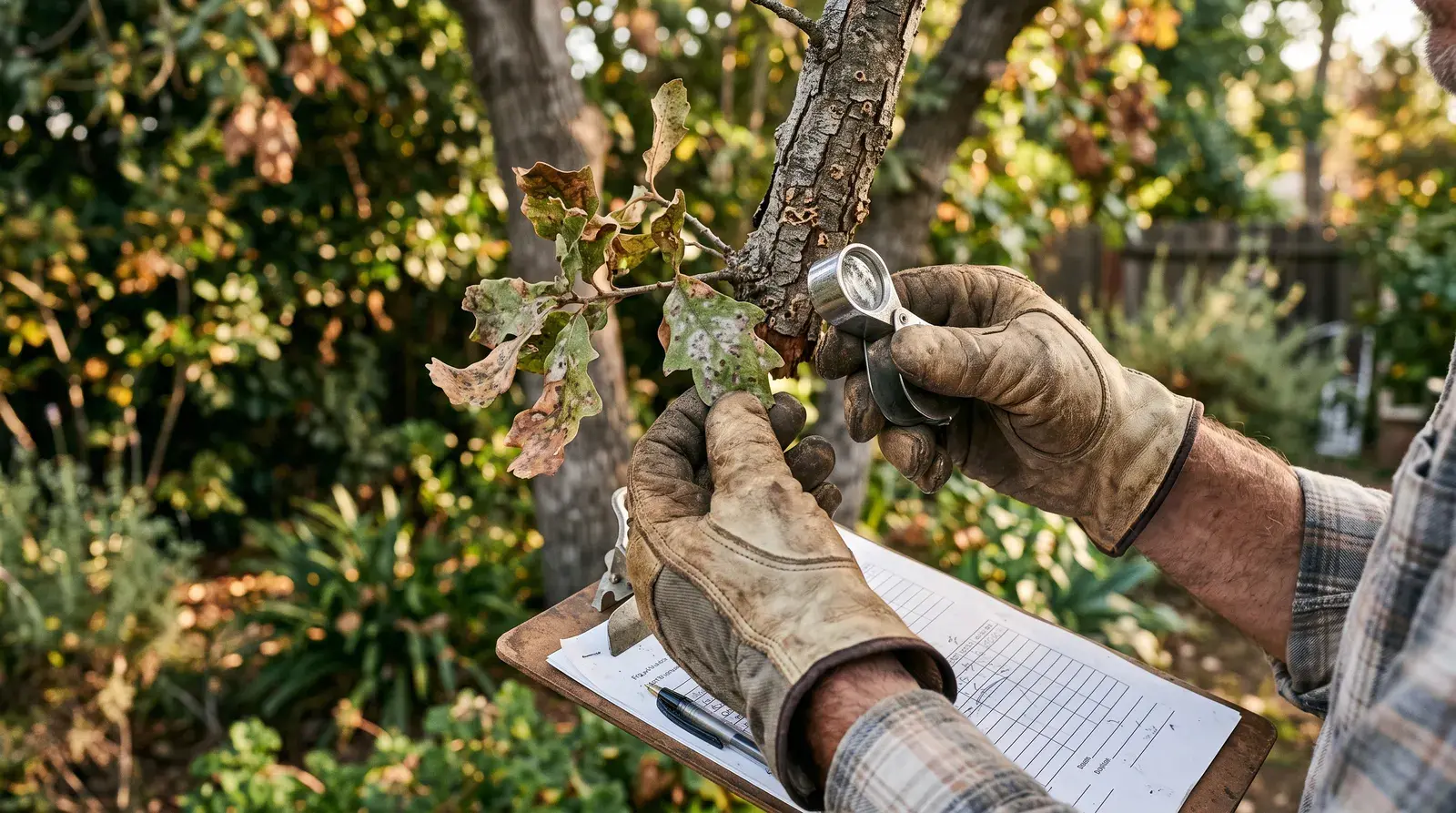
An assessment is a systematic look at the whole tree — crown, trunk, root zone, and site conditions — to figure out what's wrong and whether it can be fixed. It ends with a plain-language recommendation, not a sales pitch for removal.
- Canopy: leaf color and size, thinning, tip dieback, early leaf drop, mistletoe load
- Trunk and branch unions: cracks, cavities, fungal conks, oozing cankers, borer holes and frass
- Root zone: mushrooms at the base, soil heaving, compaction, grade changes, irrigation hitting the trunk
- Structure: co-dominant stems, included bark, over-extended limbs, lean and recent changes in lean
- Site history: construction, trenching, new lawns or drip lines under established trees
Signs Your Sacramento Tree Is in Trouble
The clearest red flags are top-down dieback, mushrooms or conks at the trunk base, bark sloughing off in patches, and sudden lean. Slow decline is easier to reverse than most people expect — but only if it's caught before major limbs die back.
- Dead branch tips at the top of the crown while lower limbs still leaf out
- A crown that gets visibly thinner each spring compared to neighboring trees
- Sap flow, small exit holes, or sawdust-like frass on the trunk — typical borer signs
- Fungal fruiting bodies on the trunk or surface roots, especially after the first fall rains
- Leaves scorching by July on redwoods, birches, and other species that struggle in Valley heat
- Heavy mistletoe clumps taking over a Modesto ash or aging shade tree
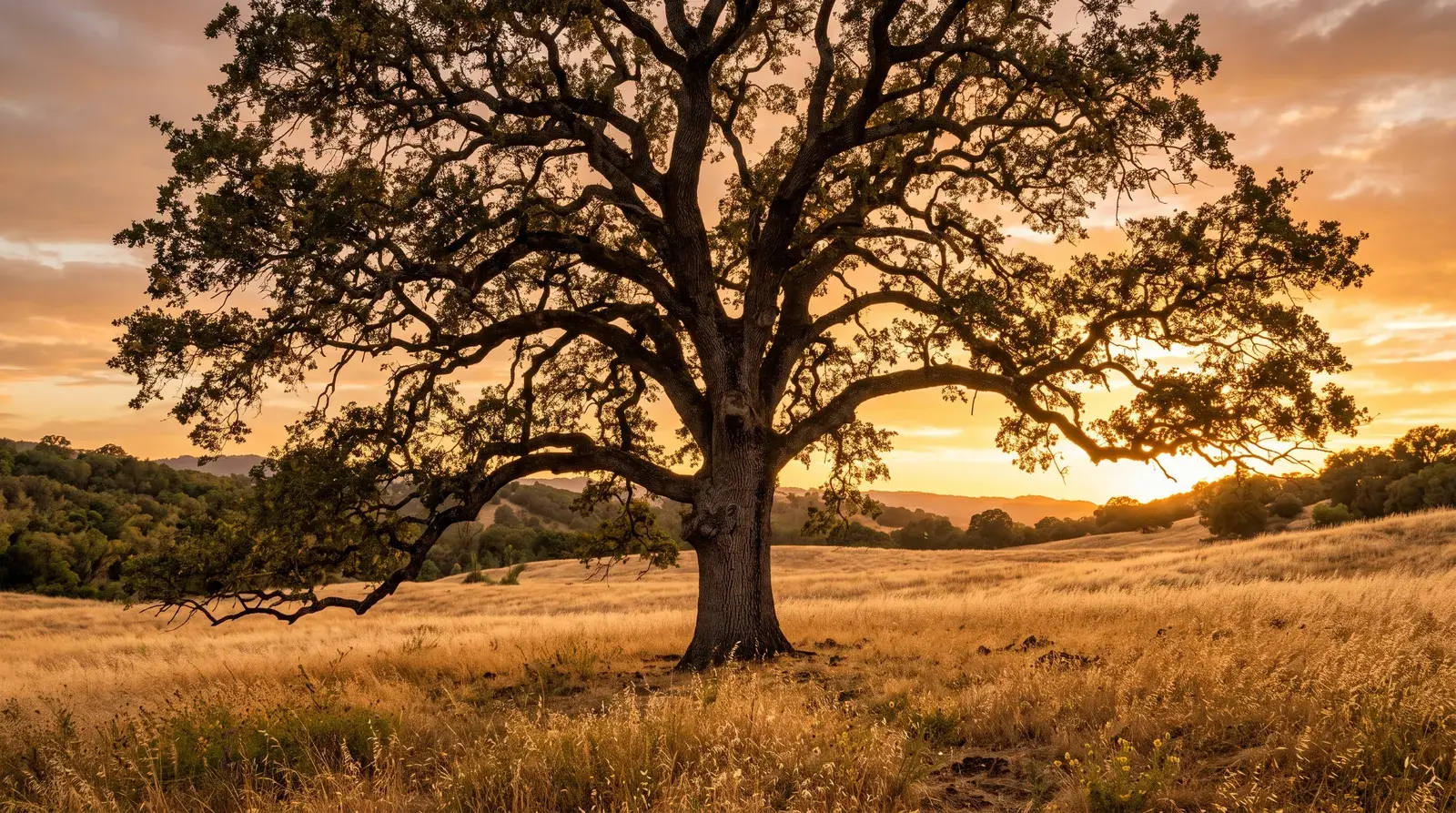
Tree Health Assessment across Sacramento, Placer, El Dorado, and Yolo counties.
Common Diseases and Pests in the Sacramento Region
Sacramento's mix of hot dry summers, wet winters, and a huge mature urban canopy produces a fairly predictable list of problems. Knowing which species gets which problem is most of the diagnosis.
The pattern that matters: most Sacramento tree deaths start with stress — drought, soil compaction, root damage from construction — and pests or fungi move in afterward. Treating the bug without fixing the stress rarely saves the tree. That's why an assessment looks at the site, not just the symptom.
- Anthracnose — London plane, sycamore, and ash; leaf blight and twig dieback after wet springs, rarely fatal
- Armillaria (oak root fungus) — native oaks with summer-irrigated root zones; honey-colored mushrooms at the base in fall
- Fire blight — ornamental pears and other rosaceous trees; blackened, scorched-looking branch tips
- Wood-boring beetles — stressed and drought-weakened trees; borers usually finish what stress started
- Powdery mildew — crape myrtle and London plane in shaded, still-air spots
- Heat and drought stress — coast redwoods, birches, and liquidambars planted outside their comfort zone; browning that mimics disease
Treat, Monitor, or Remove: How We Make the Call
The decision comes down to three questions: what's the tree worth to the property, how far has the problem progressed, and what's underneath it if it fails. A declining oak over open lawn and the same oak over a bedroom are two different conversations.
We put the recommendation in writing when you need it, and we're direct about uncertainty. Decay inside a trunk can't always be judged from the outside, and we'll say so rather than guess.
- Treat — the cause is identified and correctable: prune out infected wood, fix irrigation, mulch the root zone, reduce end weight on stressed limbs
- Monitor — early or ambiguous symptoms with no meaningful target below; recheck seasonally rather than spend money now
- Support — structurally sound wood with a weak union; cabling and bracing can preserve the tree
- Remove — significant trunk or root decay, a dead or dying crown, or failure risk over a house, driveway, or play area that pruning can't fix
Need tree health assessment on your property?
Share the address and project details — we'll come back with a scoped, site-specific estimate.
Why Sacramento Trees Decline: The Local Stress Factors
Most decline here traces back to water — too little in summer for thirsty non-natives, too much year-round for natives. Add compacted urban soil and construction damage, and you have the causes behind the majority of assessments we run.
- Dry-summer climate: months without rain stress redwoods, birches, and other shallow-rooted non-natives
- Summer irrigation on native oaks: lawn water at the root crown drives root rot in trees built for dry summers
- Clay soils: poor drainage in winter, brick-hard compaction in summer, shallow rooting
- Construction and trenching: cut roots show up as canopy dieback two to five years later
- Winter windstorms: saturated soil plus strong south winds test every structural defect a tree has
What Happens After the Assessment
You get a clear diagnosis, a recommended course of action, and a quote for any work — pruning, treatment support, cabling, or removal. If the right answer is "do nothing and watch it," that's what we'll tell you.
If the tree is a protected species or the property is in the City of Sacramento, we'll also flag permit implications before any removal talk goes further. Heritage trees and City street trees are protected under City Code Chapter 12.56, and Sacramento County's Tree Preservation and Protection Ordinance covers native oaks in unincorporated areas — a health assessment is often the first document a permit application needs. When a formal written report is required, our arborist report service picks up where the assessment leaves off.
The same crew from estimate to cleanup.
No juggling separate contractors for one tree. Tell us the address and what you're dealing with, and we'll come back with a written, site-specific number.
- Removal, trimming, stumps, and cleanup handled by one crew
- Free, site-specific estimates — priced to your tree, not a flat rate
- Sacramento, Placer, El Dorado, and Yolo counties
When to Book an Assessment
The best times are early spring, when the canopy leafs out and problems show plainly, and early fall, before winter storms test weak structure. But if you're seeing trunk fungus, sudden lean, or a dead top right now, don't wait for the season.
- Spring: thin leaf-out, dead tips, and anthracnose damage are easiest to spot
- Summer: scorch and drought stress peak in July–August heat
- Fall: mushrooms fruit after the first rains — the clearest window for spotting root disease
- Before winter: a structural check ahead of storm season is the cheapest insurance a big tree gets
Related services
Arborist Reports & Permit Support
Documentation for permits, development, and real estate — including protected and heritage tree review support.
Tree Cabling & Bracing
Structural support for co-dominant stems and heavy limbs — hardware that helps preserve mature, valued trees.
Oak Tree Care
Specialized care for native valley, blue, and interior live oaks — dry-season pruning and heritage-tree compliance guidance.
Tree Planting & Replacement
Right-tree, right-place planting and replacement — good species choices for Sacramento's heat, soils, and space.
Related guides
Common Tree Diseases in Sacramento
The six tree diseases and pests we see most in Sacramento yards — anthracnose, oak root fungus, fire blight, mistletoe, aphids, and bark beetles — and how to catch them early.
9 Signs a Tree Needs to Come Down
Nine warning signs a tree is hazardous or dying — and when removal is safer than trying to save it.
Keeping Trees Alive Through Sacramento Summers
Deep watering at the dripline, real mulch, and the heat-stress signs that matter — how Sacramento trees survive months of triple-digit heat.
Before you book tree health assessment
What it runs, where permits bite, and how tree health assessment stacks up against the alternatives.
Arborist Report Cost in Sacramento (2026)
Regional range $300–$1,500 — and what moves the number on a real job.
Deep-Root Fertilization vs. Surface Feeding: What Trees Actually Need
Deep-Root Fertilization or Surface Feeding — how to tell which one the tree actually needs.
Oak Tree Care & Trimming Cost in Sacramento (2026)
Regional range $400–$3,500 — and what moves the number on a real job.
Want to see what this looks like on a real property? Browse the tree health assessment jobs we take on, or read how our crew scopes and prices work before you call anyone out.
Frequently asked questions
How do I know if my tree is dying or just stressed?
Look at where the problem shows up. Drought and heat stress usually start with scorched leaf edges, early fall color, and thinning from the inside of the canopy outward — often recoverable with deep watering. Real decline shows as dead branch tips at the top of the crown, bark falling off in sheets, fungal conks on the trunk, or sap oozing with sawdust-like frass from borers. Top-down dieback and trunk fungus are the two signs worth a professional look.
What tree diseases are common in the Sacramento area?
Anthracnose hits London planes and sycamores in wet springs, causing leaf blight and twig dieback. Native oaks deal with Armillaria (oak root fungus), especially when summer irrigation soaks the root crown. Fire blight blackens ornamental pears, and mistletoe loads up Modesto ash and older shade trees. Coast redwoods planted in the Valley commonly brown out from heat and drought rather than disease. A site visit tells you which one you're actually dealing with.
Can a sick tree be saved, or does it need to be removed?
Most can be saved. Treatment depends on the cause: pruning out infected or dead wood, correcting irrigation, mulching over compacted roots, or thinning a dense crown. Removal only makes sense when the tree is structurally unsafe — major trunk decay, root failure, a dead top over a house — or so far into decline that money spent on treatment is wasted. We tell you which situation you're in and why, and we don't push removal when care will do.
How much does a tree health assessment cost?
A basic on-site look at one or two trees is often rolled into a free estimate when work is likely needed. Standalone consultations for larger properties, multiple trees, or trees needing a documented written evaluation typically run in the low hundreds regionally, depending on tree count and access. If the situation calls for a formal written report — for a permit or a dispute — that's our arborist reports service and is quoted separately.
Should I water my mature oak in summer?
Generally no — not near the trunk. Native valley oaks, interior live oaks, and blue oaks evolved for dry Sacramento summers, and frequent shallow watering at the root crown invites root rot. Lawn irrigation under an old oak is one of the most common decline causes we see. If a drought year calls for supplemental water, apply it deeply and infrequently out toward the drip line, not against the trunk.