What a Palm Trim Includes
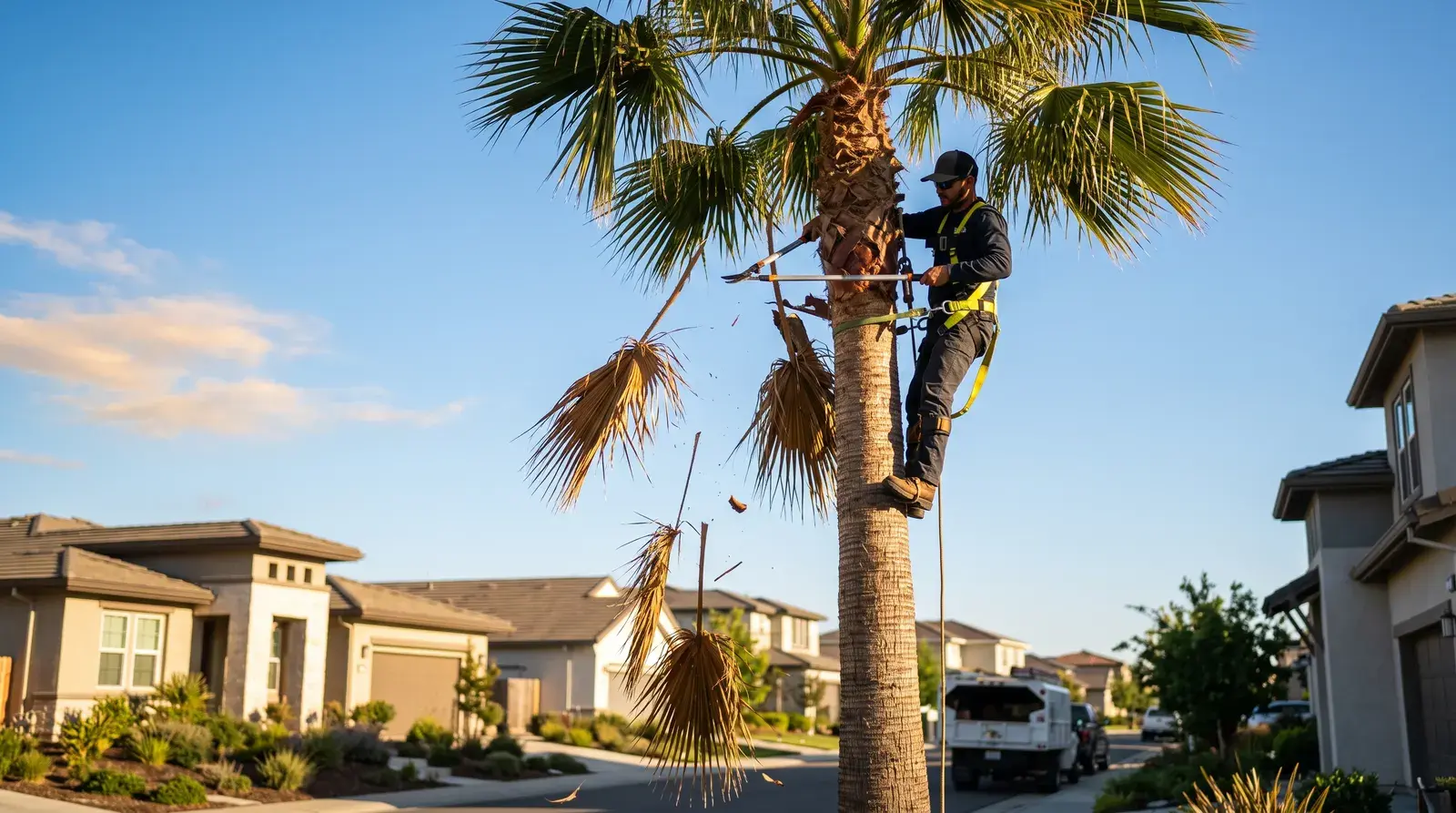
A proper palm trim removes everything dead or spent and nothing that's feeding the tree: brown and dying fronds, seed stalks and pods, loose boots, and any debris lodged in the crown. The palm leaves the visit with a full head of green fronds and a clean trunk line.
What we don't do: cut green fronds above horizontal, carve the crown into a feather duster, or gaff-climb palms you're keeping — spike wounds never heal on a palm trunk and stay visible for the life of the tree.
- Dead and dying fronds cut close to the trunk without wounding it
- Seed stalks and pods removed before they drop thousands of seeds and draw rats and pigeons
- Loose boots and skirt debris cleared from the trunk
- Crown cleaned of lodged fronds and windblown debris
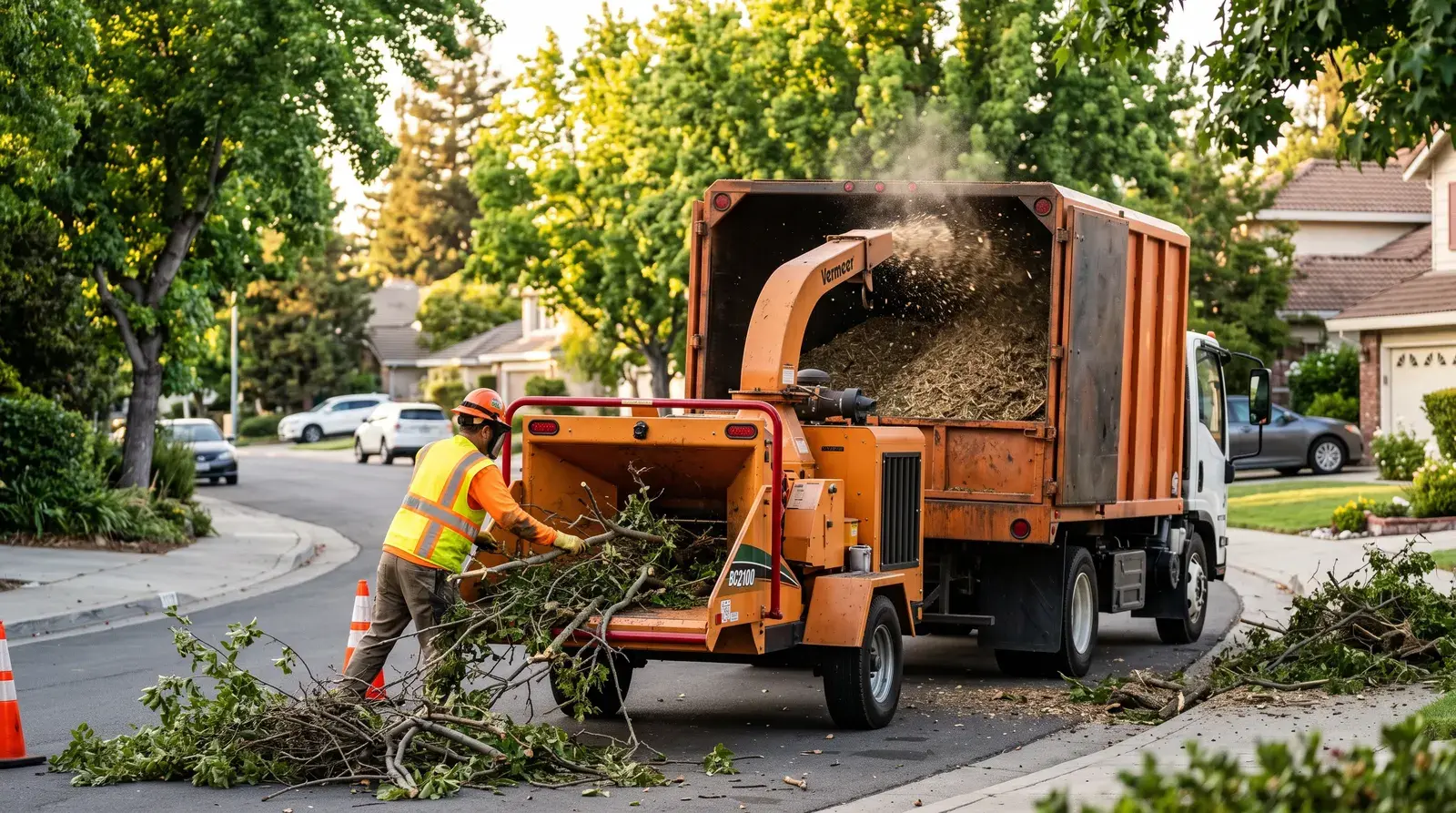
- Full haul-off — palm debris is fibrous, heavy, and most green-waste programs won't take whole fronds
Palms of the Sacramento Valley
Sacramento sits at the comfortable northern edge of palm country, and the valley grows them well. Most residential palm work here involves a handful of species, each with its own trimming profile — from the towering Mexican fan palms along older streets to the compact windmill palms in newer yards.
You'll see the mature fan palms concentrated in older neighborhoods — Land Park, Curtis Park, East Sacramento, older Carmichael — where they've had a century to get tall. Height, not complexity, is what makes those trims a bigger job.
- Mexican fan palm (Washingtonia robusta): the tall, skinny icon — fast-growing, heavy annual skirt, the classic skinning candidate; many top 60–80 feet
- California fan palm (Washingtonia filifera): our native — thicker trunk, fuller natural skirt, same annual needs
- Canary Island date palm: massive pineapple-crowned specimens; skilled crown shaping, and pruning-tool hygiene matters because fusarium wilt spreads on dirty saws
- Windmill palm: small, cold-hardy, common in newer landscapes — quick, low work
- Queen palm: fast frond turnover and messy seed clusters; often needs pods off twice a year
Palm Tree Trimming & Skinning across Sacramento, Placer, El Dorado, and Yolo counties.
The Annual Cycle: When and Why
One well-timed visit a year keeps most palms clean. Late spring to early summer is the efficient window — new growth has pushed the year's fronds, seed stalks are up but pods haven't dropped, and any frost-burned fronds from winter are obviously dead and ready to come off.
Skipping years compounds. A two- or three-year skirt on a fan palm is a fire and rat issue, sheds in every winter windstorm, and takes two or three times the labor to clear — annual service is genuinely the cheap option.
- May–July: the main event — dead fronds, seed stalks, and winter frost damage in one pass
- Late summer: touch-up window for queen palms and heavy seeders that push a second stalk
- Winter: leave palms alone where possible; extra fronds protect the bud during Sacramento's frost nights
- After windstorms: hanging fronds over walkways and driveways are worth a quick call any time of year
Skinning: The Clean-Trunk Finish
Skinning strips the layers of old frond bases off the trunk with a sharp hand tool, working top to bottom, leaving the smooth column look you see on well-kept fan palms. It's one bigger job up front, then simple maintenance shaving during each annual trim.
Skinning is optional. Some owners prefer the natural booted look, and on California fan palms a maintained natural skirt is a legitimate style. What isn't optional on a neglected palm is getting the dead material down before it comes down on its own.
- Aesthetic payoff: a uniform trunk instead of a shaggy diamond-pattern of dead boots
- Pest control: boot layers and skirts are prime rat-nesting habitat in Sacramento neighborhoods
- Fire consideration: dry boots and skirts catch embers — relevant for foothill properties working on defensible space
- Done right, the tool skims the boots without gouging live trunk tissue — palms can't heal trunk wounds
Need palm tree trimming & skinning on your property?
Share the address and project details — we'll come back with a scoped, site-specific estimate.
Safety: Why Tall Palms Are Not a DIY Job
Palm skirts are the specific hazard here. Layers of dead fronds can hide voids, wasp nests, and loose material, and a skirt that slips can pin a climber against the trunk — it's a known cause of tree-worker fatalities. Tall palm work belongs to crews with the rigging and lift access to do it from a safe position.
- Heavy skirts are worked from above or from a lift, never from underneath
- Fronds have serrated, spined stems — Canary Island date palms in particular can punch through gloves
- Falling fronds and pods are heavier than they look; the drop zone gets controlled like any removal
- Power lines near tall palms end the DIY conversation entirely — utility clearances apply
Cost Drivers and Typical Ranges
Palm trimming prices on height, skirt condition, and count. Broad Sacramento-region ranges: $75–$250 per palm for routine annual work at moderate heights, $300–$700+ for tall fan palms, multi-year skirt cleanups, or full skinning. Multi-palm discounts are normal — setup is the fixed cost.
Estimates are free and site-specific. If a palm is declining, leaning, or simply in the wrong place, we can also quote taking it out — see palm tree removal.
- Height: ladder-height windmill palm vs. 70-foot Mexican fan palm is the whole spread of the range
- Deferred skirts: each skipped year adds material, weight, and time
- Skinning: adds labor the first time; cheap to maintain afterward
- Access and disposal: tight backyards and full haul-off of heavy fibrous debris add time
The same crew from estimate to cleanup.
No juggling separate contractors for one tree. Tell us the address and what you're dealing with, and we'll come back with a written, site-specific number.
- Removal, trimming, stumps, and cleanup handled by one crew
- Free, site-specific estimates — priced to your tree, not a flat rate
- Sacramento, Placer, El Dorado, and Yolo counties
When Trimming Isn't Enough
Some palm problems aren't solved with a saw from the top. A palm with a collapsing crown, a soft or weeping trunk, or a hard lean after saturated winter soil needs an assessment, and sometimes the honest answer is removal before it picks its own moment.
- Crown wilting or the center spear pulling out easily: signs of bud or trunk failure — get it assessed
- Trunk narrowing ("pencil-pointing") partway up: a record of past stress or over-trimming worth watching
- New lean after winter storms: fan palms are top-heavy poles; root-plate movement is serious
- Wrong-place palms under lines or against structures: removal and replanting beats fighting it forever
Related services
Palm Tree Removal
Removal and haul-off of Mexican fan palms and other species — including the tall, heavy palms common in older Sacramento neighborhoods.
Tree Trimming
Trimming for clearance, appearance, and long-term health — deadwood removal, canopy shaping, and structure on a sensible cycle.
Tree Health Assessment
Diagnosing disease, pests, and structural risk — with an honest plan to treat, monitor, or remove.
Before you book palm tree trimming & skinning
What it runs, where permits bite, and how palm tree trimming & skinning stacks up against the alternatives.
Want to see what this looks like on a real property? Browse the palm tree trimming & skinning jobs we take on, or read how our crew scopes and prices work before you call anyone out.
Frequently asked questions
How often do palm trees need trimming in Sacramento?
Once a year for most palms, and that's usually enough. Mexican fan palms — the tall skinny ones all over the region — push a full skirt of new fronds and heavy seed stalks every season, so an annual pass keeps them clean. Slower palms like Canary Island date palms and windmill palms sometimes stretch to 18 months. Skip a few years and you get a built-up skirt of dead fronds that costs more to clear and drops debris in every windstorm.
What's the best time of year to trim palms?
Late spring through early summer works best in the Sacramento Valley — roughly May to July. By then the seed stalks have emerged and can come off in the same pass as the dead fronds, so one visit handles the whole year's mess before pods rain seeds across the yard. Frost-damaged fronds from a cold winter also get cleaned up then. Trimming works other times of year too; you just may need a second visit for pods.
How much does palm trimming cost?
As a broad regional range: $75–$250 per palm for routine annual trimming at moderate heights, and $300–$700+ for tall Mexican fan palms, heavy multi-year skirts, or full trunk skinning. Height is the biggest driver — a 60-foot fan palm is real climbing or lift work. Multiple palms trimmed in one visit usually bring the per-tree price down. Estimates are free and site-specific.
What is palm skinning and does my palm need it?
Skinning (or shaving) strips the dead frond bases — the "boots" — off the trunk, leaving a smooth, clean column. It's mostly aesthetic, but it also removes the habitat those boots create: rats nest in built-up skirts and boot layers, and dry boots are ember-catching fuel in fire-prone areas. It's a one-time job that then just needs the new season's boots shaved during regular trims. Not every palm needs it — plenty look fine with a natural boot pattern.
Can trimming too much hurt a palm?
Yes. Palms only grow from the bud at the very top, and every green frond is feeding it. The "hurricane cut" — stripping a palm down to a few upright fronds — starves the palm, narrows the trunk at that growth point, and leaves the bud exposed to frost, which is what actually kills palms in cold Sacramento winters. The standard is simple: remove dead, dying, and spent material, and leave healthy green fronds alone — nothing above horizontal comes off.