
Oak-Pine Woodland on Large Rural Parcels
Shingle Springs sits in the oak woodland transition zone along the Highway 50 corridor between the Sacramento suburbs and the Sierra foothills. Blue oaks and valley oaks dominate the lower elevations; gray pine and ponderosa pine become more common as you climb. Parcel sizes run large by Sacramento-area standards — half-acre to multi-acre lots are common — which means more trees, more wood volume, and frequently no established access route for equipment.
- Blue oak is the signature foothill species here: drought-adapted, slow-growing, deeply rooted, and ecologically significant. Removal is appropriate only when decay, root damage, or proximity to a structure leaves no alternative.
- Valley oaks appear on the more gentle terrain and around seasonal drainages — mature specimens reach significant size and mass.
- Gray pine (foothill pine) is common on dry, rocky exposures throughout the Shingle Springs area; its resinous wood and multi-stem habit make removal more involved than a comparable hardwood.
- Ponderosa pine appears at higher elevations and on shadier aspects — large, straight-trunked, and the tree most likely to fail in ice storms or dry-season wind events.
- Landscaped trees — ornamental species planted around homes in the 1980s and 1990s when the area built out — have reached full size and are now the trees most frequently removed for decay, root conflict, or proximity to structures.
CAL FIRE SRA and Defensible Space: Why Removals Happen Here
Most of Shingle Springs falls within CAL FIRE's State Responsibility Area. That designation matters practically: structures in SRA zones are required by California law (PRC 4291) to maintain defensible space — 100 feet of fuel reduction around every building, or to the property line, whichever comes first. Trees are a significant part of that calculation.
Zone 1 covers the first 30 feet from structures — keep it clear of dead material, maintain spacing between trees, and remove low-hanging limbs that would carry fire up into the canopy. Zone 2 covers 30 to 100 feet — reduce fuel continuity so fire slows before it reaches Zone 1. That means removing dead standing trees, thinning dense clusters, and removing trees with ladder-fuel branching that connects ground fuel to upper canopy. Many Shingle Springs removal jobs are driven directly by this framework: a dead or dying oak sitting at 40 feet from the house isn't an aesthetic problem, it's a PRC 4291 compliance problem. The language that matters for defensible space is fuel reduction, not fireproofing — there is no such thing as a fireproof landscape, only a landscape that burns slower and gives firefighters room to work. Dead trees and dense woodland within the defensible space perimeter are the first priority; healthy native oaks further from structures are rarely on the compliance list.
Tree Removal in Shingle Springs — free, site-specific estimates.
El Dorado County Permits: The Right Authority for Unincorporated Parcels
Shingle Springs has no city hall because it is an unincorporated community — not a city. Tree removal permit questions go to El Dorado County Planning and Building, not to a municipality. That distinction matters before any significant tree comes down.
- El Dorado County's General Plan includes oak woodland conservation policies that apply to significant native oaks on unincorporated parcels; the specific thresholds and application process are set by the county, and they do change — verify current requirements directly with El Dorado County Planning and Building before cutting.
- Dead, hazardous, and defensible-space-compliant removals often have a streamlined path, but documentation — photos, a written condition assessment — strengthens any approval request.
- Trees in drainages or areas mapped as sensitive habitat may trigger additional county or state review; 916 Trees flags this at the estimate when site conditions suggest it.
- There is no city urban forestry program, no city street tree list, and no HOA landscaping ordinance that overrides county authority — the county is the only permitting layer for unincorporated Shingle Springs.
- For CAL FIRE-required defensible space removals: the defensible space inspection itself provides a documented basis for fuel-reduction removals, which simplifies the paperwork trail considerably.
Steep Terrain, Rural Access, and What It Costs to Work Here
Shingle Springs removals are rarely straightforward. Long private driveways, locked gates, slope grades that limit ground equipment, and the distance from the nearest chip drop-off point all factor into what a job costs. A tree that would be a $600 removal in a flat Sacramento suburb becomes a $2,000–$4,000 job when it sits on a 20-percent slope 200 feet behind a narrow driveway.
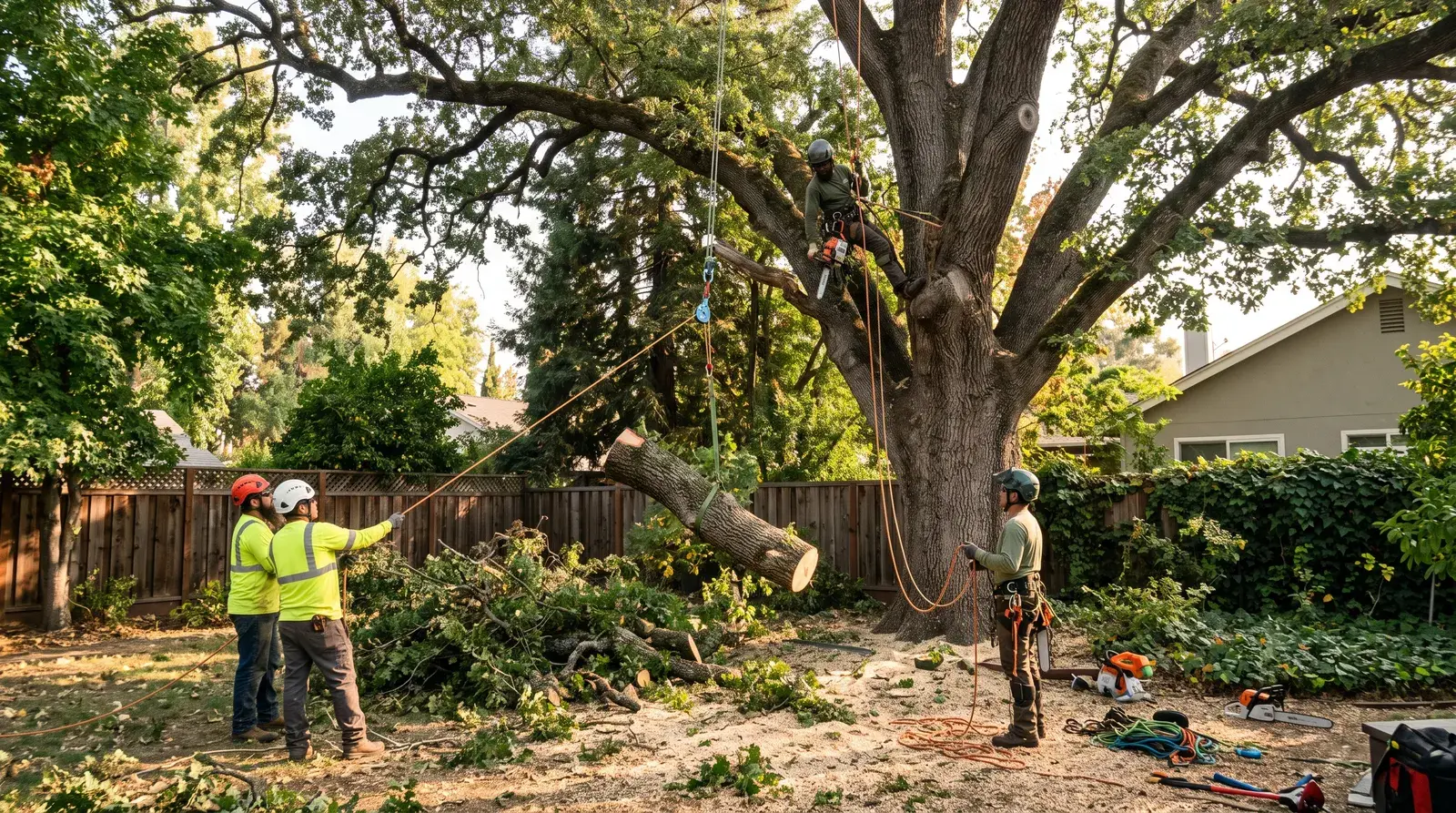
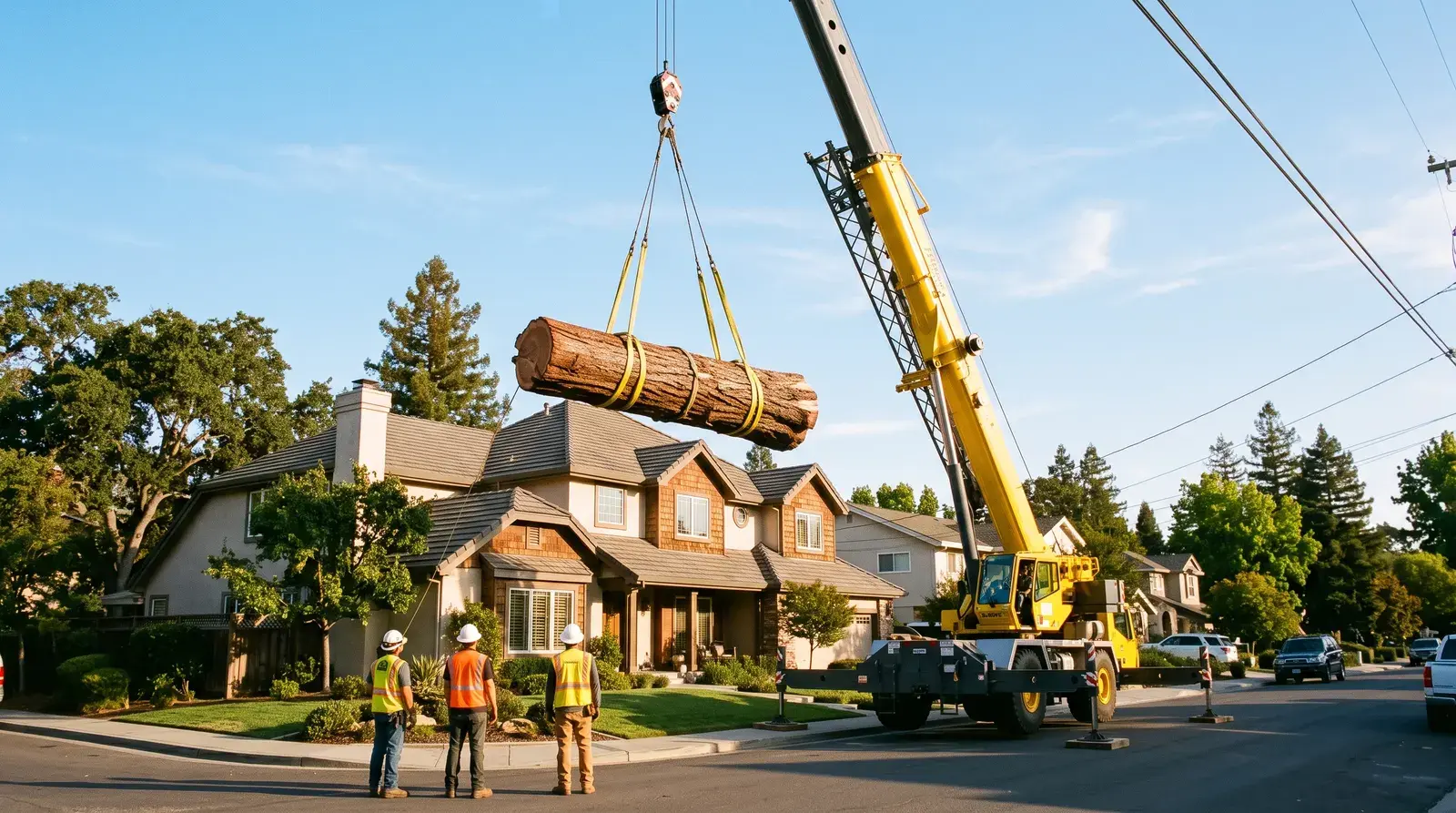
- Equipment access is the first question on every Shingle Springs estimate: can a chip truck and bucket truck reach the work? If not, the job converts to crane or rope-access rigging, which takes more time and more crew.
- Steep slope sites require rigging every cut — nothing can be dropped in a foothill setting where uncontrolled wood would roll into other trees, structures, or drainages.
- Debris haul-off on large rural parcels is a real cost line: chip trucks fill fast on multi-tree jobs, and return trips add to the total.
- As broad regional figures, foothill removals in the Shingle Springs area run $600–$3,000 for most residential trees; large ponderosa pines and mature oaks on restricted-access sites will exceed that range, sometimes significantly.
- Firewood from oak and pine is a useful offset — we can buck rounds and leave them stacked if you want the wood rather than hauling it. It's the best way to reduce removal cost on a high-wood-volume job.
- Every estimate is free, site-specific, and includes a direct conversation about access, permit questions, and debris handling before any pricing is put on paper.
Need tree removal in Shingle Springs?
Share the address and project details — we'll come back with a scoped, site-specific estimate.
Dead Trees, Storm Damage, and When Removal Can't Wait
Fire season and winter storms are the two events that turn a tree problem into an emergency in Shingle Springs. A standing dead oak in June is a PRC 4291 compliance issue and a fire-risk issue simultaneously. A large pine that half-failed in a December ice storm and is now wedged against a neighbor's fence needs to come out before the next weather event, not after.
Dead standing trees in SRA areas carry a specific urgency: they are the highest-risk fuel in the defensible space perimeter (completely dry, no moisture to slow combustion), and CAL FIRE inspectors flag them routinely. Scheduling removal early in the season, before the July–October fire risk window, is the practical play. For storm-damaged trees, the priority sequence is the same as anywhere else — get people and vehicles clear, keep everyone out of the fall zone, document the damage before cleanup for any insurance claim, and call for professional removal. Storm-loaded pine under tension is one of the most dangerous situations a homeowner can encounter with a chainsaw. We make the scene safe, rig what needs rigging, and document condition in writing for the insurance file. Post-storm is also the right time to assess the survivors — a tree that moved in the wind and showed soil lift at the root collar has partially failed, not survived.
The same crew from estimate to cleanup.
No juggling separate contractors for one tree. Tell us the address and what you're dealing with, and we'll come back with a written, site-specific number.
- Removal, trimming, stumps, and cleanup handled by one crew
- Free, site-specific estimates — priced to your tree, not a flat rate
- Sacramento, Placer, El Dorado, and Yolo counties

Stumps, Chips, and What Comes Next
Rural parcels give you options that urban lots don't: wood and chips can often stay on site, which reduces haul costs and produces mulch or firewood for the property. Decide before removal day — one mobilization is always cheaper than a callback.
- Stump grinding on foothill terrain requires a machine that can operate on grade; not every grinder is suitable for a 15-degree slope. We bring the right equipment to the first visit.
- Oak and pine firewood is a genuine value on a rural property — we buck and stack rounds at no charge when you want the wood.
- Chip piles can be left as mulch for garden beds or spread on disturbed soil to reduce erosion — useful on slope sites where bare soil is a problem after a removal.
- Replanting after a removal closes out the defensible space plan properly: a single well-chosen native tree sited 20 feet from the structure replaces three poorly placed trees that violated Zone 1.
- Stump grinding is quoted separately; depths of 8–12 inches are standard, with deeper grinds for replanting or site construction.
Related guides
Do You Need a Permit to Remove a Tree in Sacramento?
Which Sacramento trees need a removal permit, how city and county rules differ, and how to check before the saw comes out.
How Much Does Tree Removal Cost in Sacramento? (2026)
Typical 2026 Sacramento tree removal price ranges by tree size, the factors that move the number, and how to read a quote before you sign it.
9 Signs a Tree Needs to Come Down
Nine warning signs a tree is hazardous or dying — and when removal is safer than trying to save it.
What tree removal costs — and what Shingle Springs allows
Regional ranges, local permit rules, and the alternatives worth weighing before tree removal in Shingle Springs.
Emergency Tree Service Cost in Sacramento (2026)
Regional range $800–$8,000 — and what moves the number on a real job.
Do You Need a Tree Removal Permit in Auburn?
Where Auburn draws the line before a tree comes down, and who to check with.
Tree Pruning vs. Removal: When to Save a Tree and When to Take It Down
Pruning or Removal — how to tell which one the tree actually needs.
Tree Service in El Dorado County, CA
El Dorado County runs from the Sacramento Valley edge at El Dorado Hills up through Placerville and into Pollock Pines…
Crane-Assisted Tree Removal Cost in Sacramento (2026)
Regional range $2,500–$12,000 — and what moves the number on a real job.
Do You Need a Permit to Remove a Tree in Sacramento?
Which Sacramento trees need a removal permit, how city and county rules differ, and how to check before the saw comes out.
Want a sense of the work first? See the kinds of tree removal jobs we take on and who shows up to do them.
Frequently asked questions
Do I need a county permit to remove an oak tree in Shingle Springs?
Possibly, depending on the tree's size and the circumstances. Shingle Springs is unincorporated El Dorado County — there's no city, so permit authority sits with El Dorado County Planning and Building. The county's General Plan includes oak woodland conservation policies that can apply to significant native oaks on private parcels. Dead trees, documented hazardous trees, and defensible-space-required removals often have a more direct path, but the county requirements change, so we verify directly with El Dorado County on every removal where the question is live. We flag it at the free estimate and don't cut until the permit question is settled.
Is my Shingle Springs property in CAL FIRE's State Responsibility Area?
Most of the Shingle Springs community and surrounding unincorporated El Dorado County land along the Highway 50 corridor is in CAL FIRE's State Responsibility Area. You can verify your specific parcel's SRA status using the CAL FIRE SRA map, accessible through CAL FIRE's website. If your property is in the SRA, PRC 4291 defensible space requirements apply — 100 feet of fuel reduction around all structures, or to the property line. This directly affects which trees need to come out and when.
How does defensible space affect which trees I need to remove?
Defensible space under PRC 4291 isn't about removing every tree near your house — it's about fuel reduction and continuity. Zone 1 (0–30 feet from structures) needs to be cleared of dead material and limbed up to reduce ladder fuels; dense clusters of trees in this zone should be thinned for spacing. Zone 2 (30–100 feet) needs reduced fuel density but doesn't need to be clear-cut. In practice, the trees most likely to require removal are dead or dying oaks and pines within the defensible space perimeter, trees with heavy deadwood accumulation, and multi-stem shrubs or small trees that create continuous fuel paths from the ground into the upper canopy. Healthy, appropriately spaced live trees well outside Zone 1 are rarely the compliance problem.
What does tree removal cost on a rural foothill parcel?
More than flat-lot work, and the gap is access and rigging time. As broad regional figures, most residential tree removals in the Shingle Springs area run $600–$3,000; large ponderosa pines and mature oaks on steep terrain or sites with limited equipment access can exceed that significantly. The variables that move price the most: how close can a chip truck and bucket truck get to the work, how steep is the terrain under the tree, what's in the fall zone (fence, roof, drainage), and how much wood volume needs to come out. Every estimate is free and done on site — a photo quote on a foothill property is essentially a guess.
Can you handle a tree that's partially failed or storm-damaged on a steep site?
Yes, and steep-site storm damage is the situation where professional rigging matters most. A pine that's been split by ice or pushed by wind on a grade has loaded tension in the wood that changes with every cut — a chainsaw at the wrong spot releases that tension in a direction nobody expects. We rig storm-damaged trees from above, work in supported sections, and control the drop path on every piece. On extreme-grade sites with no safe ground position, that can mean a rope-access approach with no ground equipment at all. Tell us about the slope and the site when you call — it determines how we stage the job.