
Broderick and Bryte: Established Canopy in Older River Neighborhoods
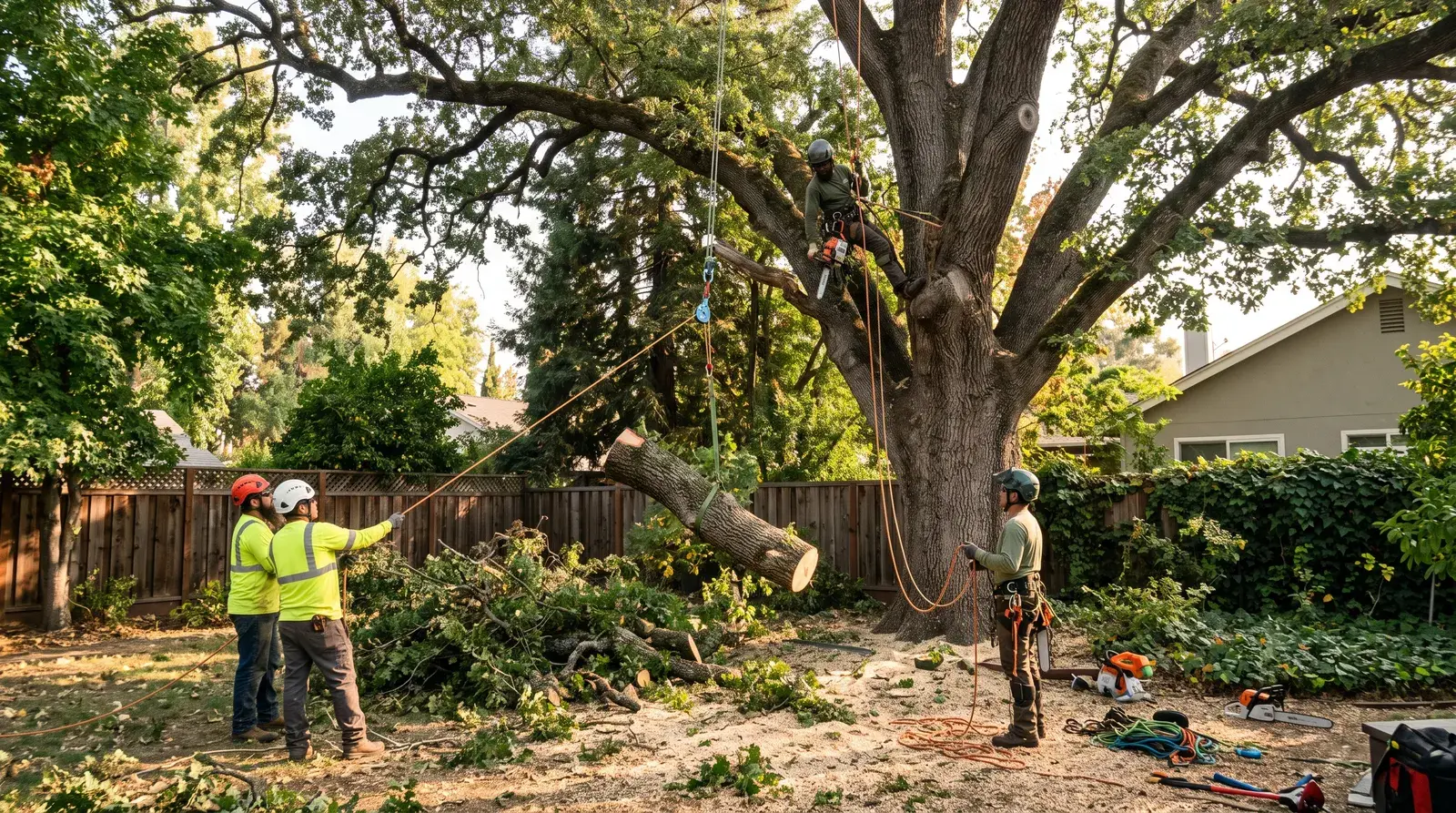
Broderick and Bryte were independent unincorporated communities long before they became West Sacramento. The trees reflect that history: mature plantings from the mid-twentieth century, including Siberian elms, cottonwoods, tree-of-heaven, and ornamental mulberries that have had decades to anchor in heavy clay soil close to the Sacramento River. These are the trees that come down with age, root failures, or storm damage — and they come down heavy.
- Siberian elm is the most common problem tree in the older neighborhoods: fast-growing, brittle-wooded, and prone to major limb failures with age. Large specimens routinely drop significant limbs without warning, especially over driveways and rooflines.
- Cottonwood and Fremont cottonwood are native to Sacramento River floodplain and appear throughout the river-adjacent neighborhoods; they grow fast, reach large size, and have aggressive surface root systems that conflict with hardscape and sewer laterals.
- Tree-of-heaven (Ailanthus altissima) is an invasive species common in the older neighborhoods; it resprouts aggressively from stumps, so stump grinding immediately after removal is essential to prevent regrowth.
- Older ornamental mulberries have reached the end of their lifespan in many Broderick and Bryte yards — trunk cavities, major scaffold failures, and chronic die-back are the common removal triggers.
- Proximity to the Sacramento River means some parcels are on or near levee infrastructure; any work within or adjacent to the levee right-of-way requires coordination with the appropriate flood control authority before removal.
The Rivers and Bridge District: Newer Development, Younger Trees
The Rivers and the Bridge District represent West Sacramento's newer riverfront face — upscale residential development, mixed-use areas near Tower Bridge, and landscaped common areas with trees planted within the last 20 years. Removals here are a different scope: trees that failed to establish, ornamentals that were sized wrong for their location, or wind-thrown specimens in open riverfront sites.
The Rivers' open riverfront setting creates a wind exposure problem similar to West Roseville's open subdivisions, but with a river influence: sustained Delta winds funnel up the Sacramento River corridor and hit trees that have no mature canopy behind them for protection. Shallow-rooted ornamentals in landscaped corridors are the most frequent failures. The newer construction in the Bridge District includes street trees planted as part of development agreements — these are generally managed by city Public Works once established in the public right-of-way, but private-lot ornamentals and courtyard plantings are owner responsibility. Riverfront views also create pressure to remove trees that are blocking sightlines; in these cases, the honest scope is often crown reduction or directional pruning rather than full removal. We'll say so at the estimate.
Tree Removal in West Sacramento — free, site-specific estimates.
Clay Soils and Root Systems: The Removal Challenge Specific to West Sacramento
The Sacramento Valley floor's heavy clay soils dominate throughout West Sacramento. Clay affects every stage of a removal — how roots spread, how deeply they anchor, how the root ball behaves at extraction, and what happens to the soil after the tree is gone.
- Clay soils drain slowly, which means winter root zones stay saturated longer than in sandier soils. Saturated clay loses its grip on root plates — trees that looked stable in October are at higher tip-over risk in January after weeks of standing water.
- Root systems in clay typically spread wide and relatively shallow rather than deep; a large elm or cottonwood can have surface roots extending 20–30 feet from the trunk that conflict with driveways, foundations, and sewer lines.
- Clay compacts around root balls, making extraction heavier and more resistant; grinding oak and elm stumps in clay takes longer than in loamier soil.
- After removal, clay sites need real topsoil in the stump hole before replanting — backfilling with clay chips from the grind produces a compacted, nitrogen-depleted root zone that kills replacement trees.
- Heavy clay near the river is also the growing medium for the aggressive root systems of cottonwood and willow; surface roots from trees near property lines are often the neighbor dispute that drives the call.
Levee Proximity, the Sacramento River, and What That Changes
West Sacramento's position on the Sacramento River floodplain means portions of the city — particularly in Broderick, Bryte, and along the southern port corridor — sit near levee infrastructure managed by the Yolo-Solano Air Quality Management District and relevant flood control agencies. Trees on or adjacent to levee rights-of-way operate under a different set of rules.
Levees require clear, stable root zones to maintain their structural integrity — woody vegetation, especially deep-rooted trees, on the levee crown or slopes is typically prohibited or heavily managed by the relevant flood control authority. If a tree is on the levee itself or within the levee right-of-way, the removal isn't simply a city tree permit issue — it involves coordination with the appropriate agency before any work starts. Trees near the levee toe on private property are a different situation, but root encroachment toward the levee structure is the concern. For trees in the Sacramento River riparian zone, there may also be state and federal permitting considerations depending on species, timing, and site. We identify these situations at the estimate and tell you clearly which authorities need to be in the conversation before work begins.
Need tree removal in West Sacramento?
Share the address and project details — we'll come back with a scoped, site-specific estimate.
City of West Sacramento Tree Permits: An Incorporated City's Rules
West Sacramento is a full incorporated city — it has its own municipal code separate from Yolo County's. That means tree removal permit questions, street tree work, and right-of-way issues are the city's jurisdiction, not the county's.
- Street trees in the public right-of-way — in the planting strip between sidewalk and curb — are city-managed. Removing or pruning them without city authorization is a code violation regardless of whose driveway they're wrecking.
- The city's Public Works Department manages the street tree program; for a dead or hazardous street tree, the process is reporting it to the city rather than hiring a private contractor to remove it.
- For private-lot trees, the City of West Sacramento municipal code sets the applicable permit requirements — verify with the city's Planning and Building Department for the current thresholds and application process, as they can change.
- Port and industrial corridor work often involves additional permitting layers — environmental review, site-plan compliance, and coordination with the Port of West Sacramento. Commercial clearance jobs are scoped on a case-by-case basis.
- 916 Trees checks the permit question on every West Sacramento estimate and points you to the right city department when an application or notification is required.
The same crew from estimate to cleanup.
No juggling separate contractors for one tree. Tell us the address and what you're dealing with, and we'll come back with a written, site-specific number.
- Removal, trimming, stumps, and cleanup handled by one crew
- Free, site-specific estimates — priced to your tree, not a flat rate
- Sacramento, Placer, El Dorado, and Yolo counties
What Tree Removal Costs in West Sacramento
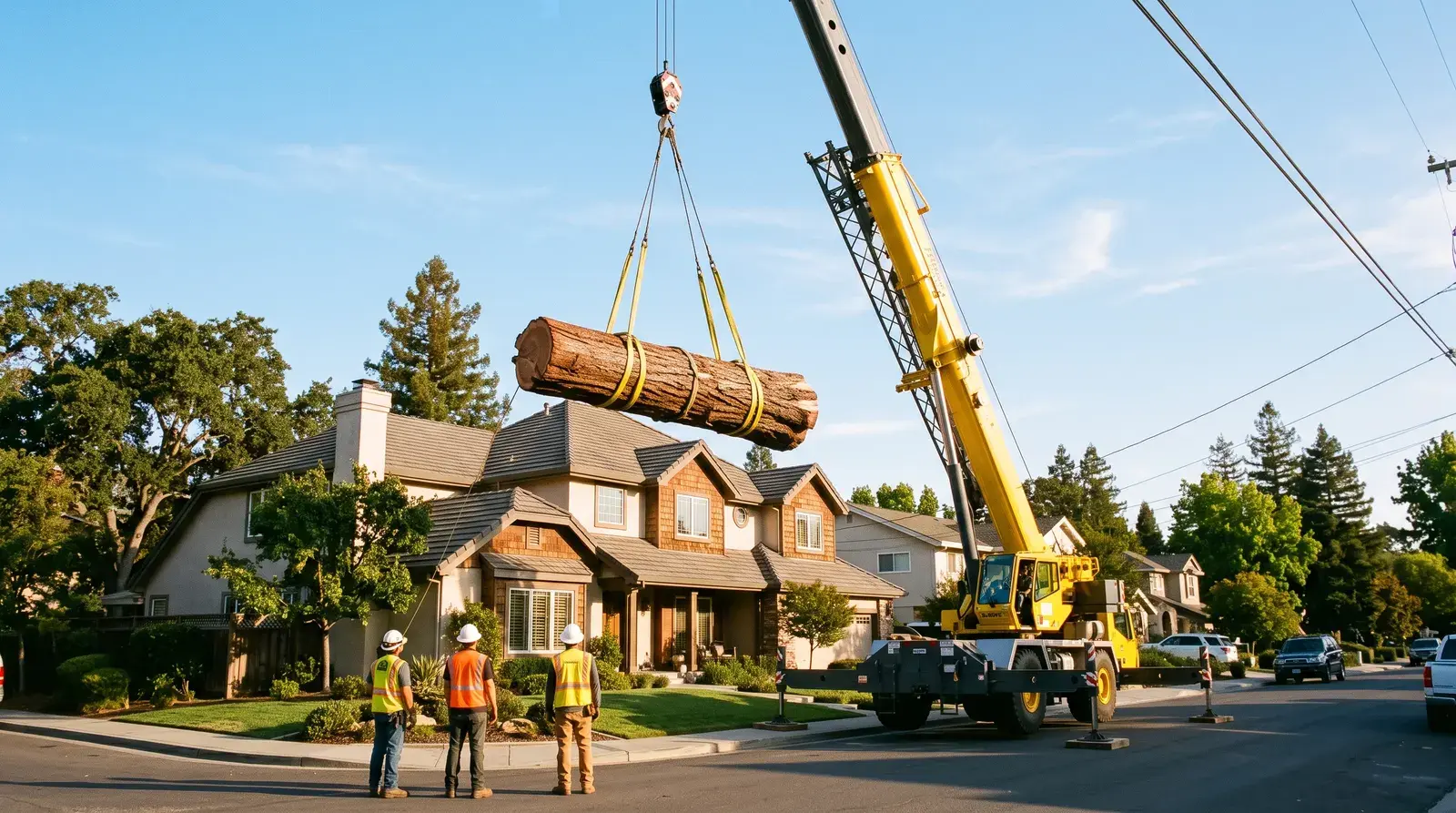
As broad regional figures, most West Sacramento residential removals run $500–$2,500. Large mature elms and cottonwoods in Broderick and Bryte — heavy wood volume, wide root spread in clay — are at the upper end. Crane-assisted work near the river or levees adds cost regardless of tree size.
- Tree size and wood volume set the baseline: a 50-foot cottonwood carries several times the mass of a 20-year-old ornamental plum.
- Access matters as much as size — river-adjacent and levee-adjacent sites often have limited equipment staging, which pushes labor time up.
- Debris haul-off is included in 916 Trees quotes; cottonwood and willow produce large chip volumes from even mid-size specimens.
- Clay soil stump grinding runs slower than sandy-soil work; quote stumps as a separate line item.
- Every estimate is free, done on site, and includes a direct conversation about permit requirements, access, and debris handling before any price is committed.
Related guides
Do You Need a Permit to Remove a Tree in Sacramento?
Which Sacramento trees need a removal permit, how city and county rules differ, and how to check before the saw comes out.
How Much Does Tree Removal Cost in Sacramento? (2026)
Typical 2026 Sacramento tree removal price ranges by tree size, the factors that move the number, and how to read a quote before you sign it.
9 Signs a Tree Needs to Come Down
Nine warning signs a tree is hazardous or dying — and when removal is safer than trying to save it.
What tree removal costs — and what West Sacramento allows
Regional ranges, local permit rules, and the alternatives worth weighing before tree removal in West Sacramento.
Emergency Tree Service Cost in Sacramento (2026)
Regional range $800–$8,000 — and what moves the number on a real job.
Do You Need a Tree Removal Permit in Citrus Heights?
Where Citrus Heights draws the line before a tree comes down, and who to check with.
Tree Pruning vs. Removal: When to Save a Tree and When to Take It Down
Pruning or Removal — how to tell which one the tree actually needs.
Tree Service in Yolo County, CA
Yolo County is flat valley floor — Sacramento River bottomland, Yolo Bypass floodplain, and agricultural land stretchin…
Crane-Assisted Tree Removal Cost in Sacramento (2026)
Regional range $2,500–$12,000 — and what moves the number on a real job.
Do You Need a Tree Removal Permit in Rancho Cordova?
Where Rancho Cordova draws the line before a tree comes down, and who to check with.
Want a sense of the work first? See the kinds of tree removal jobs we take on and who shows up to do them.
Frequently asked questions
Does West Sacramento require a permit to remove a tree on private property?
West Sacramento is an incorporated city with its own municipal code, so permit requirements are set by the City of West Sacramento's Planning and Building Department — not by Yolo County. The specifics can change, so we verify current requirements directly with the city on every removal where the question is live. Protected species or significant trees on private lots, street trees in the right-of-way, and trees within certain setbacks are the most common trigger points. We check this at the free estimate and flag it before any work is scheduled.
The tree is between my sidewalk and the curb. Can I remove it myself?
No — that planting strip is typically city property, and trees there are West Sacramento street trees managed by the city's Public Works Department. Removing one without city authorization is a code violation, even if the tree is damaging your sidewalk or driveway. The right path is reporting a dead, hazardous, or infrastructure-damaging street tree to the city and requesting removal or replacement through their program. We can document the tree's condition — photos, a written assessment — to support that request, but the city controls the work on street trees.
We're near the Sacramento River — does levee proximity affect tree removal?
It can, significantly. Trees on or within the levee right-of-way involve the relevant flood control authority before removal, not just a city permit. Trees on private property that are very close to the levee toe may have root systems the flood control agency wants to know about. For river-adjacent riparian trees, state and federal considerations may apply depending on species and site. We identify these situations at the estimate and tell you clearly which agencies need to be in the conversation before anything is cut — getting the wrong answer on a levee-adjacent removal is the kind of mistake that comes with agency fines.
How does tree removal work differently in clay soil?
Clay changes the job in a few ways. Root systems spread wide and shallow in clay, which means surface roots often run far beyond the visible canopy and can surprise you during extraction. Saturated winter clay loses structural grip on root plates, so tip-over risk peaks in January and February after sustained rain — if a tree has picked up a lean during wet season, it's a higher urgency situation than a summer lean. Stump grinding in dense clay runs slower than in loamier soils, and the chips from a clay-site grind are not ideal backfill for replanting. We flag all of this at the estimate so the scope and budget reflect what the site actually is.
What does tree removal cost in West Sacramento?
As broad regional figures, most residential removals run $500–$2,500. Older Broderick and Bryte trees — mature elms, large cottonwoods — are at the upper end and sometimes well past it, particularly when access to Yolo Bypass-adjacent lots is limited or the site requires crane rigging. Newer ornamentals in The Rivers and Bridge District neighborhoods are generally at the lower end of the range. Clay soil work and levee-adjacent or riparian sites carry additional variables that push price higher than a flat-lot suburban removal of the same tree. Every estimate is free and based on a site visit, not a photo.