
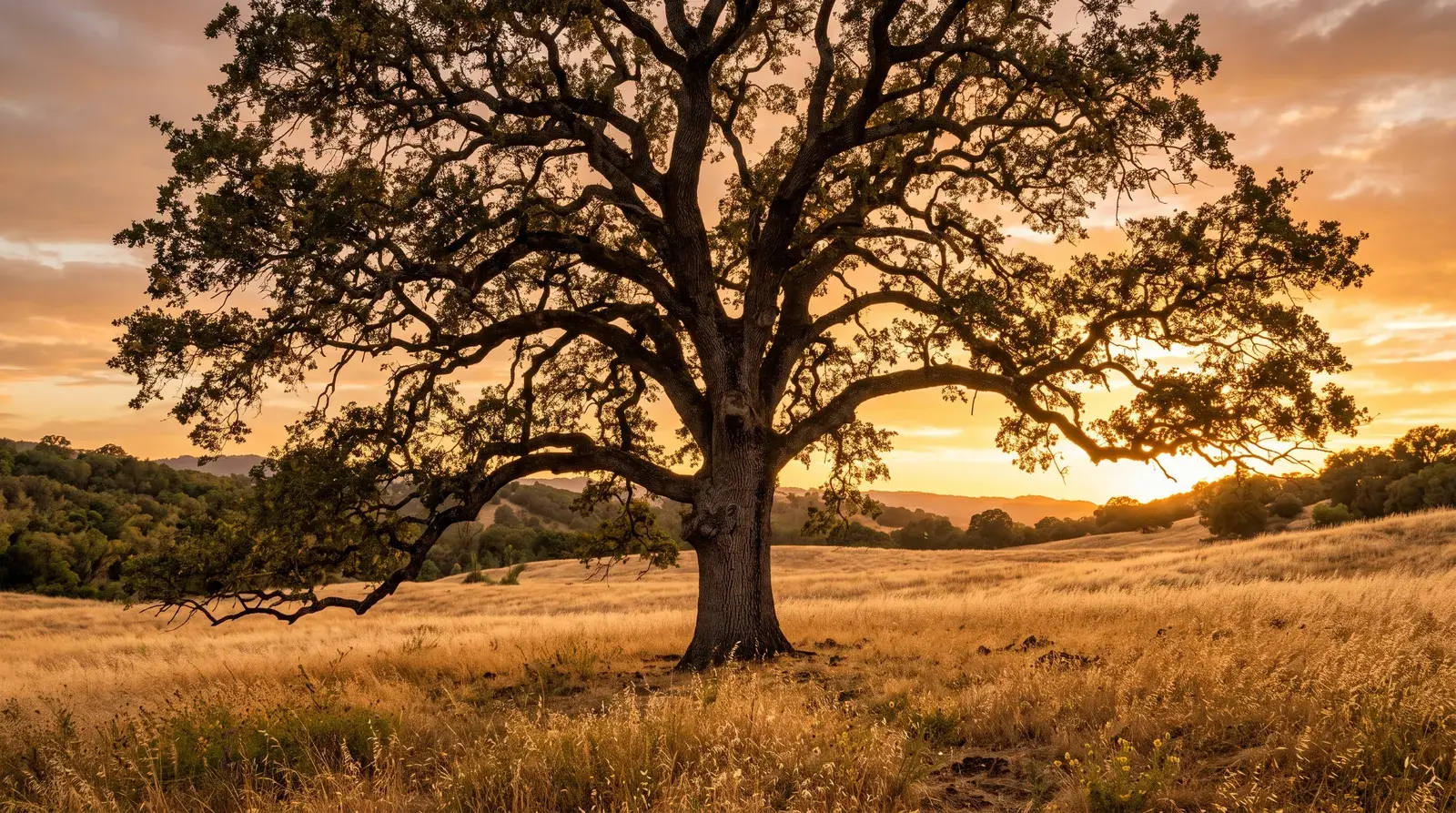
How to Care for a Mature Oak in Fair Oaks
The short version: prune lightly in the dry season, keep summer water off the root zone, do not raise or lower the grade under the canopy, and reduce end-weight on long limbs before winter storms test them. Mature oaks want benign neglect more than attention.
- Prune in dormancy or the dry season — wet-season cuts on native oaks invite disease spread, and heavy summer pruning stresses the tree in Sacramento heat.
- Take small amounts often — removing more than a modest fraction of live canopy in one pass pushes an old oak into decline.
- Never top an oak — the regrowth is weakly attached and the decay that follows is permanent.
- Protect the root zone — no trenching, fill soil, compaction, or new lawn irrigation under the dripline.
The County Ordinance and Your Oaks
Fair Oaks is unincorporated, so Sacramento County's Tree Preservation and Protection Ordinance governs native oaks here. It is aimed primarily at removals and major encroachment, but if work on a protected oak goes beyond routine maintenance, checking with the county first is the safe move.
- Protected species in Fair Oaks yards — valley oak, interior live oak, and blue oak above the county's size thresholds.
- Routine maintenance pruning is generally fine; removals and significant canopy or root-zone impacts are where permits enter the picture.
- Construction near an oak — additions, ADUs, pools, and driveways within the dripline can trigger protection requirements. Get an assessment before the plans are final, not after.
- We prune to ANSI A300 standards and document our work, which keeps you covered if a neighbor or inspector ever asks.
Oak Tree Care in Fair Oaks — free, site-specific estimates.
What Kills Fair Oaks Oaks (It Is Usually Water)
The most common killer of mature valley oaks in Fair Oaks is not pests or age — it is decades of summer lawn irrigation over a root system evolved for bone-dry summers. The rot works slowly, and by the time the crown thins, much of the damage is done.
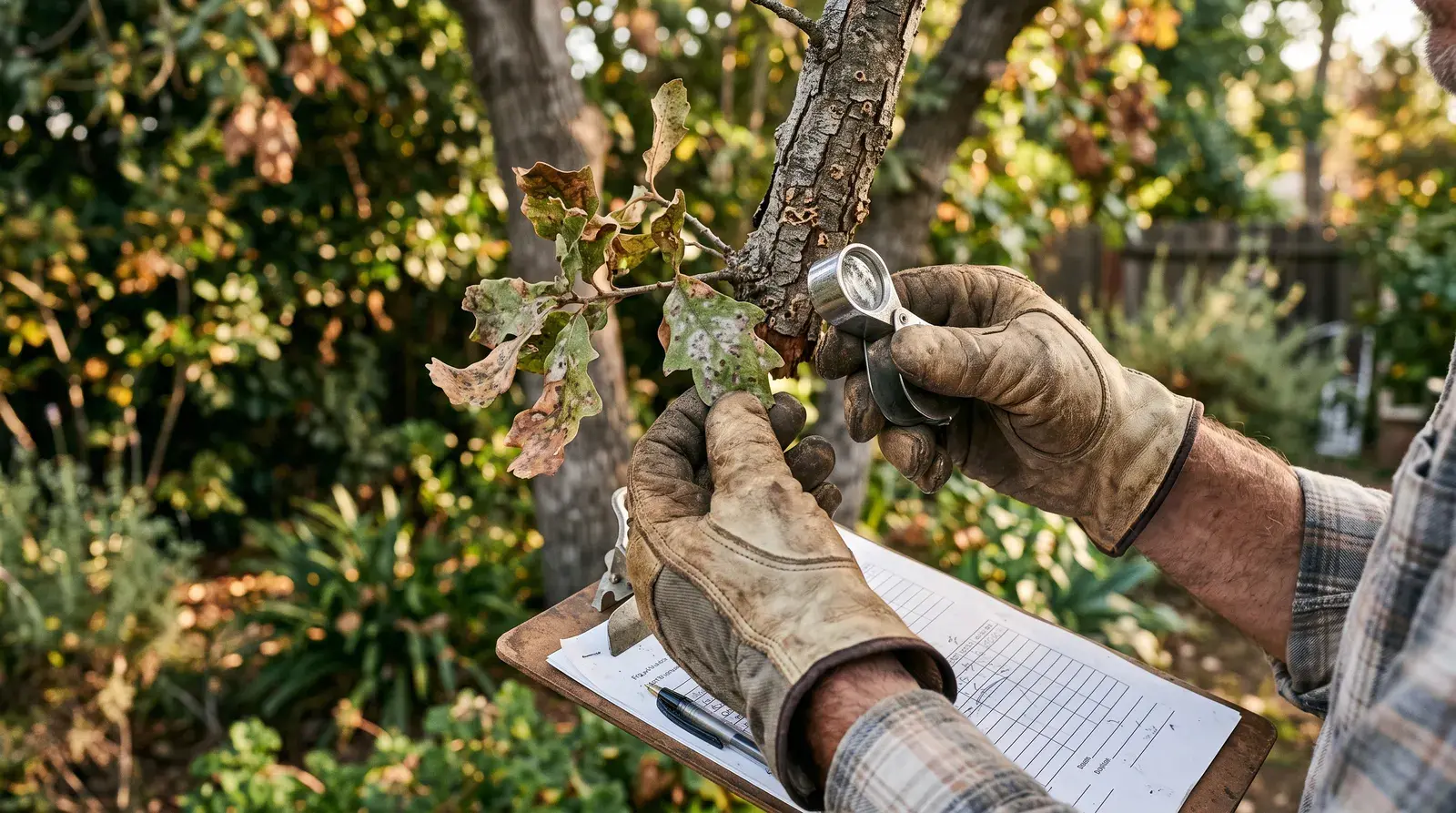
If your oak's canopy is thinning or major limbs are dying back, a tree health assessment tells you whether the tree is saveable before you spend money either direction.
- Summer irrigation under the canopy promotes crown and root rot in native oaks. Convert lawn under old oaks to unirrigated mulch where you can.
- Grade changes and trenching — a sewer line cut through the root zone in the 1990s can produce the dieback you are seeing today.
- Compaction from parked cars and equipment under the dripline suffocates fine roots.
- Mistletoe and deadwood are manageable with pruning; a thinning upper crown is the signal to get an assessment now.
Need oak tree care in Fair Oaks?
Share the address and project details — we'll come back with a scoped, site-specific estimate.
Weight Reduction Before Storm Season
The classic Fair Oaks failure is a horizontal valley oak limb, forty feet long and heavy at the tip, letting go over a roof during a saturated-soil windstorm. End-weight reduction — shortening and lightening long limbs back to good laterals — is the highest-value work we do on old oaks.
- Reduce, do not remove — keeping the limb but shortening its lever arm preserves the tree's structure and shade.
- Cabling and bracing supplements pruning on split-prone co-dominant stems; see our cabling service.
- Bluff-top oaks above the American River take the full south wind — they are the first trees we would walk before winter.
- Fall scheduling beats February emergency calls, in both price and outcome.
The same crew from estimate to cleanup.
No juggling separate contractors for one tree. Tell us the address and what you're dealing with, and we'll come back with a written, site-specific number.
- Removal, trimming, stumps, and cleanup handled by one crew
- Free, site-specific estimates — priced to your tree, not a flat rate
- Sacramento, Placer, El Dorado, and Yolo counties
Young Oaks and Replacements
Fair Oaks Village did not get its canopy by accident, and the next century of shade depends on oaks planted and trained now. Young valley oaks establish quickly here when planted in fall and structurally pruned in their first decade.
- Right placement — valley oaks want room; give them 30+ feet from foundations and leach fields.
- Structural pruning in years 3–10 prevents the co-dominant stem problems we cable at year 60.
- County permit conditions after an oak removal often require replacement planting — we handle both ends of that.
Related guides
When to Trim Oak Trees in California
The best window to prune native California oaks, why dry-season timing cuts disease risk, and the pruning mistakes that shorten an oak's life.
Sacramento's Heritage Tree Ordinance, Explained
What makes a Sacramento tree a Heritage Tree, what City Code Chapter 12.56 protects, and how to get pruning or removal approved.
Do You Need a Permit to Remove a Tree in Sacramento?
Which Sacramento trees need a removal permit, how city and county rules differ, and how to check before the saw comes out.
What oak tree care costs — and what Fair Oaks allows
Regional ranges, local permit rules, and the alternatives worth weighing before oak tree care in Fair Oaks.
Oak Tree Care & Trimming Cost in Sacramento (2026)
Regional range $400–$3,500 — and what moves the number on a real job.
Do You Need a Tree Removal Permit in Folsom?
Where Folsom draws the line before a tree comes down, and who to check with.
Deep-Root Fertilization vs. Surface Feeding: What Trees Actually Need
Deep-Root Fertilization or Surface Feeding — how to tell which one the tree actually needs.
Tree Service in Sacramento County, CA
Tree work in Sacramento County ranges from removing aging valley oaks in East Sacramento to grinding stumps on new-buil…
Arborist Report Cost in Sacramento (2026)
Regional range $300–$1,500 — and what moves the number on a real job.
Do You Need a Permit to Remove a Tree in Sacramento?
Which Sacramento trees need a removal permit, how city and county rules differ, and how to check before the saw comes out.
Want a sense of the work first? See the kinds of oak tree care jobs we take on and who shows up to do them.
Frequently asked questions
When should oaks be pruned in Fair Oaks?
Prune native oaks in the dry season or winter dormancy — roughly late summer through winter, when the tree is under the least stress and disease pressure from wet-weather pathogens is lowest. Avoid heavy pruning in spring flush or peak summer heat. The exception is hazard work: a cracked or hanging limb over a target comes off whenever it is found, regardless of season.
Do I need a permit to trim an oak in Fair Oaks?
Routine maintenance pruning generally does not require a permit, but Fair Oaks oaks fall under Sacramento County's Tree Preservation and Protection Ordinance, which regulates removals and significant impacts to protected native oaks. If the work goes beyond standard pruning — major canopy reduction, root cutting for construction, or removal — verify with the county first. We flag ordinance questions on every estimate.
Why is my valley oak's crown thinning?
In Fair Oaks the usual suspects are root-zone problems, not the canopy itself: decades of lawn irrigation promoting root rot, old trenching through the roots, soil compaction, or grade changes under the dripline. Mistletoe load and normal deadwood accumulation add to the look. A thinning crown is worth an assessment sooner rather than later — caught early, changing irrigation and clearing deadwood can stabilize the tree; caught late, you are pricing a removal.
Can a big oak limb over my roof be saved instead of cut off?
Usually, yes. End-weight reduction shortens the limb back to strong laterals and cuts the leverage that snaps limbs in winter wind, while keeping the shade and the tree's structure intact. On split-prone unions we add cabling or bracing. Removing a major limb entirely opens a large decay wound on an old oak, so we treat it as the last option, not the first.
Should I water my mature oak during Sacramento summers?
Established native oaks in Fair Oaks generally should not get regular summer irrigation — valley and live oaks evolved for dry summers, and consistent warm-season moisture at the root crown promotes the rot that kills them. In extreme multi-year drought, an occasional deep soak at the dripline (not the trunk) in early morning can help. Young, newly planted oaks are different and need regular water for their first few seasons.