
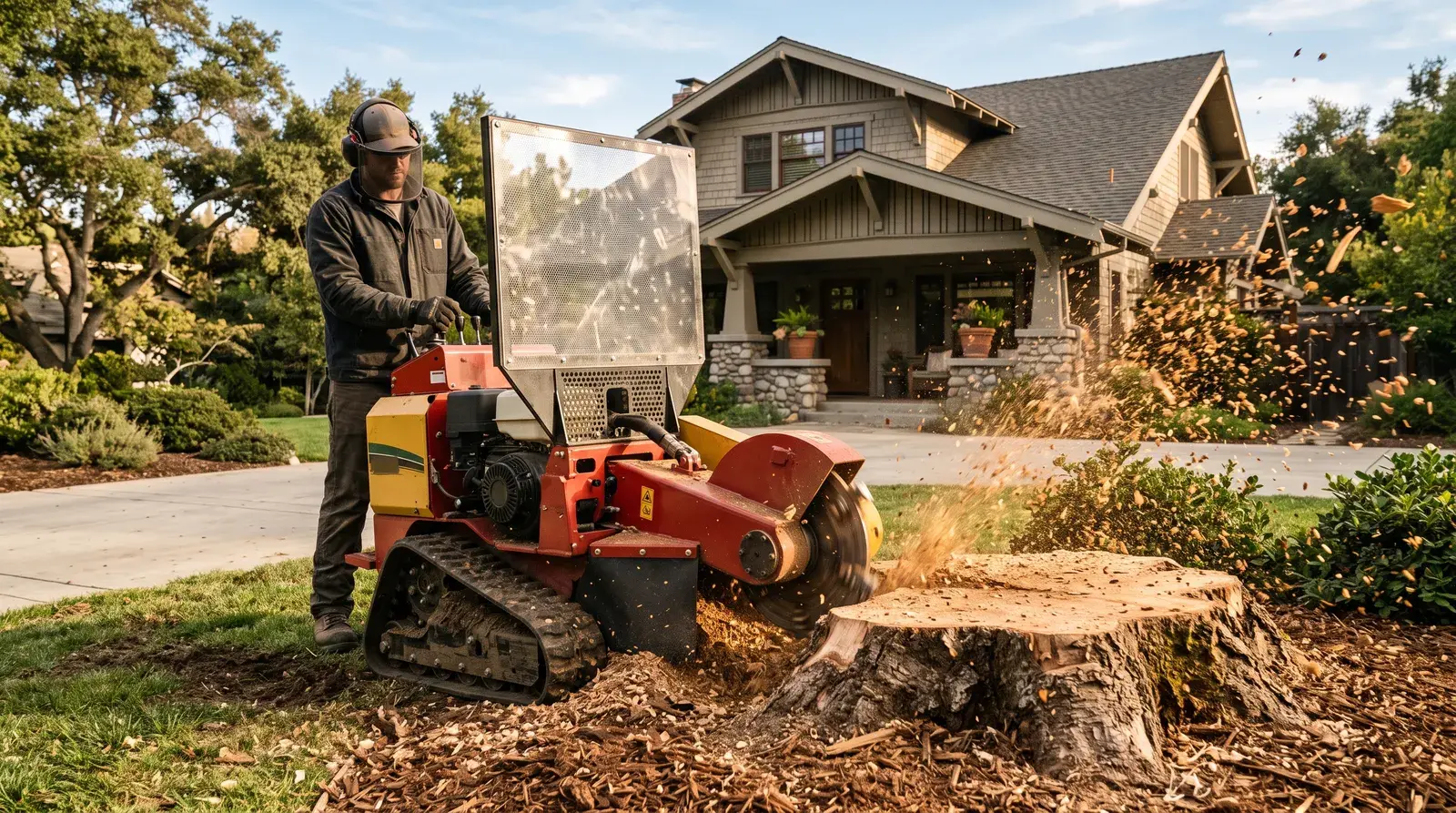
Grinding Stumps Over Granite
Rocklin's bedrock is not a rumor — in parts of town, granite sits inches below the topsoil. That does not stop stump grinding, but it changes how it is done: probe first, grind to the depth the ground actually allows, and price the job for the conditions.
- We probe around every stump before grinding; buried granite, old quarry rock, and construction rubble are all common finds in Rocklin yards.
- Where rock sits high, we grind to the achievable depth and tell you exactly what that is — usually still plenty for lawn or groundcover.
- Carbide teeth survive wood, not stone; spotting rock first is the difference between a clean job and a stalled one.
- Shallow-soil stumps often have wide, plate-like root flares instead of deep taproots, which spreads the grind footprint outward rather than down.
What a Standard Grind Includes
A stump grinder chews the stump into mulch with a rotating carbide wheel, working from the top down to 8–12 inches below grade — enough to lay sod, seed lawn, or plant shrubs over the spot without ever knowing a tree stood there.
- Standard grind: 8–12 inches below grade, ground conditions permitting.
- Deep grind: 12–18+ inches where you plan to replant a tree or pour concrete — worth requesting up front rather than calling back later.
- Surface roots: mulberry and ash runners heaving lawns in Stanford Ranch and Sunset Whitney can be chased and ground as an add-on.
- Grindings: backfilled into the hole, raked out as free mulch, or hauled off with clean soil backfill for an extra charge — your call.
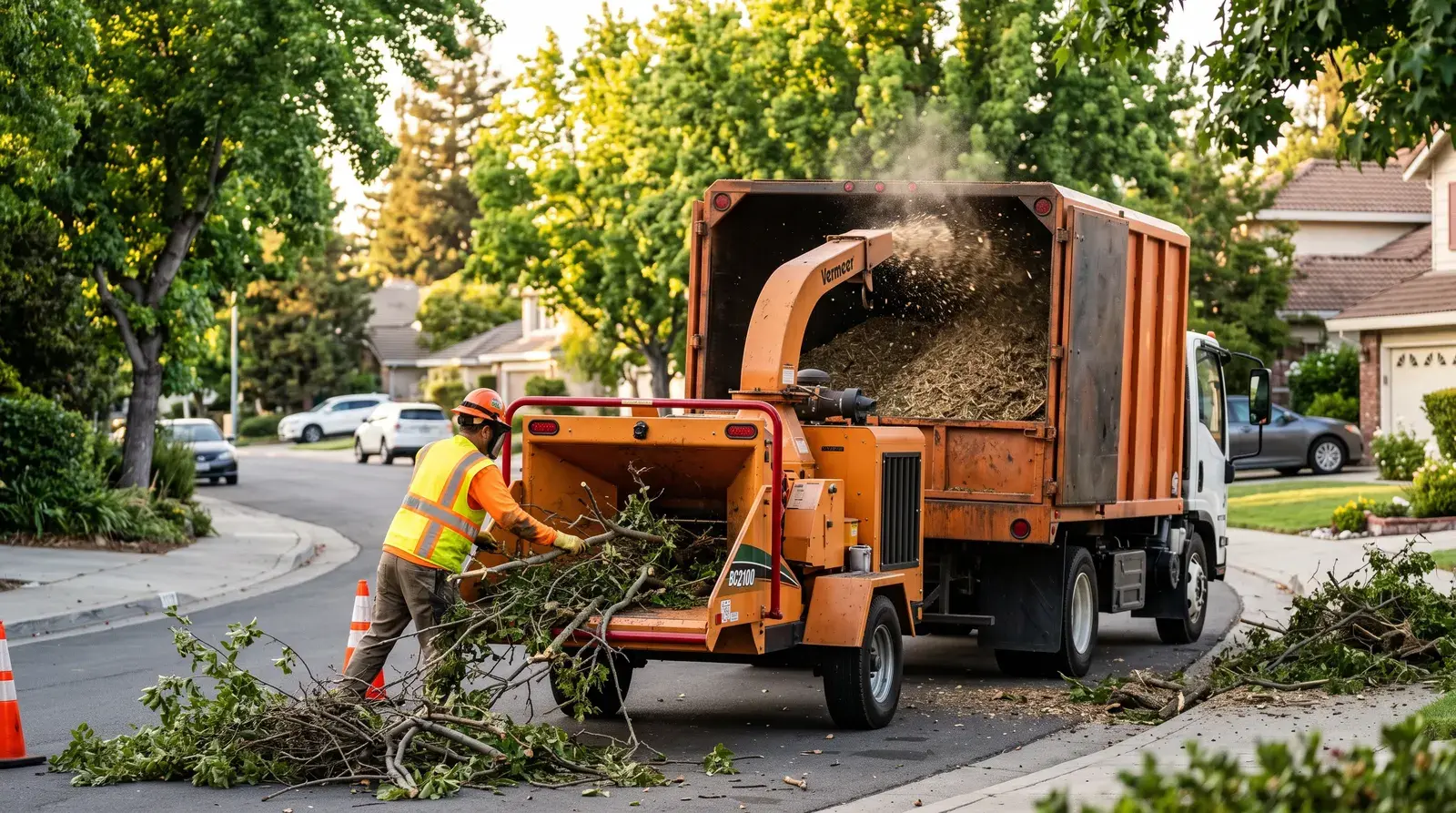
Stump Grinding & Removal in Rocklin — free, site-specific estimates.
Oak Stumps After Permitted Removals
A large share of Rocklin grinds follow oak removals — dead or hazardous blue oaks and live oaks taken out through the city's approval process. Oak is dense, slow-grinding wood, and mature oaks on shallow Rocklin soil put out wide flares that add real footprint to the job.
We price by measured diameter at the widest point of the flare, species, and access, so a 30-inch live oak quotes differently than a 30-inch pine — honestly, because it is a different amount of work. If your oak removal approval included replacement-planting conditions, tell us: we can grind deep enough at the same visit for the replacement tree to go straight in.
Need stump grinding & removal in Rocklin?
Share the address and project details — we'll come back with a scoped, site-specific estimate.
Why Rocklin Stumps Should Not Just Sit There
A leftover stump is a slow problem. In Rocklin's climate, oak and mulberry stumps resprout, decaying wood pulls termites and carpenter ants toward the house, and the stump occupies exactly the spot where lawn, hardscape, or a new tree belongs.
- Regrowth — live oak and mulberry stumps sucker aggressively for years; grinding removes the tissue that drives it.
- Pests — a rotting stump is a standing termite invitation a sprinkler-run away from your slab.
- Trip hazards and mower damage — stumps and surface roots in Whitney Ranch lawns take out mower blades and ankles alike.
- Curb appeal — an old stump in the front yard reads as deferred maintenance to every buyer and every HOA letter-writer.
The same crew from estimate to cleanup.
No juggling separate contractors for one tree. Tell us the address and what you're dealing with, and we'll come back with a written, site-specific number.
- Removal, trimming, stumps, and cleanup handled by one crew
- Free, site-specific estimates — priced to your tree, not a flat rate
- Sacramento, Placer, El Dorado, and Yolo counties

Access and Cost in Rocklin
Stump grinding is priced by diameter, species, depth, access, and — in Rocklin specifically — rock. As a broad regional guide, small stumps often start around $100–$200, mid-size stumps $200–$450, and large oak stumps run more; multiple stumps in one visit always price better per stump.
- Our compact grinders fit through a standard 36-inch gate, covering most fenced backyards in Whitney Ranch, Stanford Ranch, and Whitney Oaks.
- We have underground utilities located before deep grinds near irrigation mains or low-voltage lines.
- If we are removing the tree, ask for the grind on the same written estimate — one mobilization beats two.
- All estimates are free and measured on-site, not guessed from a photo.
What stump grinding & removal costs — and what Rocklin allows
Regional ranges, local permit rules, and the alternatives worth weighing before stump grinding & removal in Rocklin.
Stump Grinding Cost Guide (2026)
What stump grinding costs in the Sacramento region in 2026 — pricing by diameter, what a standard grind includes, and where the extra charges come from.
Do You Need a Tree Removal Permit in Folsom?
Where Folsom draws the line before a tree comes down, and who to check with.
Removing vs. Preserving a Native Oak in the Sacramento Region
Oak Removal or Preservation — how to tell which one the tree actually needs.
Tree Service in Placer County, CA
Placer County spans flat valley suburbia in Roseville and Rocklin and rises through the oak-woodland foothills to ponde…
How Much Does Tree Removal Cost in Sacramento? (2026)
Typical 2026 Sacramento tree removal price ranges by tree size, the factors that move the number, and how to read a quote before you sign it.
Do You Need a Permit to Remove a Tree in Sacramento?
Which Sacramento trees need a removal permit, how city and county rules differ, and how to check before the saw comes out.
Want a sense of the work first? See the kinds of stump grinding & removal jobs we take on and who shows up to do them.
Frequently asked questions
Can you grind a stump if there's granite underneath it?
Almost always, yes. We probe around the stump before starting, and where granite sits high we grind to the depth the ground allows — often still 8 or more inches below grade, which is plenty for lawn or planting beds. What we avoid is hitting rock blind at full speed, which wrecks teeth and stalls jobs. Rock changes the approach and sometimes the price; it rarely stops the work.
How deep do you grind stumps in Rocklin?
Standard grinds go 8–12 inches below grade, enough to sod, seed, or plant shrubs over the spot. For replanting a tree, pouring hardscape, or setting fence posts, we grind 12–18 inches or deeper where soil depth permits. Tell us what is going in the stump's place at the estimate — grinding to the right depth the first time is far cheaper than a return trip.
How much does stump grinding cost in Rocklin?
As a broad regional guide, small stumps often start around $100–$200, mid-size stumps run $200–$450, and large oak stumps cost more because oak is dense and flares wide. Access, depth, and rock conditions adjust the number, and multiple stumps ground in one visit always price better per stump. Every quote is free and based on actual measurements at your property.
What happens to the wood chips after grinding?
A large oak stump produces a surprising pile of grindings. The standard approach is backfilling the hole with them — they settle as they decompose, so top off with soil before seeding lawn. We can also rake them into your beds as free mulch, or haul them off and backfill with clean soil for an additional charge. Just tell us which you want when we quote.
Will grinding the stump stop it from regrowing?
For most species, yes. Grinding removes the stump and upper root crown where new shoots originate, which stops resprouting from oaks, pears, and most ornamentals. Aggressive suckering species like mulberry and tree of heaven can send shoots from surviving lateral roots for a season or two; those are managed by cutting or chasing the main runners. We will tell you at the estimate whether your species is a one-and-done grind.